
Introduction
Grade 10 - Native Studies - Aboriginal Peoples in Canada
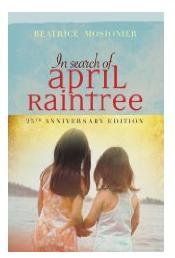
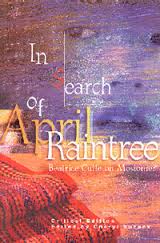
Novel Study: In Search of April Raintree

Imagine your entire world being pulled from you. Imagine being taken from your loved ones, and being separated from your sibling and being thrown into a world of Foster Care and strangers. Imagine been abused. Imagine feeling so lost that you don't even know who you are. What would you do? Where would you turn?
In this WebQuest Unit, you will explore some of the Aboriginal Issues that arise in Beatrice Culleton Mosionier's novel, "In Search of April Raintree."
We will put ourselves in the shoes of our protagonist and narrator, April, and her sister, Cheryl. We will journey with them as they lose their family, and their identity as a Métis. We will reflect upon what they endure and how they can find hope, and ultimately, if they can find themselves.
Task
In this unit, one goal is to gain insight on the struggles Aboriginal People have faced since the days of European Colonization. You will aim to recognize the true and painful past of Aboriginal peoples of Canada. You will strive to undertstand the issues Aboriginal people are still facing today, and the action that is being taken in the pursuit of aboriginal rights.
The main task is to look at identity loss from the perspective of April Raintree, our protagonist, and her sister, Cheryl.
As they search for their identity, we will reflect upon our own identity.
In order to complete this task, we will have a series of "stepping stone activities" to get us through.
We will read this novel together, in class, seated in a circle. You are encouraged to close your eyes and visualize or follow along in your own novel.

Your Task will be carried out through FOUR Stepping Stone Activities:
1. The Living Journal
2. Family Tree
3. Timeline of Injustice
4.Film Trailer: Lights, Camera, Action!
Process
Stepping Stone Activities
The following activities are to be completed at the discretion of your teacher. There are significant moments in the book that will compliment these activities. Your main task right now is to be a reflective and active reader.
- 1st Stepping Stone: Living Journal (Ongoing Class Activity)
1. Throughout the novel, you are to put yourself in the shoes of April, our narrator, and her sister Cheryl. Think about what they are feeling, think about their reactions to what is happening in the plot, think about their hopes and dreams, think about their regrets, etc.
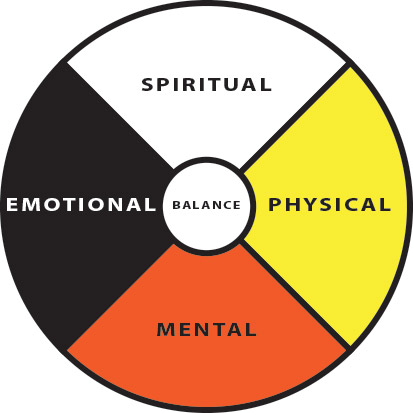
2. We will discuss each chapter of the novel through a "Living Journal," which means, we will openly discuss April and Cheryl's feelings through discussion, from their perspective. We will explore each chapter through their physical, mental, spiritual, and emotional wellbeing.
3. We will present our responses in first person context from April and Cheyrl's perspectives. For example, "As April, I feel scared, because..." or "As Cheryl, I wish I could...." or "I am upset about...." and so on.
4. We will place key words, thoughts and feelings from our Living Journal from each chapter on the bulletin board dedicated to the novel. At the end of the novel we will reflect upon the journey of April and Cheryl's thoughts and feelings throughout the book.
- 2nd Stepping Stone: Family Tree (Individual Activity - Introduced after Chapter 1)
1.In order to know who you are, you must first know where you come from. In the novel, In Search of April Raintree, April had a heritage of mixed nationalities. Her father was "a little bit of this and a little bit of that, and a whole lot of Indian." April's mother was part Irish and part Ojibwa. April inherited her mother's pale skin, while her sister, Cheryl, inherited her father's darker skin. April's heritage makes her unique, and that's not a bad thing.
2. Talk to your family, or people in your community to trace your own lineage.
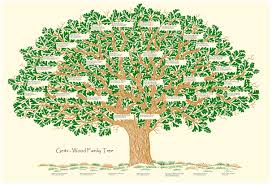
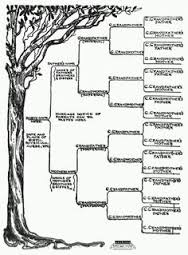
3. Create a "My Family Tree" project. This family tree should include you, your siblings, your parents, your grandparents and great-grandparents. You may also include people who have made a great impact on your life, even if they are not a 'blood relative.'
4. This family tree can be created in a variety of ways. You can create a family tree by including pictures and text on poster board, or through a PowerPoint Presentation, a digital story, a speech or live presentation, or in any way you want (be sure to have your family tree format approved by your teacher.)

- 3rd Stepping Stone: Timeline of Injustice (Group Activity - After Chapter 15 )
1. Throughout the book we will have discussed some horrible situations in which April, Cheyrl and many Aboriginal people unfortunately dealt with, and still deal with today. Some of these travesties include: Alcohol and Drug abuse, Physical Abuse, Rape, Human Trafficking, Emotional Abuse, Forced Assimilation, and the list goes on. Many of these horrible circumstances stem from the loss of identity for Aboriginals, The Indian Act, Residential Schools, Stolen Land, Stolen Rights, and so on.
2. In a small group, you are to create a Timeline of Injustice, pinpointing the timeframe and chronology of the different ways Aboriginal people were wronged, beginning with colonization. This timeline will act as a reminder to all of us of the obstacles Indigenous people have had to overcome in order to maintain their culture.
3. This timeline should explain at least five, well-researched instances of injustice for Aboriginal people in Canada.
4. Your project can be presented in a variety of ways. As a group, you can create a Bristol board presentation, a Prezzi or PowerPoint, a Digital Story, A Dramatic Performance, A sequence of Art pieces, a Story or Speech, or any other format that is approved by your teacher.
- 4th Stepping Stone: Film Trailer: Lights, Camera, Action! (Group Activity - After Novel )
1. In Search of April Raintree is not a motion picture (yet,) but I think we can all agree, it would be a very powerful film. In anticipation of the making of this film, you are to create a Film Trailer, in a group.
2. This film trailer must include highlights from the story, without "spoiling" any crucial moments. You can choose significant themes, words, quotes, feelings, etc. This is not a retelling of the story.
3. Here are some YouTube videos to give you inspiration:
https://www.youtube.com/watch?v=e05H-ThDqy0
https://www.youtube.com/watch?v=eXK2W7IRs0c
https://www.youtube.com/watch?v=CDUiSGaMULQ
4. This film trailer can be a video, a Prezi or PowerPoint (with voice over), a Storyboard project (with at least 12 frames,) Or a live dramatic performance. Any video or performances should be at least one minute in length.

Evaluation
The following provides suggestions for assessment of each Stepping Stone Activities. However, chosen assessment is at the discretion of the teacher:
The Living Journal:
Assessment based on participation and contribution to the living journal discussions. Teachers may also use teacher-student interviews, a casual conversation, to assess students' knowledge about the events in the book and the feelings they render. Here is a rubric to accompany participation/interview:
https://docs.google.com/document/d/1azKSo6eKxHCfpDKrzqzwRT3e0S-LHYAcktA…
The Family Tree:
Assessment for the family tree is in accondance to the rubric. It is also suggested to conference with the student in regards to an explanation of the tree, as not all assignments will be in a standard family tree format:
https://docs.google.com/document/d/11jDCHFBLlyGfQLlCaiRbUKgsSyxr3kPxF6Y…
The Timeline of Injustice:
Assessment for the Timeline is based upon accuracy of information, explanation of incents, as well as team members' contributions to the project:
https://docs.google.com/document/d/1j8bMzhGoMjdbgDeK2A9kRcOxXRdM_VkliS7…
Film Trailer:
Assessment for the film trailer is based upon effort, accuracy to the content of the novel, choice of significant material, and team members' contributions to the project:
https://docs.google.com/document/d/1mV1r2M8-bjzaB-OZ_mraJilQw3nyd8Ovx6h…
Conclusion

Closing Talking Circle:
To bring the novel study to a close, sit in a circle and share your feelings and thoughts about the book, and the journeys of April, and her sister, Cheryl. Use the words, quotes and feelings from the bulletin board to help guide your discussion.
Discuss how this novel has effected students physically, mentally, emotionally and spiritually.
What have we learned from this novel?
How can this novel help us to lead better lives?
How can this novel help us to strengthen our sense of identity?
Credits
https://www.youtube.com/watch?v=e05H-ThDqy0
Teacher Page
This novel can be quite powerful, and some students maybe be affected by the emotional and sensitive content. Please make a plan for how to deal with the aftermath of possible emotional reactions. Talking about it as a class can be effective, but try to discuss any studnts' private connections to the story with a Student Support Worker.
There are several other lessons that can come from this novel, you do not have to limit it to the four mentioned activities, however, overwhelming students with assignments could take away from their connection to the content. It is beneficial to have students really listen and visualize during the reading of In Search of April Raintree.
Extentions:
- An extention activity might be a gallery walk, where students display their work and the class walks around to admire each others' assignments.
-Watch films from the 8th Fire series to help connect with other Aboriginal Rights Issues, and how people are fighting them and facing them.
-Storytelling activities - students can share fictional or non-fictional stories about "Indentity" or other topics related to the novel.
- A continuation story. Students can continue the story to follow how April connects with her Metis roots, and grows stronger in her connection to her identity as a metis woman.
Curriculum Strands
After this unit, students will...
- identify social, economic, and political issues within Aboriginal communities in relation to Canadian government policies
- identify significant events and issues that have had an impact on Aboriginal peoples and their communities (e.g., the introduction of European, Asian, and African diseases, such as tuberculosis and HIV; residential schools; the relocation of Inuit communities in the high Arctic);
- use correctly terms related to the discussion of Aboriginal identity (e.g., culture, assimilation, Indian Act, Métis, Inuit);
- identify sources of information on the efforts made by Aboriginal peoples to define and express their identity within Canada during the twentieth century;
- identify, chronologically or thematically, significant events involving Aboriginal peoples in twentieth-century Canadian history;
- assess conflicting viewpoints about an Aboriginal identity that is distinct within Canada
- describe the key aspects of the Indian Act and the impact that it has on the lives of Aboriginal peoples;