
Introduction
Australia as a Nation: Immigration is a webquest unit based on the Australian Curriculum: History domain for Year 6. Students will gain a deeper understanding of the diverse groups of people who came to Australia and their reasons for coming to Australia. The Australian Curriculum History Achievement standard states that students need to identify change and continuity and describe the causes and effects of change on Australian society.
Curriculum: History
Year level: Year 6
Keywords: nation, democracy, citizenship, immigration, migration, refugee

Australia is a country of migrants and we all have a story to tell. This webquest is all about finding out why people came to Australia.
Use the internet (kid friendly sites only), personal stories and books to discover the stories of migrants.
Who were the people that came to Australia?
Why did they come to Australia?
Task
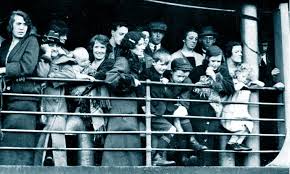 Unit outline:
In this webquest, you will be asked to investigate reasons why individuals or particular groups have migrated to Australia. You will need to provide:
1. a detailed recount of an individual's migration experience to Australia (interview)
2. provide a summary of Australia's migration history. (research)
After researching and drafting your information in your History book, you will then create a data show to present your information to the class.
1. Brainstorm what we already know about migration to Australia (first lesson)
2. Class discussion about our own experiences with migration OR family experiences with migration OR friends' experiences with migration.
3. Team work: working collaboratively
4. With your work colleague, decide on who you will interview, the types of questions you want to ask them and how you will record your interview. (It can be written, recorded electronically) Make a list of your questions, have them checked and organise a mutually convenient time to interview your chosen person.
5. Use class time to research Australia's migration history. Record ALL information in your History book.
6. Put your information into a data show. This will include your interview AND summary of why people/groups migrated to Australia. Proofread and edit.
7. Save into the Year 6 History folder on the school drive.
8. Complete an evaluation on how you worked with your colleague.
Process
1. As a class we will brainstorm everything we know about migration to Australia. Choose a graphic organiser to present this information. Remember this is your opportunity to discover what you want to find out about immigration.
2. Discuss and describe the cultural practices related to family life, beliefs and customs of newly arrived migrant groups and compare these with those of the communities in which they settled within Australia. Can you share any personal migration experiences? Family? Friends? Record everything in your History book.
3. Select a partner OR MS will allocate teams. We need to be fair to everyone! Now work with your partner to decide on who you will interview about their personal migration experiences. Make a list of possible questions you can ask. Record these in your History book. They will be checked. Make sure you ask permission to interview your family member or friend.
4. Interview time - this may have to be done for homework or on the weekend. Discuss with your partner. How will you record the interview? Written responses (you write!), electronically recorded or other format?
5. Part Two: research the history of Australian migration. Use kid-friendly web sites, library resources and text books. Why did individuals or specific groups migrate to Australia? Record your notes in your History book AND include a reference section.
6. Now that you have an interview and your notes about migration, work with your partner to put together a data show to share your learning. IT WILL BE VERY IMPORTANT TO USE ALL CLASS TIME WISELY.
7. Check your finished data show - proofread and edit.
8. Save into the Year 6 History folder on the school drive. Make sure you name your file - use your name.
9. Complete the evaluation rubric that MS will give to you.
10. All work will be checked throughout the term - all work must be submitted by week 7.
Information:
Australian Bureau of Statistics: www. abs.gov.au
Migration Museum of SA
library books
http://tenpoundpom.com/stories
waves.anmm.gov.au/Immigrants-Stories
Evaluation
The assessment rubric will be given to all students at the commencement of the unit. Students will, therefore, have an understanding of the expectations of the assignment and are able to ask questions regarding the assessment rubric.
|
|
4 |
3 |
2 |
1 |
|
Conclusion |
Completed conclusion which identifies five or more facts they have learnt. |
Completed conclusion which identifies five facts they have learnt. |
Completed conclusion which identifies four or less facts they have learnt. |
Conclusion incomplete. |
|
Data show |
Is extremely well organised, logical and easy to follow. |
Is well organised, logical and easy to follow. |
Is sometimes organised, at times logical but in some places difficult to follow. |
Disorganised, difficult to follow. |
|
Team work |
Partners worked extremely well; planned, interviewed, researched and developed a combined presentation. |
Partners worked well; planned, interviewed, researched and developed a combined presentation. |
At times, partners worked well; some evidence of planning, research and interview. Presentation disjointed. |
Difficulty working as a team. Limited evidence of planning, research, interview and presentation disorganised. |
|
Quality of information |
Information clearly relates to the main topic. It includes several supporting details and/or examples. Excellent reference. |
Information clearly relates to the main topic. It includes supporting details and/or examples. Good reference. |
Information sometimes relates to main topic. Limited details and/or examples. Limited reference. |
Information has limited connection to the main topic. No reference given. |
Conclusion
You have now completed your interview, research and data show. You have been given a time to present to your peers.
You have investigated migration experiences which have contributed to making Australia a multicultural society.
The last step in this process is to write an evaluation of how you worked with your partner. Remember to include the things that worked well and things that didn't. What future improvements could you make in research and project work? How could you improve your collaborative learning?
Credits
Australian Curriculum - History
Google images