
Introduction
Today we will be looking at two of the communicable diseases that we may come into contact with at this school.
Chickenpox and Whopping Cough are infectious diseases and it is the school's responsibility to help support the prevention and control of transmission of infectious diseases by supporting immunisation programs and by providing prompt and consistent responses to detected or suspected cases of disease.
In the case of an outbreak of these diseases we as a school must take specific precautions to prevent and control the transmission of infectious diseases, minimise contact with body fluids and substances and have procedures that protect staff and students and educate staff and students in the precautions to prevent and control the transmission of infectious diseases.
Precautions to assist with infectious infection and control must be followed by all individuals in the school at all times.
During this WebQuest will be exploring the above communicable diseases by looking at the specific nature of each disease, examining school policies and procedures and gaining knowledge in the preventative measures we can implement to ensure safe treatment and procautions are in place.
Two one hour professional development sessions will be provided to cover the range of content.
Task
What are communicable diseases? (wait for responses)
* Contagious and infectious
* Can be spread from one person to another or from an animal to a person
* Generally spread airborne or through direct contact with bodily fluids or blood
CHICKENPOX
Chickenpox is a highly contagious viral disease caused by the varicella-zoster virus (VZV).
SYMPTOMS:
Blistering skin rash (first formed on the body and later on the head and limbs)
Low-grade fever
General discomfort
Itensely itchy skin rash
Ulcers may develop in certain areas (eg. mouth)
(State Government of Victoria, 2015)
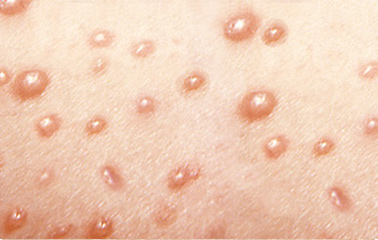
Image retrived from http://www.nhs.uk/Conditions/Chickenpox/Pages/Symptoms.aspx
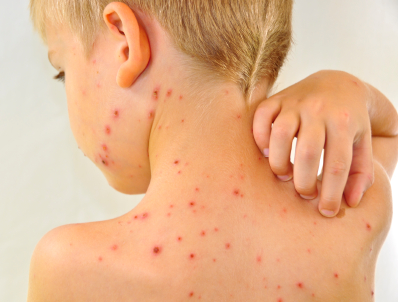
Image retrieved from http://www.amcal.com.au/health-hub-article-chickenpox
Whooping Cough
Whooping cough (pertussis) is a serious, contagious, respiratory infection caused by the bacterium Bordetella pertussis. The disease begins like a cold and then the characteristic cough develops. This cough may last up to three months, even after antibiotic treatment is completed and the person is no longer infectious.
SYMPTOMS:
Severe cough (occurs in bouts)
Whooping sound on inhalation
Vomiting at the end of a bout of coughing
Aponea (child stops breathing for a period of time and may go blue)
Poor appetite
Fatigue
Dehydration
Open the following link to view and hear a 5 year old girl with whooping cough
https://www.youtube.com/watch?v=PFNvGqw9HKY
TASK:
In year level groups discuss and write reponses on the poster paper provided to the following question:
How do we prevent the transmission of infection?
Examples of reponses:
Wash hands (after going to the bathroom, before preparing/ eating, after blowing nose or coughing etc)
Wear gloves when in contact with bodily fluids or blood
Maintaining a clean and hygienic environment
Discussing any suspected infectious diseases with first aid officer/ staff manager
Having policies in place for parents to keep children at home if presenting with an infectious disease
Encourage parents to seek medical advice
TASK:
You will now be seperated into two groups. One group will explore our state and school's policy on Chickenpox and the other group will investigate Whooping Cough.
Each group will present their findings to the whole staff in a follow up professional development session next week.
Process
Preventative measures task:
-Groups will be divided into year levels (Administation, Foundation, Junior School- Years 1 and 2, Middle School- Years 3 and 4, Senior School- Year 5 and 6)
-Groups will select a scribe and all contribute to responses
-Groups share their responses with the rest of the staff
-Posters are to be displayed in the staff room for future reference
Policies and procedures task:
-Staff will be divided into two groups (Administration, Foundation, Year 1 and 2 will explore Chickenpox and Years 3, 4, 5 and 6 will explore Whooping Cough)
-Both groups will examine current government and school policies and procedures in relation to their given communicable disease and presnt their findings to the whole staff at a follow up professional develeopment sessions next week.
-Groups will provide a current document to all staff outlining the state/ school policy in relation to Chickenpox and Whooping Cough and highlight the procedures staff should take to ensure the prevention of infection.
Evaluation
Quiz!
We will now have a quiz in relation to the knowledge you should of gained throughout this professional development session.
Record responses on the paper provided.
1. What are communicable diseases?
2. What are the symtoms of Chickepox? Provide at least three examples.
3. What are the symtoms of Whooping Cough? Provide at least three examples.
4. How can we prevent the transmission of infectious diseases? Provide at least four examples.
5. Who would you consult with if you suspect a child in your care was presenting with symtoms of one of these communicable diseases?
You will receive your certificate of participation once your responses have been evaluated.
Conclusion
Throughout this professional development experience staff should have gained knowledge in what commuincable diseases are and have a high understanding of Chickenpox and Whooping Cough including symtoms to be aware of. Staff should also be capable of undertaking preventative measures to ensure the transmission of infectious diseases is minimal and be aware of who they should consult with if they suspect a student in their care is presenting with a commincable disease.
Once the follow up professional development session in relation to state/ school policies of commincable diseases has been completed staff should be aware of the procedures that are in place to ensure transmission of infectious disease is prevented. This will include the amount of absence from school is required, immunistaion requirements and other preventaive measures.
Credits
References
State Government of Victoria. (2015). Better health channel: Chickenpox. Retrieved from http://www.betterhealth.vic.gov.au/bhcv2/bhcarticles.nsf/pages/chickenpox
State Government of Victoria. (2015). Better health channel: Whooping cough. Retrieved from http://www.betterhealth.vic.gov.au/BHCV2/bhcarticles.nsf/pages/Whooping_cough