
Introduction
The United States Government:
Grade Level: 5
Curriculum: Social Studies
Keywords: Branches of Government, Legislative, Executive, Judicial, United States, Government
Author: Ms. Schahczinski

Imagine living in a country that is run by a monarchy. A monarchy is a system of government that is ruled by one person. The person is usually called a king or queen. Whatever they said or wanted happened and the people could not disagree with their decisions. That's what happened under England rule until the United States of America declared their independence in 1776 by issuing the Declaration of Independence.
The United States then had to create its own government. They decided on to have the government based on federalism. This meant that the power is shared between the national and state/ local governments. There were three branches of power that were created the Legislative Branch, Executive Branch, and the Judicial Branch. Each checks over one another and balances out the powers so no branch becomes too big and turns into a monarchy.
Task
Overview:

Students are divided into three groups; each group will have their own set of questions to fill out on the worksheet to guide their research for the final project using PowerPoint. Students will be learning about all three branches while focusing on one with a partner. Then, those students will join two other groups with different branches to further their learning about the United States Government. After completing the WebQuest students will pair up and discuss the questions and their answers from the worksheet with the other two groups. This information obtained from all the groups will be used for the final project on PowerPoint to complete further understanding of the three branches of government.
Students will:
1. Work in pairs that the teacher assigned and complete the worksheet using the WebQuest Activity about the branches of government.
2. Students will then be regrouped according to the teacher and comparing their worksheets sharing and discussing with one another the information they found.
3. Students will then create a PowerPoint using the information and explaining the importance of the three branches, how they work together, what each branch does, and how they check and balance one another.
Worksheet questions are below (printed copy provided by teacher):
WebQuest Worksheet/ PowerPoint Questions
Name: __________________________________ Group Letter: ______________
- What does your branch do? Does it have any power over the other branches? Explain and use details from your research.
2. What positions are there and who is in charge?
3. How do people get these jobs?
4. Is there a time limit in these job positions? Can a person work there forever?
5. Who checks the branch so it does not become too powerful?
Process
What are we doing today?
By doing this WebQuest it will help you gain a better understanding of the three branches. This WebQuest will also provide answers to the questions on the worksheet that will be used for your final project.
Step 1: This video will give you more information on each branch of government. Be sure to pause the video to write down information for your worksheet.
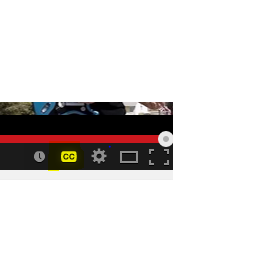
Use the "CC" closed captioning button while the video is being played to see the words that are used in the video.
See picture below for help.
[video:https://www.youtube.com/watch?v=UlxpQmYdwZY]
Helpful Definitions:
|


 Executive Branch:Headed by the president. The president carries out federal laws and recommends new ones, directs national defense and foreign policy, and performs ceremonial duties. Powers include directing government, commanding the Armed Forces, dealing with international powers, acting as chief law enforcement officer, and vetoing laws.

After watching, discuss with your partner: What branch of government would you like to work in and why?
Step 2: Click on the links that are assigned for your group and add important information to the worksheet provided.
Group L: Legislative Branch
 https://www.whitehouse.gov/1600/legislative-branch
http://www.congressforkids.net/Legislativebranch_index.htm
https://www.congress.gov/legislative-process
(Watch the overview of the legeslative process, house floor, and senate floor)
Group E: Executive Branch:

https://www.whitehouse.gov/1600/executive-branch
http://www.congressforkids.net/Executivebranch_president_fun.htm
Group J: Judicial Branch:

https://www.whitehouse.gov/1600/judicial-branch
http://www.congressforkids.net/Judicialbranch_index.htm
Step 3: When done gathering information ask your teacher for your other group members and begin to share information.
Example:
Group L. will be paired with Group E. and Group J.
Group E. will be paired with Group L. and Group J.
Group J. will be paired with Group L. and Group E.
This information will go into a PowerPoint explaining the questions on the worksheet.
This PowerPoint will be created by the entire group covering the worksheet questions and the "final image" below.
Explain what this diagram means in your presentation based on the information found from the WebQuest:

Evaluation
Grading Rubric for the Entire Unit:
- Be sure to provide detail and show comprehension of the subject!
- Be Creative!
- Have Fun!
|
60 Points Possible! |
Outstanding |
Good |
Acceptable |
Emerging |
Comments/ Score |
|
Product |
Covers topic in-depth with details and examples subject knowledge is excellent. |
Includes essential knowledge about the topic. Subject knowledge appears to be good. |
Includes essential information about the topic, but there are 1-2 factual errors or missing information. |
Content is minimal or there are several factual errors or missing information. |
/20 |
|
Presentation |
Student spoke when presenting and demonstrated understanding of the topic. |
Student spoke when presenting and showed some understanding. |
Student barely spoke, but showed understanding through work. |
Student did not speak at all. |
/5 |
|
Organization |
Content is well organized using headings or bulleted lists to group related material |
Uses headings or bulleted lists to organize, but the overall organization of topics appears to be flawed |
Content is logically organized for the most part |
Content is disorganized and no logical order |
/10 |
|
Participation |
Student fully participated |
Student participated |
Student said at least one thing and did some work. |
Students did not participate. |
/10 |
|
Worksheet |
Completed with many details. |
Completed with some details. |
Completed with limited details. |
Did not complete |
/10 |
|
Grammar |
No errors. |
Minimal errors. |
Few errors |
Numerous errors. |
/5 |
Conclusion
What have we Learned?
In this lesson, you learned about the three different branches and how they check and balance each other. There can be no branch that gains too much power or has too little of authority they all work together to get the job done.
Working in groups we have also worked on our communication skills and time management skills. These are very important in not only school, but in life.
After completeing the project and presenting it to the class you may sit back, relax, and enjoy the rest of your classmates presentations and see what they found.
Feel free to ask any additional questions to the presenters, classmates, and/or your teacher!
:)
For additional resources:
- There are plenty of books on the three branches and our government in the school library.
- Visit Government: The Captial/ Local Government (offices such as the mayors office)
- Try running for student government at school or join the government club!
- Washington D.C. Trip in 8th grade coming up keep it on your calander!
Credits
Teacher Page

Teacher Notes/ Before Assignment:
Created by Ms. Schahczinski
Students will need prior knowledge of how to use PowerPoint for their final project. Teacher will group students into three groups:
L. Legislative, E. Executive, and J. Judicial each group having two partners taking into consideration when pairing ELL Levels and ESE students. Pairing will consist of general education student with an ELL or ESE depending on how many are in the particular classroom. This unit is designed to have structure to help all students on the assignment. There are explicit instructions and video features that have captains. Students are able to replay videos and pause them as they feel necessary. In addition, there are definitions to assist the students further. This provides a scaffold for instruction that is taking place before the project at the end of the unit.
This unit will take at least three class days: one day to complete the webquest, another day for discussion with the regrouping of all the branches, and the final day to work on the project. An additional day may be added to have students present the information they put together on the PowerPoint.
Standard:
LAFS.5.RI.1.3
Explain the relationships or interactions between two or more individuals, events, ideas, or concepts in a historical, scientific, or technical text based on specific information in the text.
Access Points:
- LAFS.5.RI.1.AP.3a: Identify the relationship between two or more individuals in a historical, scientific or technical text.
- LAFS.5.RI.1.AP.3b: Identify the relationship between two or more events of concepts in a historical, scientific or technical text.
- LAFS.5.RI.1.AP.3c: Explain the relationships or interactions between two or more individuals, events, ideas or concepts in a historical, scientific or technical text based on specific information in the text.
SS.5.C.3.1
Describe the organizational structure (legislative, executive, judicial branches) and powers of the federal government as defined in Articles I, II, and III of the U.S. Constitution.
Access Points:
Independent
- SS.5.C.3.In.a: Recognize that the three branches of the United States government have separate powers.
- SS.5.C.3.Su.a: Recognize the three branches of the United States government.
- SS.5.C.3.Pa.a: Recognize the United States has a government.