
Introduction
You may have been studying adjectives and adverbs for years, but you may not use them to color your personal stories. Think about how long it might take you to tell an important story from your life. Then, think about how long you would normally spend telling that story in English.
Is there a difference? If so, the difference is probably in how much description you include. Adjectives and adverbs can help you to describe people, places, and feelings more clearly. English is rich in adjectives and adverbs--you don't have to stick with "safe" words like "good," "smart," and "ugly"; you can spice up your speaking by using words like "breath-taking," "clever," and "horrendous." Instead of describing someone as walking "fast," you can use "briskly" instead!
In your speaking, you may have learned to focus on the nouns and verbs you have to use in order to form complete sentences. Now, it is time to make your language richer by adding descriptive language.
In this webquest, you will watch videos and do activities that can make your speaking clearer and more interesting.
Task
Read the description below. As you read, create a detailed picture in your mind. What do you see?
A man and a woman are standing in front of a house. The man is holding a pitchfork. He is wearing a white shirt, overalls, and a jacket. He has glasses. The woman is wearing a dress over a shirt. The man is looking at the viewer, but the woman is looking to the side. There are trees behind the house.
Now, read the description a second time. As you read, create an even more detailed picture in your mind. What do you see?
A man and woman are standing in front of their farmhouse. Both of them have very serious, perhaps even pessimistic, expressions on their faces. The man is looking directly at the viewer, but the woman is looking sourly off to the side. They are both Caucasian, and probably in their late forties. Their faces are oval-shaped. The man has wire-framed glasses, and he is wearing a buttoned white shirt, blue jean overalls, and a black suit jacket. He is bald, with just a few hairs showing on the side of his head. The woman is blond, and her hair is tied at the neck, perhaps in a bun. She is wearing a spotted brown dress over a dark blue shirt with a white collar. Both the man and woman are standing very straight. The house behind them is white, and four windows are visible. The window on the 2nd floor is very narrow and pointy. To the right of the house, there is a part of a little red barn with a black roof. Behind the house, there is a forest of bushy green trees.
Which of the descriptions painted a better picture in your mind?
Draw the picture that you have imagined in your head on a piece of paper. Then, click on "Process" to see the actual picture.
Process
Here is the actual painting:
 The name of the painting is "American Gothic," and it was painted by Grant Wood.
On your paper, write down the differences between what you imagined and the actual picture. What details could have been included in the description that would have made it clearer for you?
As you can see, using descriptive language can make a HUGE difference in how well you are able to communicate with another person. Go back to the "Task", read the detailed description again, and make a list of the adjectives and adverbs that you see.
How many did you find?
Task 2
Let's review adjectives and adverbs before we go any further. Watch these 2 videos to make sure you understand how they are used in a sentence.
[video:https://www.youtube.com/watch?v=1AkJKGgDBpc]
[video:https://www.youtube.com/watch?v=tDBYzZs-bJc]
You can test your ability to understand adjectives and adverbs by taking these 3 quizzes:
http://www.softschools.com/quizzes/grammar/adjective/quiz219.html
http://www.softschools.com/quizzes/grammar/adverbs/quiz567.html
http://www.softschools.com/quizzes/grammar/adjective/quiz237.html
Task 3
Now, you try it! Look at the painting below, and describe it in writing in as much detail as possible. Use at least 10 adjectives and 3 adverbs. The painting is called "The Persistence of Memory," and it was painted by Salvador Dali.
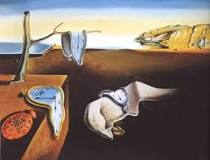
Are you having trouble thinking of adjectives and adverbs to use? Check out the lists on the following websites, and choose some of them to add to your description:
http://www.enchantedlearning.com/wordlist/adjectives.shtml
http://www.enchantedlearning.com/wordlist/adverbs.shtml
Did you come up with at least 10 adjectives and adverbs to describe the painting? If not, go back to the lists and choose a few more.
Task 4
Now that you have practiced using adjectives and adverbs to add more flavor to your description, you can add them to your narrative speech!
Make a list of 10 nouns that you already use in your speech.
Then, make a list of 5 verbs.
Finally, think of adjectives you could use to describe those nouns, and add them to your speech.
Think of adverbs you can use to describe the verbs, and also add those to your speech.
Evaluation
American Gothic descriptive words
Persistence of Memory descriptive words
Nouns and Adjectives List
Verbs and Adverbs List
Creativity
Appropriate Usage
| 4 | 3 | 2 | 1 | |
| American Gothic Description | Listed 28+ adjectives and adverbs | Listed 20-28 adjectives and adverbs | Listed 10-20 adjectives and adverbs | Listed less than 10 adjectives and adverbs |
| Persistence of Memory Description | Listed 10+ adjectives and adverbs | Listed 7-9 adjectives and adverbs | Listed 4-6 adjectives and adverbs | Listed less than 6 adjectives and adverbs |
| Nouns and Adjectives List | Listed 10+ nouns with adjectives | Listed 7-9 nouns with adjectives | Listed 4-6 nouns with adjectives | Listed less than 6 nouns with adjectives |
| Verbs and Adverbs List | Listed 10+verbs with adverbs | Listed 7-9 verbs with adverbs | Listed 4-6 verbs with adverbs | Listed less than 6 verbs with adverbs |
| Creativity | Very descriptive and challenging vocabulary | Descriptive and interesting vocabulary | Vague and common vocabulary | Flat and simple vocabulary |
| Appropriate Usage | The adjectives and adverbs chosen for the speech are used appropriately | The adjectives and adverbs chosen for the speech are used somewhat appropriately | The adjectives and adverbs chosen for the speech are often used inappropriately | The adjectives and adverbs chosen for the speech are used inappropriately |
Conclusion
By watching the videos, playing the games, analyzing the paintings, and being exposed to more adjectives and adverbs, you should be able to "spice up" your speech with descriptive language. This will help you to tell your story more clearly, and help your audience members see what you saw, hear what you heard, and feel what you felt. It is important to be specific when telling a personal narrative, if you expect to be understood. Also, descriptive language keeps your audience awake and interested!
Wait, are "awake" and "interested" adjectives?? You bet they are! :)
I look forward to hearing your speeches!
Credits
Websites:
https://www.youtube.com/watch?v=1AkJKGgDBpc
https://www.youtube.com/watch?v=tDBYzZs-bJc
Paintings:
"American Gothic," by Grant Wood
"La Persistencia de Memoria," by Salvador Dali
Biography:
Farrah LittlepageFarrah Littlepage holds a Master’s degree in TESOL from the University of Missouri-Columbia. She has taught English at the high school, adult education, and university levels. Her main interests are pronunciation, collaborative learning, technology use in the classroom, and working with ITAs. Currently, Farrah is a lecturer at the University of Missouri in the Intensive English Program and the English Language Support Program. She is enrolled in the TESOL Online Teaching Certificate Program.
Teacher Page
Students will review the role of adjectives and adverbs in a sentence. Then, they will explore their usage in order to understand their importance in description and learn new vocabulary. Finally, they will apply their knowledge to a narrative speech by adding adjectives and adverbs where appropriate. This activity can empower students to share their stories by including many details that they would normally include in their native language, but not in English.