
Introduction
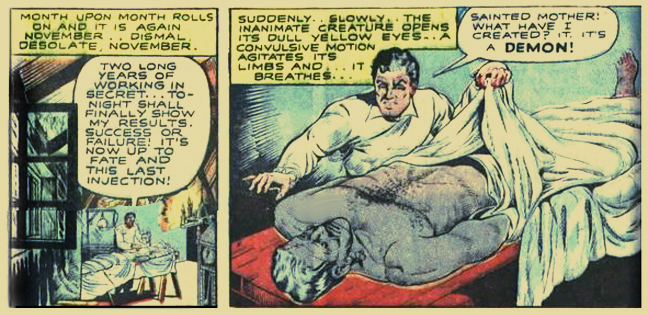
Have you ever worked long hours on a project only to discover that the end result is much less than you expected? Has an idea of yours--which seemed nothing short of amazing at the time--ever turned out to be a colossal mistake? Ever had the experience of alienating friends or family because you had a case of "tunnel vision" about something that was important to you? If you can answer "yes" to any of the above questions, then you're not so different from Mary Shelley's characters Robert Walton or Victor Frankenstein... or even Frankenstein's Creature.
Published nearly 200 years ago, Frankenstein was the first science fiction novel. A unique blend of the Romantic and Gothic genres, the book captivated audiences and generated intense speculation upon its publication: Was it real? Did the events portrayed in the novel take place? Could the science be possible? Who even wrote the book? (For around 10 years, the book was published without an author's name. Shelley, an 18-year-old woman, feared that people wouldn't read a scary monster book written by a woman.)
As you browse the links on the "Process" page, you'll find enough to pique your curiosity as well as plenty of material to pull you down a rabbit hole. Keep in mind as you search that you need to identify early on if you're more intrigued by Victor Frankenstein or his Creature. Please read the "Task" page before exploring the "Process" links, and your job will be much easier. Have fun, but keep your end goal in mind.
Task
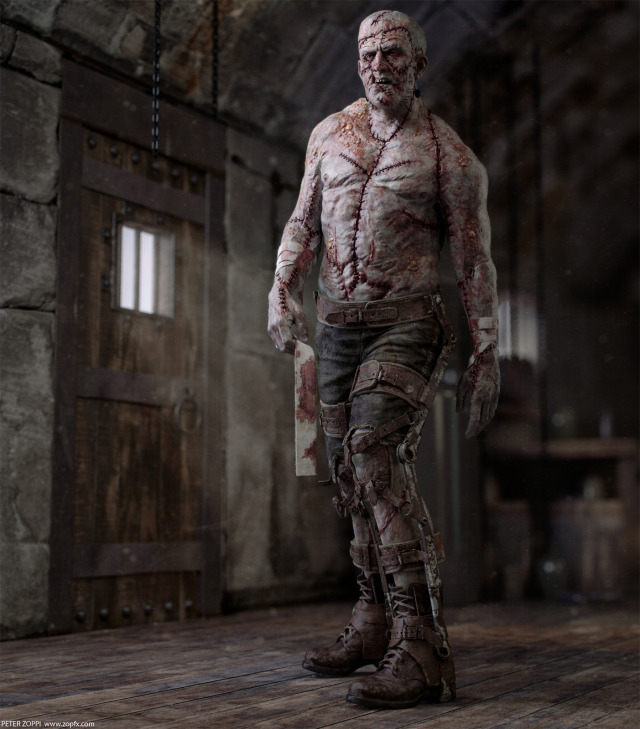
In this WebQuest, you'll spend time with both Victor Frankenstein and his Creature. Additionally, you'll meet some of the supporting cast in the novel Frankenstein. You'll learn about the science behind the book, the modern-day developments which show that much of Mary Shelley's science fiction is now fact, the literature that inspired Mary Shelley, and the environments in which the novel takes place.
At the end of this WebQuest, you'll write a letter to a family member explaining the story of either Victor Frankenstein or his Creature. (You get to choose which one of them most intrigues you.) Your letter must be written as if the characters in the novel are real people. Please do not write, "Dear Mom, I just read this great book called Frankenstein." If you had actually met either of these characters, you'd be as astounded by their stories as Mary Shelley's narrator, Robert Walton... and you'd want to share that knowledge with someone... preferably someone who wouldn't go blabbing your tale.
Without sounding like a crazy person, how would you explain what you've seen and heard? Write a one-page letter using specific information discovered during your WebQuest. Be sure to follow the appropriate personal letter format (see https://owl.english.purdue.edu/owl/resource/992/01/), and be sure that your handwriting is legible. (You may certainly type this assignment, but a handwritten letter is much more eighteenth century-oriented, don't you think?) See the "Evaluation" page for more specifics.
Process
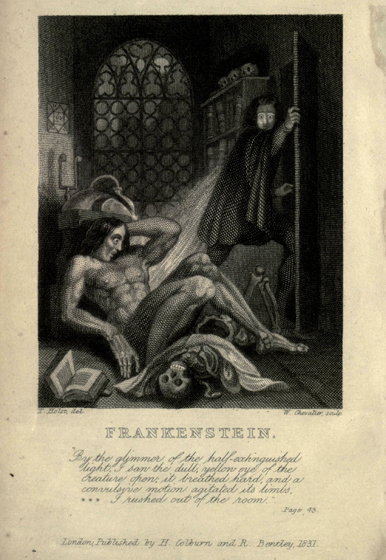
What should you know about Mary Shelley's world and the world of Frankenstein? Follow the instructions below to find out about the literature (and genres) that inspired Shelley, her personal background, and the basics (and not-so-basics) of the novel.
1. Romantic and Gothic Literary Genres: Shelley is the only author to have used both of these genres in the same novel. If you've read some Poe, you're familiar with both traditions in the short story format... but sustaining this throughout an entire novel is a masterful accomplishment, indeed. Here's a PowerPoint to explain more:
http://filecabinet3.eschoolview.com/02BB2D43-86D6-4332-A96A-FE7183219211/Romanticism-Gothic.ppt
2. Who was Mary Shelley, and what events in her life inspired her to write Frankenstein? This PowerPoint will explain the answers to those questions and more...
http://filecabinet3.eschoolview.com/02BB2D43-86D6-4332-A96A-FE7183219211/MaryShelley.pptx
3. Coleridge's poem "The Rime of the Ancient Mariner" is one of the longest in the English language, but you don't need to read/listen to more than five minutes of it in order to see why the Romantic and Gothic stylings of Coleridge's work inspired Mary Shelley. This poem is also quoted in Frankenstein, so you'll see explicit references to it as well as its influence.
https://www.youtube.com/watch?v=4EpuaCaPML8
If you prefer more "oomph" with your English poetry, Iron Maiden recorded a song called "Rime of the Ancient Mariner" that contains both direct quotes from Coleridge as well as an excellent lyric condensation of the original poem. And it rocks, if you're into metal music. There are some good live versions on YouTube, but the lyrics move quickly... so I've linked you to a lyrics-only video. Check out Maiden's "Live After Death" concert for a great live version of this song.
https://www.youtube.com/watch?v=NA2cGy_iDTk
4. Milton's Paradise Lost: one of the most amazing epic poems in English, Milton's work introduced the concept of the anti-hero... the villain you love to hate, but whom you actually understand. Here's a comprehensive study guide for the poem, which the Creature is deeply influenced by.
5. The Science of Life and Death in Shelley's novel: the science of Victorian England was primitive by today's standards, but Mary Shelley's thorough research rendered her science fiction believable. Check out this webpage from the British Library!
6. What did Victor Frankenstein's world look like? In the novel, Victor and his Creature spend most of their time in Geneva, Switzerland and Ingolstadt, Germany. Here are a couple of good pages on those cities so you can see the culture and landscapes of both:
Geneva (this one's in English and French if you're so inclined!): http://www.ville-geneve.ch/welcome-geneva/
Ingolstadt: A beautiful German city, this town is also host to a thriving university that Victor attends (and where the Creature is "born"). With a population of 125,000, Ingolstadt is mostly a tourist town today. But what was it like in Victor Frankenstein's day? Here's a page that explains about the university in particular:
http://knarf.english.upenn.edu/V1notes/univers.html
7. F r a n k e n s t e i n's C r e a t u r e: Chances are you have some preconceptions about the Creature, but who is he, really? What's his name? Is he actually green? Can he speak? Why is he called a "monster"? Without spoiling the plot, this webpage will clear up many common misconceptions about the Creature.
http://listverse.com/2013/10/29/10-things-you-never-knew-about-frankensteins-monster/
8. Have any of the concepts presented in Frankenstein actually made it into modern medicine? This thoughtful New York Times piece will answer that question:
http://www.nytimes.com/2012/07/09/arts/design/messing-with-mother-nature.html?_r=0
9. How does the narrative structure of Frankenstein contribute to the novel's believability and effectiveness? If you've ever read Chaucer's Canterbury Tales, you know just how effective a frame narrative can be. Here's how the concept works in Frankenstein:
http://crossref-it.info/textguide/frankenstein/7/374
10. Frankenstein in popular culture: Whether you have leftover questions, or whether you'd simply like to see how Frankenstein has infiltrated popular culture for almost 200 years, here's a super-comprehensive webpage that serves as a pathway to nearly any question you might have. Warning, though: there are spoilers on some of the subpages!
http://www.rc.umd.edu/editions/frankenstein/Pop/pop
11. Bonus Link for fun! In the novel, Frankenstein's creature is pieced together from many different source materials--not all of them human. Musician extraordinaire Edgar Winter used this concept when he composed his instrumental "Frankenstein." Here's a brief interview with Winter, followed by a performance of the song.
https://www.youtube.com/watch?v=RSLP1FCREBA
Evaluation
|
|
EXCELLENT- 5PTS |
GOOD- 4PTS |
SATISFACTORY- 3PTS |
NEEDS IMPROVEMENT- 2PTS |
UNSATISFACTORY- 1PT |
|
SUBJECT KNOWLEDGE |
Students will make reference in their letter to four or more of the links provided on the process page. |
Students will make reference in their letter to three links provided on the process page. |
Students will make reference in their letter to two links provided on the process page. |
Students will make reference in their letter to one of the links provided on the process page. |
Students do not refer to any links on the process page. |
|
ORGANIZATION and MECHANICS |
Letter is two pages in length, double-spaced, and uses proper grammar. |
Letter is two pages in length, double-spaced, and may contain minor spelling and/or grammatical errors. |
Letter is a page and a half long, double-spaced, but contains a few spelling and grammatical errors. However, these errors are not severe enough to inhibit reading. |
Letter is at least a page long, double-spaced, but contains spelling and grammatical errors that make it difficult to follow. |
Letter is less than one page long, double- spaced, and contains significant spelling and grammatical errors that make it difficult to follow. |
|
CONTENT OF EVENTS |
Students clearly state whether they’re writing about meeting Victor Frankenstein or his Creature, and use at least 3 detailed examples of things that sound unnerving, impossible, or intriguing. |
Students clearly state whether they’re writing about meeting Victor Frankenstein or his Creature, and use at least 2 detailed examples of things that sound unnerving, impossible, or intriguing. |
Students clearly state whether they’re writing about meeting Victor Frankenstein or his Creature, and use at least 1 detailed example of things that sound unnerving, impossible, or intriguing. |
Students do not clearly state which character they’re writing about, though one or two examples of unnerving, impossible, or intriguing things can be seen. OR Student uses appropriate examples of unnerving, impossible, or intriguing things, but discusses BOTH Victor and the Creature.
|
Students do not clearly state a chosen character, make no reference to any examples, and give no descriptions. |
|
CREATIVITY |
Students include all five of the following elements: period-accurate language, illustrations or doodles, cursive handwriting, a plausible detail that’s not in the book, and a distinctive writing voice. |
Students include four of the following elements: period-accurate language, illustrations or doodles, cursive handwriting, a plausible detail that’s not in the book, and a distinctive writing voice. |
Students include three of the following elements: period-accurate language, illustrations or doodles, cursive handwriting, a plausible detail that’s not in the book, and a distinctive writing voice. |
Students include one or two of the following elements: period-accurate language, illustrations or doodles, cursive handwriting, a plausible detail that’s not in the book, and a distinctive writing voice. |
Students include none of the following elements: period-accurate language, illustrations or doodles, cursive handwriting, a plausible detail that’s not in the book, and a distinctive writing voice. |
|
COMPLETION |
Students will show that they have extensively researched the website and completed the necessary reading/viewing/research. Letter must be thoughtful and reflective. |
Students will show that they have sufficiently researched the website and have put some thought into their descriptive letter. |
Students will show that they have somewhat researched the website and have put some thought into their descriptive letter.
|
Students will show that they did the bare minimum of research on the paper. Displays very little thought in their descriptive letter. |
Students will show that they did little to no research. There is no originality or thought in their descriptive letter.
|
Conclusion
As you've discovered, there's so much interest in (and controversy surrounding) Mary Shelley's Frankenstein that you can spend hours debating the merits of the novel--with nary a comment on its shortcomings. I deliberately didn't include anything about the novel's timeline, as we'll discuss that later in our study. (Plus, too much discussion early on would spoil the plot!)
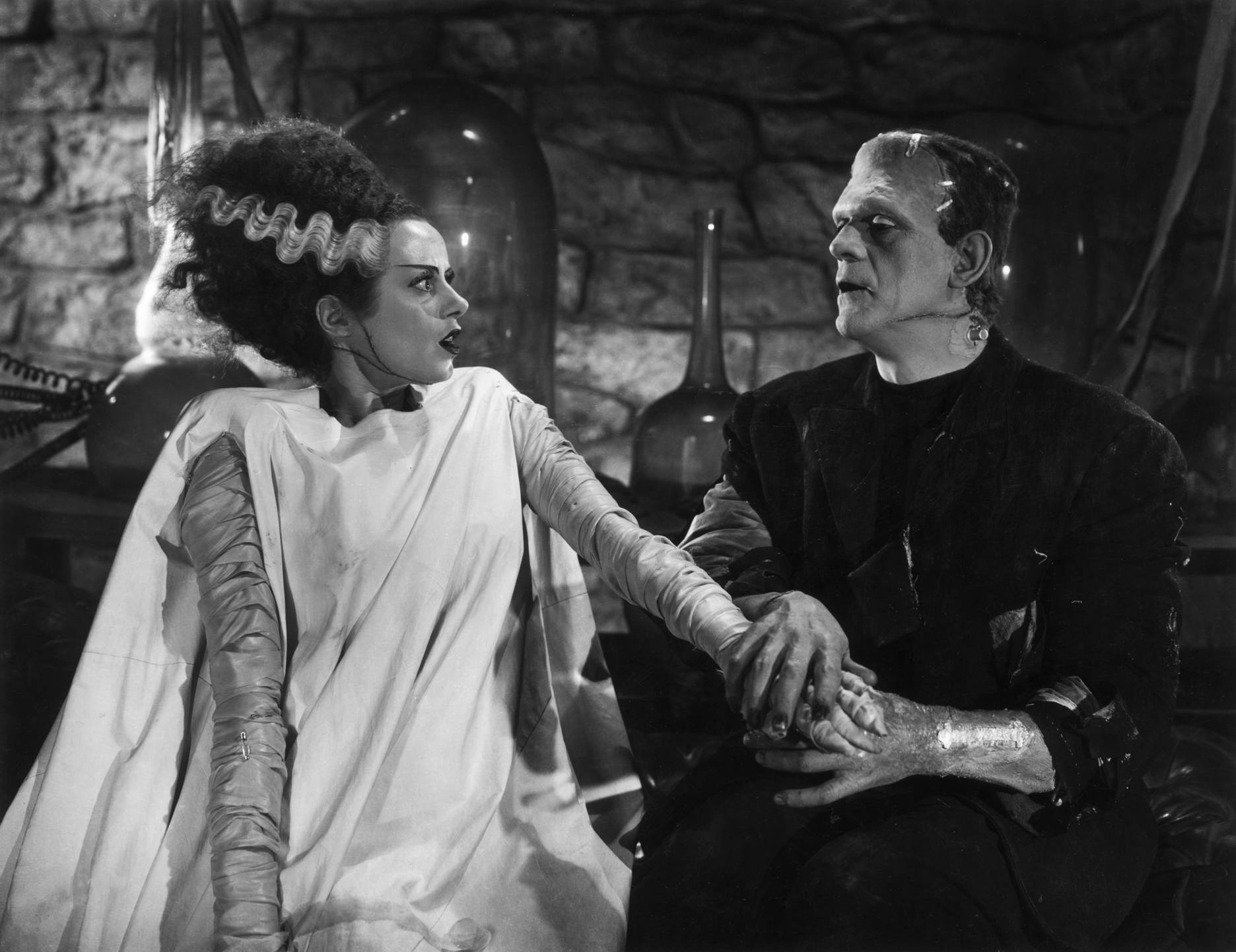
You'll find as you read the book that there are enough loose ends (and enough cracks in the novel's mortar) to develop short stories or even other novels. There have been countless Frankenstein-inspired horror movies over the past 100 years. Yes, it's true! The novel was immortalized in one of the first-ever silent films. Consider what's so compelling about this story. What's missing? Is there any part of the story you'd like to know more about? We'll discuss that near the end of the unit.
Teacher Page
Standards Covered in this WebQuest:
- ELACC9-10RL2: Determine a theme or central idea of text and analyze in detail its development over the course of the text, including how it emerges and is shaped and refined by specific details; provide an objective summary of the text.
- ELACC9-10RL3: Analyze how complex characters (e.g., those with multiple or conflicting motivations) develop over the course of a text, interact with other characters, and advance the plot or develop the theme.
- ELACC9-10RL5: Analyze how an author’s choices concerning how to structure a text, order events within it (e.g., parallel plots), and manipulate time (e.g., pacing, flashbacks) create such effects as mystery, tension, or surprise.
- ELACC9-10RL7: Analyze the representation of a subject or a key scene in two different artistic mediums, including what is emphasized or absent in each treatment (e.g., Auden’s “Musée de Beaux Arts” and Breughel’s Landscape with the Fall of Icarus).
- ELACC9-10RL9: Analyze how an author draws on and transforms source material in a specific work (e.g., how Shakespeare treats a theme or topic from Ovid or the Bible or how a later author draws on a play by Shakespeare.
- ELACC9-10W3: Write narratives to develop real or imagined experiences or events using effective technique, well-chosen details, and well-structured event sequences.