
Introduction
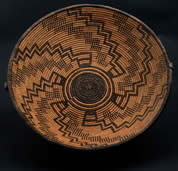
The Apache Indians are perhaps one of the best-known tribes in America. The Apache Indians lived in Arizona and northern Mexico. They were thought of as a commanding tribe with fierce warriors who were constantly fighting against the white man. The Apache and the Navajo spoke a similar dialect from the language known as Athabaskan.The Apache Indians were nomadic, meaning they moved frequently. They lived almost completely off the buffalo, including using buffalo skins for clothing and tent covers. They were among the first Indian tribe to learn to ride horses.
Task
Team Work
Students will be divided into groups of four and each group will be tasked with conducting research on 3 different Apache tribes (Mescalero, Chiricahua, and Plains). Students will prepare a one-paragraph summary of the Apache traditions. Some web sites on the various tribes include:
http://www.indians.org/articles/apache-indians.html
http://www.native-languages.org/apache_culture.htm
http://www.accessgenealogy.com/native/apache-tribe.htm
http://digital.library.okstate.edu/encyclopedia/entries/A/AP002.html
http://www.tshaonline.org/handbook/online/articles/bmk11
Process
Continued
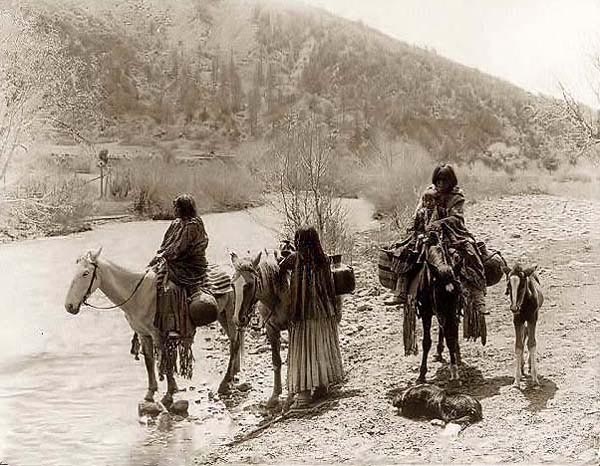
Each student group will conduct research to identify one unique tradition from each tribe and will prepare a PowerPoint presentation on those specific traditions. Students can use any of the following websites provided to them and any other sources that are pre-approved by the teacher. Some of the traditions that may be explored are dances, herbal medicine, shamanism, native dress, housing structures, song/music, food, among others.
http://www.folkways.si.edu/music-of-the-plains-apache/american-indian/album/smithsonian
http://www.impurplehawk.com/apache.html
http://www.fortsillapache-nsn.gov/index.php/tribal-history/food
http://www.youtube.com/watch?v=UUxkGbf-GaI
http://nativeamerican-art.com/apache-legend2.html
Evaluation
|
Webquest Evaluation Rubric |
||||
|
Beginning |
Developing |
Accomplished |
Score |
|
Overall Visual Appeal |
0 points
There are few or no graphic elements. No variation in typography. |
3 points
Graphic elements sometimes, but not always, contribute to the understanding of concepts, ideas and relationships. There is some variation in type size, color, and layout. |
6 points
Graphics and type styles contribute to the understanding of concepts, ideas and relationships. Differences in type size and color are used well and consistently. |
|
|
Mechanical Aspects |
0 points
There are more than 5 broken links, misplaced or missing images, badly sized tables, misspellings and/or grammatical errors. |
3 points
There are some broken links, misplaced or missing images, badly sized tables, misspellings and/or grammatical errors. |
6 points
No mechanical problems noted. |
|
|
Motivational Effectiveness of Introduction |
0 points
The introduction is purely factual, with no appeal to relevance or social importance |
3 point
The introduction relates somewhat to the learner's interests and/or describes a compelling question or problem. |
6 points
The introduction draws the reader into the lesson by relating to the learner's interests or goals and/or engagingly describing a compelling question or problem. |
|
|
Cognitive Level of the Task |
0 points
Task requires simply comprehending or retelling of information found on web pages and answering factual questions. |
3 points
Task is doable but is limited in its significance to students' lives. The task requires analysis of information and/or putting together information from several sources. |
6 points Task is doable and engaging, and elicits thinking that goes beyond rote comprehension. The task requires synthesis of multiple sources of information, and/or taking a position, and/or going beyond the data given and making a generalization or creative product. |
|
|
Clarity of Process |
0 points Process is not clearly stated. Students would not know exactly what they were supposed to do just from reading this. |
3 points Some directions are given, but there is missing information. Students might be confused. |
6 points Every step is clearly stated. Most students would know exactly where they are at each step of the process and know what to do next. |
|
|
Relevance & Quantity of Resources |
0 points Resources provided are not sufficient for students to accomplish the task. OR There are too many resources for learners to look at in a reasonable time. |
3 point There is some connection between the resources and the information needed for students to accomplish the task. Some resources don't add anything new. Some links carry information not ordinarily found in a classroom. |
6 points There is a clear and meaningful connection between all the resources and the information needed for students to accomplish the task. Every resource carries its weight. Links make excellent use of the Web's timeliness and colorfulness. |
|
|
Clarity of Evaluation Criteria |
0 points Criteria for success are not described. |
3 points Criteria for success are at least partially described. |
6 points Criteria for success are clearly stated in the form of a rubric. Criteria include qualitative as well as quantitative descriptors. The evaluation instrument clearly measures what students must know and be able to do to accomplish the task. |
|
|
Thoroughness of Teacher Section |
0 points
No information in teacher section. |
3 points
Teacher section partially filled out |
6 points
Teacher section completed and contains resources to help teacher effectively implement the webquest |
|
|
Total Score |
/48 |
Conclusion
 Dear Researchers, Congratulations! Your team has discovered and presented vital information pertaining to Native Culture. The information presented today gives great insight to our past but also connects us with our present time. Thank you for your hard work. Sincerely,Teacher Angelica and Teacher Stanson
Credits
The following were used to conduct reseach on Native Culture:
http://www.bigorrin.org/apache_kids.htm
http://www.native-languages.org/apache_culture.htm
http://education-portal.com/academy/lesson/apache-tribe-history-facts-culture.html
http://www.greatdreams.com/apache/apache-tribe.htm
http://www.legendsofamerica.com/na-apache.html
http://www.indians.org/articles/apache-indians.html
http://www.native-languages.org/apache_culture.htm
http://www.accessgenealogy.com/native/apache-tribe.htm
http://digital.library.okstate.edu/encyclopedia/entries/A/AP002.html
http://www.tshaonline.org/handbook/online/articles/bmk11
Teacher Page
Native Culture
Teacher Page
A WebQuest for 8th Grade (Language Arts)
Designed by
Angelica, Christy, and Stanson
team#1@wnmu.edu
[img_assist|nid=21938|title=tmi00911.jpeg|desc=|link=none|align=center|width=395|height=281]
What did you learn from this activity?
This new format of teaching than the traditional methods give students the opportunity to become more engaged in the learning process. It gets the students more involved and gives them the chance to do something new and unique. -Angelica RojasOther ideas, comments or suggestions related to this activity.
Webquest require students to take on roles where they are part of a team that must accomplish the task. They have to become experts on a certain topic and share this information with their group.This also makes them accountable for the assignment and their contribution to their team. I also found this activity to be fun to create and look forward to implementing this “new” format of teaching to my future students. -Angelica Rojas