
Introduction
|
Author |
Berta Sanchez |
|
Curriculum |
Social Studies |
|
*Subject(s) |
History |
|
Topic or Unit of Study |
American Revolution |
|
*Grade/Level |
7th |
Summary:
This lesson plan provides an overview of what led to the American Revolution. This lesson plan will also provide students with the opportunity to research and learn about important events during the American Revolution, and about some of the important people that had a connection or contributed to those important events.Students will also be using existing and new techniques in researching such information from books, websites, and articles.
Objective:
Students will read about, discuss, and research the events leading to the American Revolution. Students will be able to identify important events and people of the Revolutionary war era. Students will be able to identify cause and effects of war issues during the American Revolution. Students will accomplish these goals by working independently, working in groups, and by participating in class discussions and activities.
**"What were some important events, places, and dates during the revolutionary war; and who were some important people who were connected to these events, places, and dates?"**
Task
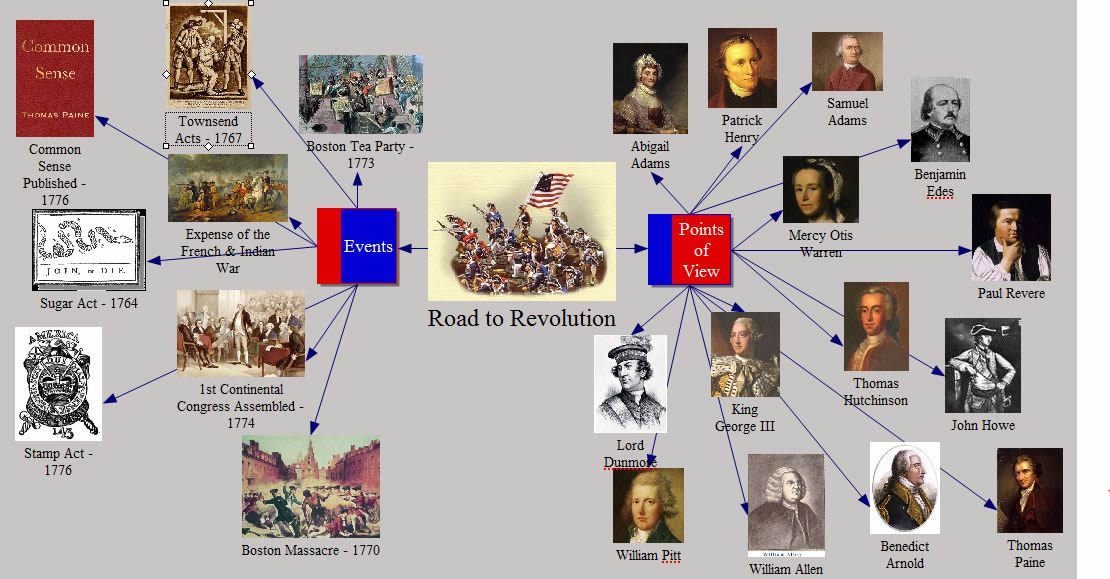
Students will be studying, researching, discussing, and actively participating in activities, assignments, and projects about the American Revolution.
- Students will also watch some videos about the American Revolution.
- Students will be defining a list of american revolution related terms.
- Students will choose one important person related to the American Revolution and write a summary about them and put together a project as instructed by teacher.
- Students will be seperated into small groups to work on different activities and worksheets.
- Students will be responsible for doing research with provided websites and books; and they will have to take notes on videos presented.
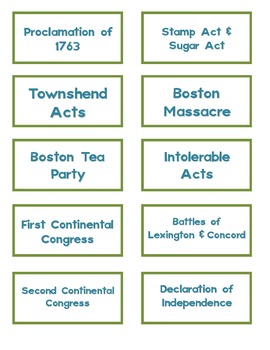
- One activity will consist of student making flash cards with important events, people, and locations having to do with The American Revolution.
- Students will participate in a class game of unit trivia in which the class will use the flash cards created by all students.
- Students will collect all notes, worksheets, drawings, and other work (as instructed by the teacher) in a notebook created by students.
- Students will take a large construction sheet folded in half. They will then insert lined papers in this construction sheet folder.
- Students will write "The American Revolution" on the front of the folder, along with their name.
- Students will take notes on the lined paper.
- They will add there drawings into the folder.
- They will staple all work in this folder at the end of lesson on the 5th day.
Process
Phase 1: (Monday)
Briefly introduce the American Revolution to the class.
***The American Revolution was a political disturbance that took place between 1765 and 1783. During this time colonists in the Thirteen American Colonies rejected the British monarchy and aristocracy. They also overthrew the authority of Great Britain, and founded the United States of America.
**Ask students what they know about the American Revolution and talk about it.
Have students watch the 11 minute youtube video titled:
Tea, Taxes, and The American Revolution: Crash Course World History #28
http://www.youtube.comwatch?v=HlUiSBXQHCw
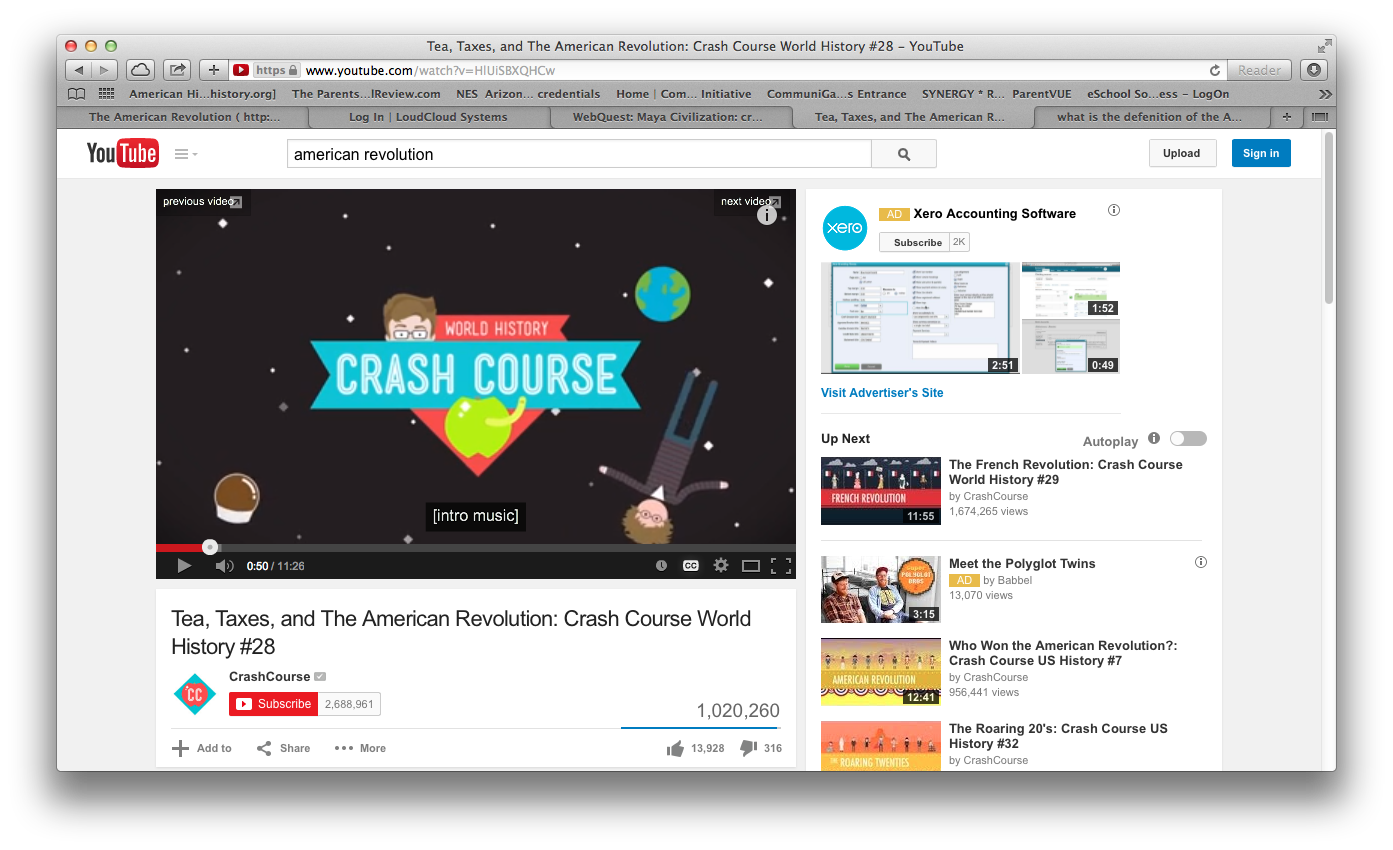
Have a class discussion after students watch the video.
Discuss what students learned about the video they just watched.
Have students start taking notes on what students shared and what they watched on the video while discussing it with a partner.
**Differentiated Instruction:
For those students who need a little extra help due to their different learning abilities and different learning levels, I will have them pair up with a higher learning level buddy. This buddy will assist them as needed and and will allow student to copy their notes or have me make a photo copy of notes for the other student. This buddy will receive extra credit or a privilege option for the help they provide their partner.
Talk about what the next few days will be like on this lesson.
Homework:
- Have students choose one important event or person from the American Revolution lesson.
- have them write a brief summary about the event, document, person, land or object.
- have them draw a picture about their event (examples: tea cup, face of person, patriot, loyalist, ship, document...etc.)
- have students look for a water or juice bottle to complete this project due Wednesday.
Adams, John - Second President of the United States
Adams, Samuel - American Revolutionary
Allen, William - Loyalist - former mayor of Philadelphia
Allen, Ethan - American Revolutionary War patriot, hero, and politician.
Franklin, Benjamin - American Statesman
Franklin, William - Loyalist, Govenor of New Jersey, Son of Ben Franklin
Greene, Nathanael - American General during the American Revolutionary War
Hancock, John - American Politician, Entrepreneur, and Soldier
Henry, Patrick - Founding father of American Revolutionary War and governor of Virginia
Howe, John - Loyalist printer during the American Revolution
King George III
Lee, Francis Lightfoot - Active in Virginia politics and signer of the Declaration of Independence
Paine, Thomas - Author of "Common Sense" and Revolutionary
Prescott, William - American colonel in the Revolutionary War
Revere, Paul - American Activist and Artisan
Rush, Benjamin - Signatory of the Declaration of Independence
Warren, Joseph - Doctor, Soldier and Statesman of the American Revolution
Washington, George - First President of the United States
Wilson, James - Signer of the Declaration of Independence
| 1754-1763 | |||
|---|---|---|---|
| The French and Indian War | |||
| 1754 | |||
| June 19-July 11 | The Albany Congress | ||
| 1763 | |||
| Oct. 7 | Proclamation of 1763 | ||
| 1764 | |||
| April 5 | The Sugar Act | ||
| September 1 | The Currency Act | ||
| 1765 | |||
| March 22 | The Stamp Act | ||
| March 24 | The Quartering Act of 1765 | ||
| May 29 | Patrick Henry's "If this be treason, make the most of it!" speech | ||
| May 30 | The Virginia Stamp Act Resolutions | ||
| Oct. 7-25 | The Stamp Act Congress | ||
| 1766 | |||
| March 18 | The Declaratory Act | ||
| 1767 | |||
| June 29 | The Townshend Revenue Act | ||
| 1768 | |||
| August 1 | Boston Non-Importation Agreement | ||
| 1770 | |||
| March 5 | The Boston Massacre | ||
| 1772 | |||
| 1773 | |||
| May 10 | The Tea Act | ||
| Dec. 16 | The Boston Tea Party |
||
| 1774 | |
|---|---|
| March 31 | Boston Port Act, one of the "Intolerable Acts" |
| May 20 | Administration of Justice Act, one of the "Intolerable Acts" |
| May 20 | Massachusetts Government Act, one of the "Intolerable Acts" |
| June 2 | Quartering Act of 1774, one of the "Intolerable Acts" |
| June 22 | Quebec Act, one of the "Intolerable Acts" |
| Sept. 5-Oct. 26 | The First Continental Congress meets in Philadelphia and issues Declaration and Resolves |
| Oct. 10 | Battle of Point Pleasant, Virginia (disputed as to whether it was a battle of the American Revolution or the culmination of Lord Dunmore's War) |
| Oct. 20 | The Association (prohibition of trade with Great Britain) |
| Oct. 24 | Galloway's Plan rejected |
| 1775 | |
| March 23 | Patrick Henry's "Give me liberty or give me death" speech |
| Apr. 18 | The Rides of Paul Revere and William Dawes |
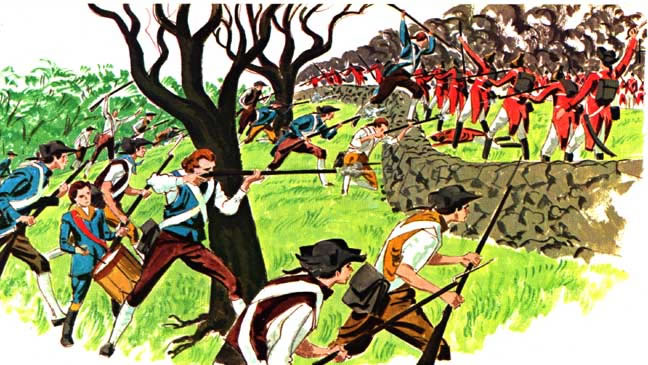
| Apr. 19 | Minutemen and redcoats clash at Lexington and Concord "The shot heard 'round the world." |
| May 10 | Ethan Allen and the Green Mountain Boys seize Fort Ticonderoga |
| May 10 | The Second Continental Congress meets in Philadelphia |
| June 15 | George Washington named Commander in Chief |
| June 17 | Battle of Bunker Hill: The British drive the Americans from Breed's Hill |
|
1781 March 2 |
Articles of Confederation adopted |
| 1787 | |
|---|---|
|
Sept. 17 |
U.S. Constitution signed |
(http://www.ushistory.org/declaration/revwartimeline.htm)
Phase 2: (Tuesday)
Write the important key words/terms list up on the board.
Have students write these key words/terms down and then have them work in small groups to find the definition or brief explanation of the term in their textbooks.
key words/terms: Continental Army, blocade, patriots, loyalist, "The Crisis", calvary, neutral, ratify, mercenaries, recruit, deserted, inflation, ambush, liberty, justice, regiment, rebel, smuggle, repeal, disguise, treason, preamble, Constitutional, taxes, representation, and revolution.
-The teacher will walk around the room to make sure students are on task and being productive.
-The teacher will be available to answer questions and direct students to needed resources or pages.
-The students will place this vocabulary list into their "American Revolution" folder when they are done with it.
Differentiatied Instruction:
The students with different learning abilities and learning levels or difficulties will get to break up their vocabulary list in two parts and complete in two days instead of one. If students are still having difficulty, teacher will be available before or after school to help student complete work.
Homework:
- Students will choose one key revolutionary war event and make a graphic organizer called the four corners.
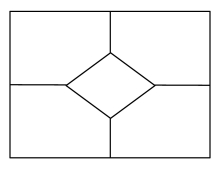
Middle Section: What? (Event)
Corner 1: Who?
Corner 2: Where?
Corner 3: When?
Corner 4: Why?
-Students need to add a simple drawing to some of these sections, as possible.
This homework assignment is due tomorrow (Wednesday). It is to be turned in at turned in at beginning of class. After the teacher briefly reviews the homework assignments, teacher will pass back homework for students to add to their American Revolution folder.
Phase 3: (Wednesday)
-Pass out worksheet on the French and Indian War.
-Have students read article and answer questions at end of article.
-Pass out worksheet on cause and effects of the French and Indian War.
-Have students put these completed worksheets in their "American Revolution" folder.
-The teacher will assign students to groups.
-Once students are in their assigned groups, the teacher will pass out a list of the assigned key terms, key events and dates, and infulential/important people of the revolutionary war period for each group.
-The teacher will pass out index cards and have students start creating the flash cards on key terms, key events and dates, and influential/important people of the revolutionary war period. (Students can use their textbooks and any work in their American Revolution folders)
-Colect flash cards before class ends.
Homework:
-Hand out a map worksheet (of the American Revolutionary war areas), at the end of class.
-Have student color and label the map, they can refer to their textbook page...
Phase 4: (Thursday)
Have students watch the following videos:
- Watch YouTube video: Schoolhouse Rock – The Shot Heard Round the World. (www.youtube.com/watch?v=EdDgmwEljl8
- Watch YouTube video: Tea Party – Schoolhouse Rock – No More Kings. (www.youtube.com/watch?v=t-9pDZMRCpQ
-Pass out the Battle Information Sheet. Give students 10 minutes. If students do not finish the worksheet, it is HOMEWORK.
TO BE TURNED IN FRIDAY.
-Have students break into groups and continue creating flash cards on assigned information.
-The teacher will walk around the room to make sure students are on task and also to answer questions as needed.
-Collect flash cards before class ends.
Phase 5: (Friday)
***HAVE STUDENTS TURN IN THEIR FOLDERS....AND THEN....
-Have students Stand at their desk.
-Start the Unit Trivia Game using the flash cards created by students in the past couple of days.
-Go down the rows and start the questions....if a student gets it wrong, they must sit down and ask the question again to the next student...until the question is answered correctly.
-Continue asking questions until the last student standing.
Differentiated Instruction:
I will give all students a fair chance to answer questions by reading the question for each student slowly, will count to 10 (in my head as to not make students nervous by making it known that they have a specific amount of time to answer), and give some clues as needed.
OFFER PRIZE OR FUN PRIVILEGE TO THE LAST STUDENTS STANDING BY THE END OF THE GAME.....
Evaluation
RUBRIC: THE AMERICAN REVOLUTION UNIT
|
PERCENT: |
1 FAIR |
2 GOOD |
3 EXCELLENT |
|
10% PARTICIPATION
|
DID VERY LITTLE PARTICIPATION DURING CLASS DISCUSSION AND GROUP ACTIVITIES. |
PARTICIPATED WELL DURING CLASS DISCUSSION AND GROUP ACTIVITIES. |
PARTICIPATED OFTEN AND ACCURATELY DURING CLASS DISCUSSION AND GROUP ACTIVITIES. |
|
20% HOMEWORK
|
COMPLETED A FEW HOMEWORK ASSIGNMENTS. SOME HOMEWORK WAS COMPLETELY CORRECTLY. HOMEWORK WAS NOT VERY NEAT. |
MOST HOMEWORK WAS TURNED IN COMPLETE AND MOSTLY FREE OF ERRORS. |
ALL HOMEWORK WAS TURNED IT AND ON TIME. ALL HOMEWORK WAS CORRECT AND NEATLY DONE. |
|
10% PROJECT
|
PROJECT WAS POORLY PUT TOGETHER, INCOMPLETE, OR NOT TURNED IN ON TIME.
|
PROJECT WAS COMPLETE AND TURNED IN ON TIME. |
PROJECT WAS VERY NICELY PUT TOGETHER, ACCURATE, AND TURNED IN ON TIME. |
|
40% FOLDER AND ALL ITS CONTENTS (NOTES, IN CLASS ASSIGNMENTS, AND HOMEWORK ASSIGNMENTS IN FOLDER).
|
STUDENT HAD SOME CLASS ASSIGNMENTS, MOST NOTES, AND HOMEWORK ASSIGNMENTS IN FOLDER. SOME WORK WAS ORGANIZED BY DATE. |
STUDENT HAD MOST CLASS ASSIGNMENTS, MOST NOTES, AND MOST HOMEWORK ASSIGNMENTS IN FOLDER BUT NOT ALL WORK WAS PUT IN ORDER BY DATE. |
STUDENT HAD ALL CLASS ASSIGNMENTS, ALL NOTES, AND ALL HOMEWORK IN FOLDER. ALL WORK WAS NICELY DONE AND ORGANIZED BY DATE. |
|
|
|
|
|
|
20% KNOWLEDGE OF UNIT LESSON MATERIAL
|
THE STUDENT WAS NOT GRASPING THE KNOWLEDGE OF THE LESSON CONTENT ACCORDING TO THEIR WORK AND PARTICIPATION. |
THE STUDENT KNEW SOME MOST OF THE LESSON CONENT ACCORDING TO THEIR WORK AND PARTICIPATION. |
THE STUDENT KNEW MOST, IF NOT ALL LESSON CONENT ACCORDING TO THEIR WORK AND PARTICIPATION. |
|
100%
ADDITIONAL NOTES TO STUDENT:
|
Conclusion
https://datax.teacherspayteachers.com/thumbitem/Events-Leading-to-the-A…
Students will be able to discuss and participate in providing information regarding the American Revolution battles, events, dates, and important people who contributed to this era.

Credits
Resources used in lesson and also for students to use when doing their work.
Videos:
- Schoolhouse Rock – The Shot Heard Round the World. (www.youtube.com/watch?v=EdDgmwEljl8
- Tea Party – Schoolhouse Rock – No More Kings. (www.youtube.com/watch?v=t-9pDZMRCpQ
- Tea, Taxes, and The American Revolution: Crash Course World History #28(http://www.youtube.comwatch?v=HlUiSBXQHCw)
Books:
- *Liberty! How the Revolutionary War Begun By: Lucille Recht Penner
- social studies textbook
Websites:
- http://www.history.com/topics/american-revolution
- http://www.ushistory.org/declaration/revwartimeline.htm
- http://www.historyplace.com/unitedstates/revolution/revwar-75.htm
- http://www.thepotters.com/puzzles.html (Word Search Puzzle)
Teacher Page
Materials needed:
- list of websites
- worksheets
- text book
- additional books
- index cards
- colored pencils
- glue
- scissors
- tape
- white copy paper
- lined paper
- construction paper in variety of colors
- plastic water or juice botte
- (students to provide this themselves for their project, but if they do not have access to one, I can provide it for them)
- a few prizes and/or a list of privileges students can choose from --- when it calls for this
-------------------------------------------------------------------------------------------------------------------------------------------------
*EXTRA CREDIT: Word Search on the American Revolution
[img_assist|nid=21414|title=Extra Credit - WordSearch|desc=|link=none|align=left|width=505|height=640]
______________________________________________________________
*I used the following Social Studies State Standards:
CALIFORNIA SOCIAL STUDIES COMMON CORE STANTARDS FOR 6-8 GRADES:
Determine the central ideas or information of a primary or secondary source; provide an accurate summary of the source distinct from prior knowledge or opinions.
Determine the meaning of words and phrases as they are used in a text, including vocabulary specific to domains related to history/social studies.
Describe how a text presents information (e.g., sequentially, comparatively, causally).
Integrate visual information (e.g., in charts, graphs, photographs, videos, or maps) with other information in print and digital texts.
--------------------------------------------------------------------------------------------------------------------------------------------
*I used the following standards when integrating some English language Arts to my lesson...
CALIFORNIA ENGLISH LANGUAGE ARTS COMMON CORE STATE STANDARDS 7TH GRADE:
Comprehension and Collaboration:
Engage effectively in a range of collaborative discussions (one-on-one, in groups, and teacher-led) with diverse partners on grade 7 topics, texts, and issues, building on others' ideas and expressing their own clearly.
Presentation of Knowledge and Ideas:
Research to Build and Present Knowledge:
___________________________________________________________________________________________________
Extra reading for teacher
[img_assist|nid=21415|title=Teachers guide as extra reference|desc=|link=none|align=left|width=495|height=640]