
Introduction
The lesson will strengthen the skills of student in performing the fundamental operations of integers. Knowlegde of these will serve as an axiom/guide in performing said operations. In addition, this will help students solve problems including real life situations in albegra. This section also discusses how an application of the properties of real numbers in real life situation can be helpful in sustaining harmonious relationships among people.
Task
The goal of this assignment is for each of the student to gain knowlegde about the different properties of the operation of integers. This knowledge will be obtained through the Internet using the Websites provided.
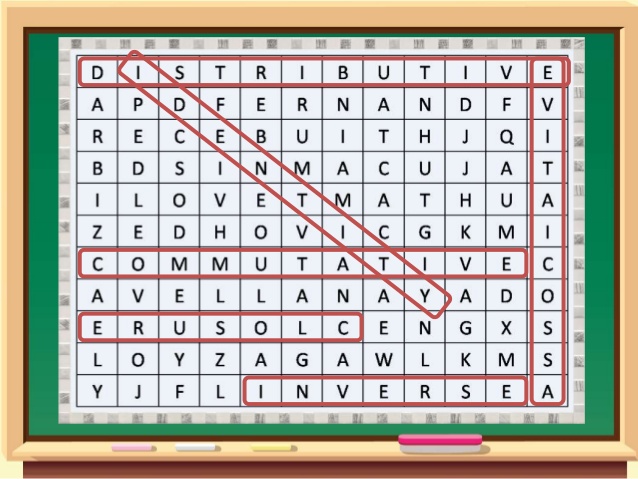
The student will be expected to state and illustrate the different properties of the operations on integers:
a. closure d. distributive
b. commutative e. identity
c. associative f. inverse
To rewirte given expressions according to the given properties
Process
Process
Properties of the operation on Integers
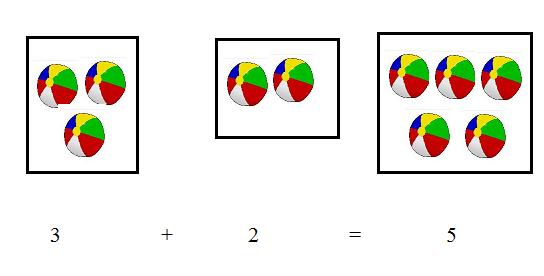
1. Closure Property
If a and b are two integers: (a + b), (a - b), and (a x b) is also an integer.
Example:
2. Commutative Property
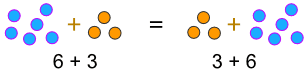
This property states that changing the order of the addends does not affect the sum. e.g a+b=b+a or ab=ba
Example:
3. Associative Property
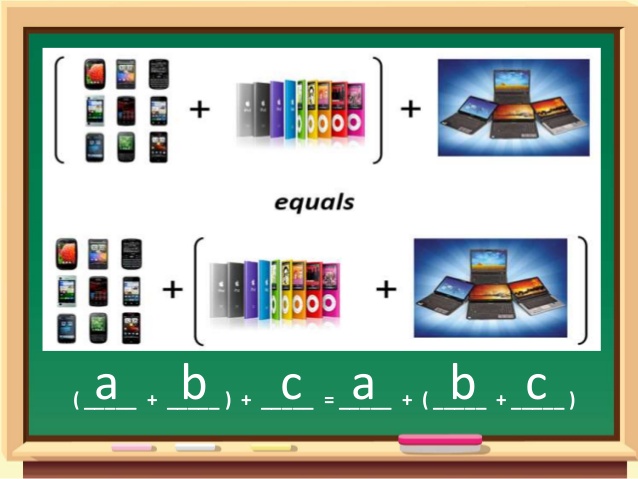
This property states that changing the grouping of numbers being added does not change its value. e.g (a+b)+c=a+(b+c)
Example:
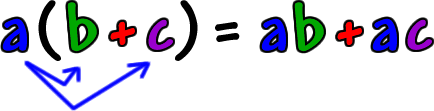
4. Distributive Property
This property states that when two numbers have been added/subtracted and then multiplied by a factor, the result will be the same when each number is multiplied by the factor and the products are then added/subtracted. e.g a(b+c)= ab+ac
Example:
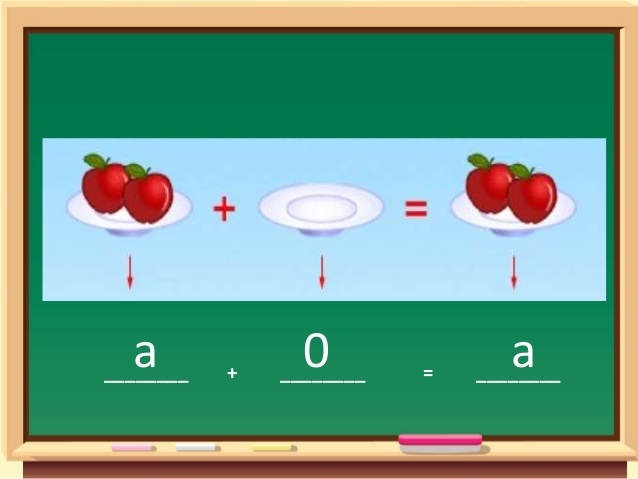
5.1 Identity Property for Addition
states that the sum of any number and zero is the number itself. e.g a+0=a
Example:
5.2 Identity Property for Multiplication
states that the product of any number and one is the number itself. e.g a*1=a
Example:

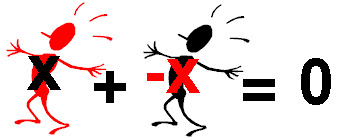
6.1 Inverse Property for Addition
states that the sum of any number and its additive inverse is zero. e.g a+(-a)=0
Example:
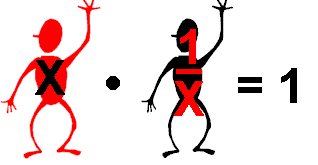
6.2 Inverse Property for Multiplication
states that the product of any number and its multiplicative inverse or reciprocal is 1. e.g a*1/a=1
Example:
Evaluation
State what property are use.
1. 14(mn)=(14m)n
2. -k*1 = -k
3. -4(2+3) = (-4*2) + (-4*3)
4. 65 + t= t + 65
5. p = 0+p
6. 1250 + (-1250) = 0
7. (x + p) + (r + t) = (r + t) + (x + p)
8. -3 (x + 8) = -3x + (-3)(8)
9. 1 = (-7) + (-1/7)
10. xy = yx
Conclusion
Conclusion
The lesson on the properties or real numbers explains how numbers or values are arranged or related in an equation. It further clarifies that no matter how these numbers are arranged and what processes are used, the composition of the equation and the final answer will still be the same. Our society is much like equations - composed of different people with varied personalities, perspectives and experiences. We can choose to look at the differences and forever highlight one's advantage or superiority over the others. Or we can focus on the commonality among people and altogether, work for the common good. A peaceful society and harmonious relationship starts with recognizing, appreciating and fully maximizing the positive traits that we, as a people, have in common.
Credits
Teacher Page
This webquest state and illustrate the different properties of the operation on integers.