
Introduction

The town of Merrimack is building it's own zoo! For animals to live a happy life in the zoo, they need to live in an area that is similar to where they would live in the wild. This area is called their habitat. The zoo gives animals the food, water, and shelter that the animal needs to survive. Because each animal has different needs, each habitat will be different.
An animal like the polar bear would not survive in the desert. That's because it lives in an arctic habitat where it is cold and has a lot of water for swimming. A camel would not be able to live in the arctic. It's natural habitat is the desert because all of the camel's needs are met there.
It is important for us to learn about habitats because every living thing has a habitat, even humans and our pets. To keep animals healthy and happy, like zoo animals, we need to be able to provide them the proper habitat. Having an understanding of different habitats gives us a good idea of what life would be like there and what animals might live there.
Today you will be designing a habitat for an animal that will be added to Merrimack's new zoo!
Task

Our class has been asked to help pick an animal for the new zoo and design its home! They want exciting animals that people will want to come see and the animal has to be able to survive in the zoo exhibit.
You will be working in a team of four to pick and animal and design it's habitat. Your team will start by learning about different habitats and the animals that live there. Once you find a habitat that you think is intersting, you will pick an animal that lives there. Remember, the zoo wants to add intersting animals to get people to come to the zoo. Then you will start working on a plan for the habitat, each member of your team will have a specific job.
- Vegitation Visionary
- Food Guru
- Space Designer
- Architect
Once your teams knows what the animals habitat will look like, as a group you will build a model of that habitat. This will give the class and zoo builders an idea what it will zoo like completed. You will present your habitat to the class and zoo builders. Make sure to explain why that animal is interesting and why that habitat is the right one for the animal.
Process
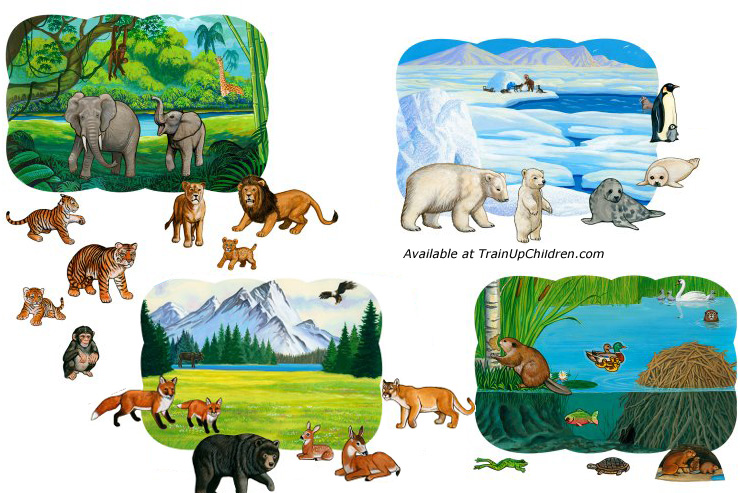
1. You will be working in groups for this project. Miss. Shaughnessey has selected your groups already, they will be posted on the board. We will be working in the computer lab. Make sure you are sitting at computers with your group. Fill out this worksheet as a group as your go along.
2. You will start by looking at different habitats as a group. Go to these website and where you can watch different videos about what a habitat is and learn about different kinds of habitats.
http://www.pbslearningmedia.org/resource/idptv11.sci.life.eco.d4khab/habitat/
http://www.brainpopjr.com/science/habitats/arctichabitats/preview.weml
3. As a group pick the habitat you like most. If you have trouble deciding you may vote for habitats and pick the one with the most votes.
4. This website will give you even more information about your habitat! The pictures can be a big help in telling you what the habitat is like. Look at the list of animals that live in that habitat.
http://www.skyenimals.com/browse_habitat.cgi
5. Brainstrom some animals that might live in your habitat and as a group decide on the animal you want to join the zoo. Once you have picked an animal this website will give you information on your animal. You can also get books from the library if you would like.
http://a-z-animals.com/animals/

Each group member should now select a role. As you work you will fill out a worksheet with information.
- Vegitation Visionary: You will learn about the different plants in your animals habitat. Is there a lot of grass, what if there is no grass? What do the plants look like, can you find any examples? What plants will you put in the exhibit. Worksheet
- Food Guru: What kind of food will your animal eat? Do they eat meat or plants? What must the zoo feed them? Worksheet
- Space designer: What is the land like in your habitat? Are there mountains, is there a lot of water, is it dry and sandy. Your job is to think about the space the animal is living in and make sure if fits the animal. Is it hot or cold? Worksheet
- Architecht: You are building shelter for the animal. What might it sleep in or where might it go for shade. How big should the exhibit be? How big is the animal does it need a lot of space to run around? Worksheet
6. Each member will present their information back to the group. This way everyone will know what the animals habitat will look like and what the animal needs.
7. As a group you will build a model of your habitat. A shoe box will be your exhibit and you must decorate it to demonstrate what your animals habitat will look like. Make sure you include your animal or animals inside the habitat too! Each job will be responsible for adding their parts to the model (ex. Vegitation Visionary will make plants).
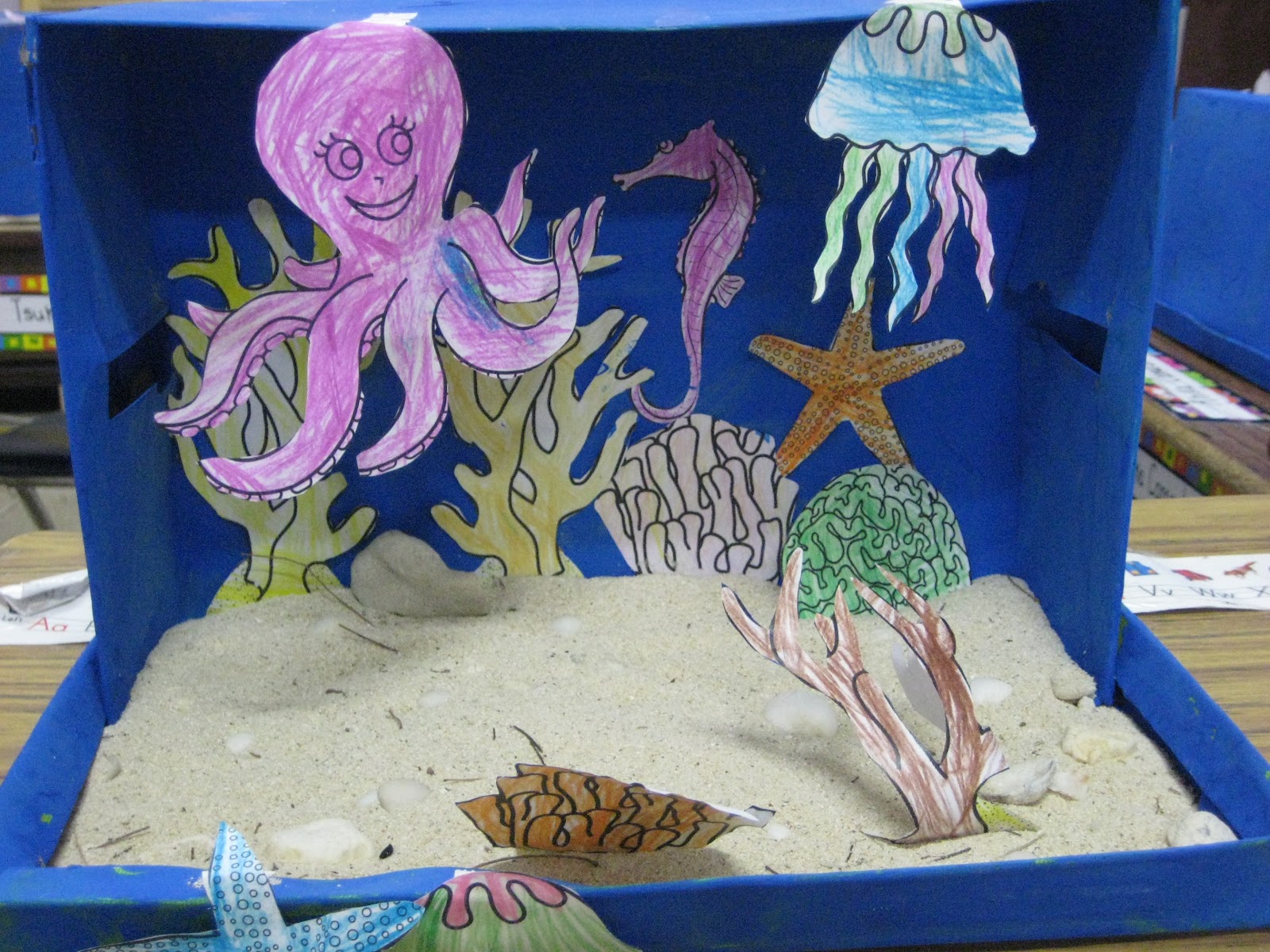
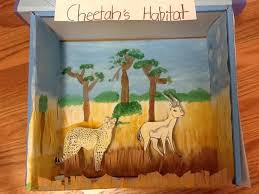
8. You will present your model to the class! Tell us about your animal and the habitat. Why did you design the habitat the way you did!
Evaluation
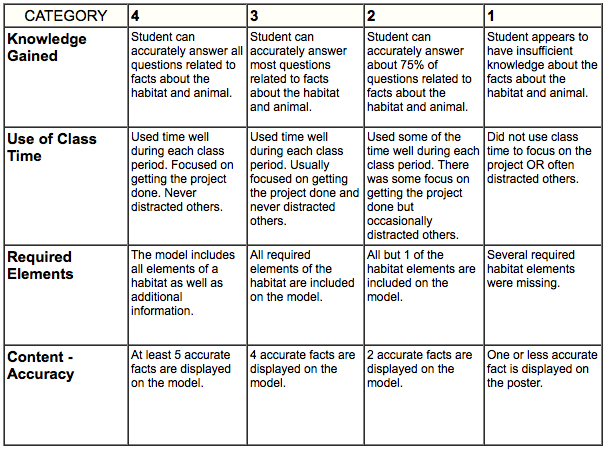
This is the criteria students will be graded on. Students will be graded as a group.
Conclusion

The town is so excited for the new zoo! Thank you so much for helping to pick an animal that will live in the zoo and making sure it will live a happy and healthy life there. Because of you, zoo builders will know exactly what the animal needs in its habitat, they will have a much easier time completing the exhibit thanks to your plans and model.
Credits
References:Animal Fact Sheets. (n.d.). Retrieved November 20, 2014, from http://www.defenders.org
Animal Habitats For Kids. (n.d.). Retrieved November 20, 2014, from http://www.skyenimals.com/browse_habitat.cgiHabitat. (n.d.). Retrieved November 20, 2014, from http://www.pbslearningmedia.org/resource/idptv11.sci.life.eco.d4khab/ha… Home. (n.d.). Retrieved November 20, 2014, from http://rubistar.4teachers.org/index.phpSweger, K. (n.d.). School Zoo Adventure. Retrieved November 20, 2014, from http://www.nycsd.k12.pa.us/tchr/sweger/questks/Welcome to A-Z Animals. (n.d.). Retrieved November 20, 2014, from http://a-z-animals.com
Teacher Page
The following standards will be met through this webquest.
CCSS.ELA-LITERACY.RI.1.6
Distinguish between information provided by pictures or other illustrations and information provided by the words in a text.
| 3-LS4-3. | Construct an argument with evidence that in a particular habitat some organisms can survive well, some survive less well, and some cannot survive at all. |
|---|