
Introduction
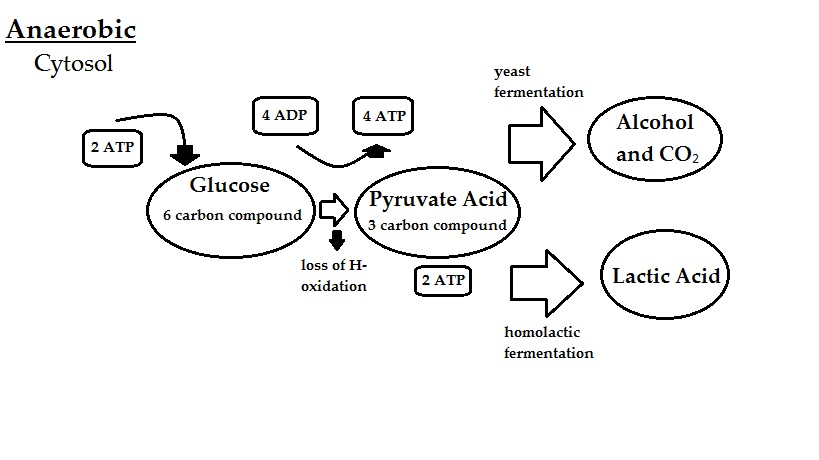
Anaerobic respiration is the form of respiration that does not use oxygen.
Organisms can make ATP without oxygen through the process of fermentation, the process of releasing energy from food molecules by producing ATP in the absence of oxygen. The two forms of fermentation are lactic acid fermentation and alcoholic fermentation.
Lactic acid fermentation produces lactic acid and regenerates NAD+ to allow glycolysis to continue. When your body cannot get enough oxygen, such as during rapid exercise, lactic acid is produced in your muscles because without enough oxygen the body cannot produce ATP. So, the muscles in your body will rapidly produce ATP through lactic acid fermemtation.
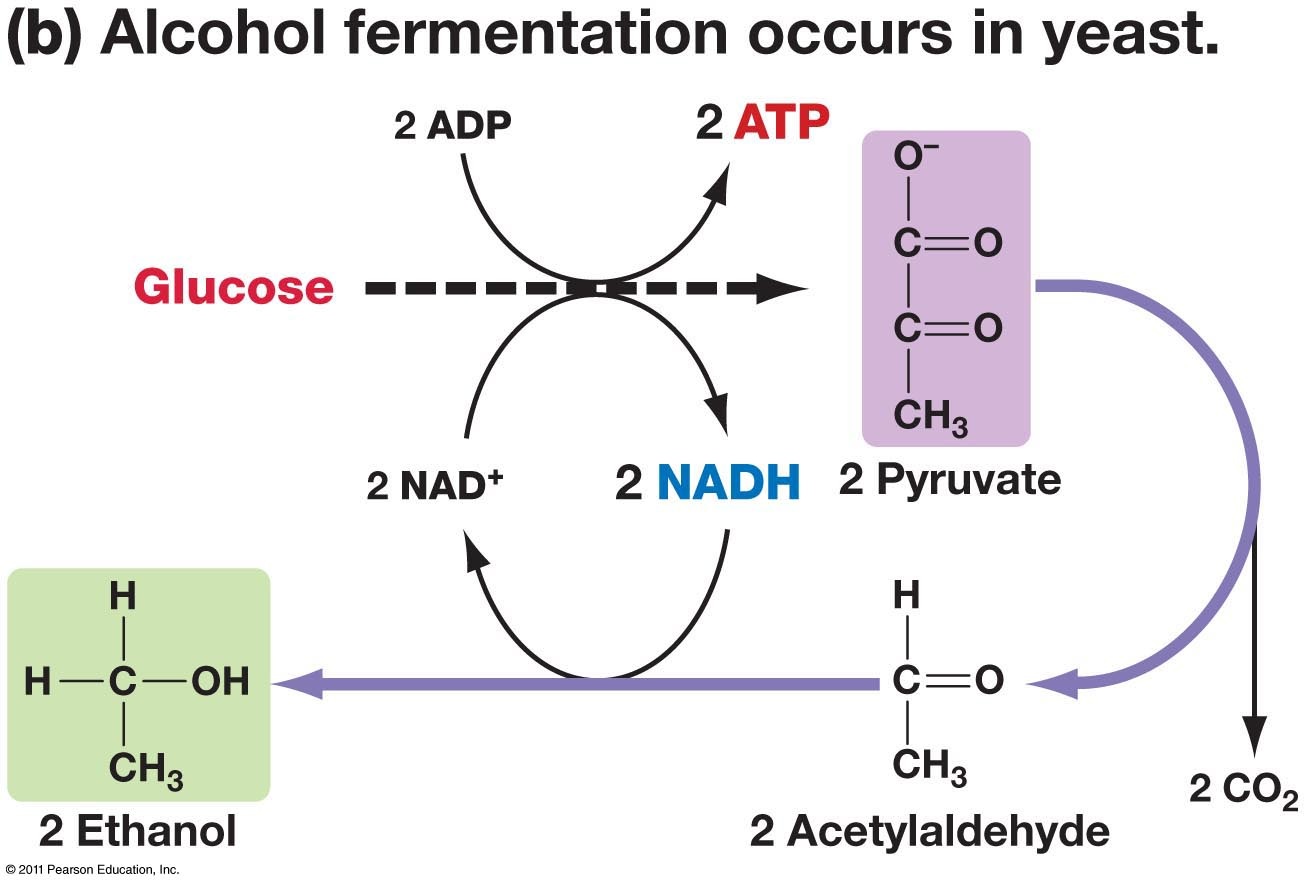
Alcoholic fermentation is used by yeast and a few other microorganisms. It forms ethyl alcohol and carbon dioxide as wastes, as well as NAD+.
Task
 On the page labeled 'process' I've include three websites. Answer the three questions about each website.
Process
 http://www.bbc.co.uk/schools/gcsebitesize/science/add_aqa/respiration/r…
Visit the link above and answer the following questions on lactic acid fermentation.
1. Define oxygen debt.
2. What is the waste product of lactic acid fermentation?
3. What does the build up of lactic acids in muscles cause?
http://www.tempeh.info/fermentation/alcohol-fermentation.php
Visit the link above and answer the following questions on alcoholic fermentation.
1. What is alcoholic fermentation done by?
2. Explain how glucose transforms into energy for the cell.
3. Name three human made products that are made through alcoholic fermentation.
http://moodleshare.org/mod/book/view.php?id=2108&chapterid=258
Visit the link above and answer the following questions on the advantages of anaerobic respiration.
1. Which advantage of anaerobic respiration is obvious?
2. At what speed does anaerobic respiration produce ATP?
3. Organisms that live where use anaerobic respiration?