
Introduction
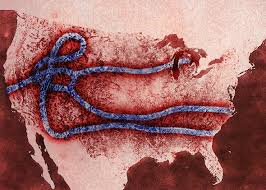
The current outbreak of Ebola in Western Africa has already claimed the lives of 2,000 people and leading international health organizations predict the number may reach ten times that amount before the virus has run its course. There is currently no cure or vaccine for Ebola and it is doubtful that one will be discovered during the outbreak. Local and international health workers are being pushed beyond their limits as they attempt to save as many lives as possible by identifying the sick (who are often reluctant to leave their homes), treating the infected patients with limited resources, and attempting to prevent the further spread of the virus through on-the-ground public health education campaigns.
Task
Your Task is "to become an expert on the deadly Ebola virus and design a strategy to contain the rapidly growing outbreak in Western Africa".
Process
Tasks: Review the materials listed below that have been assembled for you by a team of experts. Then use what you’ve learned to create a strategy to stop the outbreak.
So as afirst activity, let´s play this trailer from the film “Outbreak” to get Us (the students) thinking about the impact of an epidemic on a population.
This project will be developed by teams consisting of three students who all materials will be distributed equitably. In the end, the team will receive a group evaluation.
The resources are presented in a way that helps to reinforce the organizational strategy that the Center for Disease Control uses and the students will need to know in order to complete their mission successfully. The model is described in detail in the first resource and if you plan to use the assessment at the end of the lesson plan it is highly recommended you have students start with it.
1. Read about the Epidemiologic Triangle. It will help you understand the method public health scientists use to stop an outbreak and will come in handy when you are creating your own strategy to halt the spread of Ebola.
2. Explore as many of the resources below as you can. Keep in mind that the more materials you are able to watch, read and explore, the better chance you will have at creating a successful plan. The information is organized into three categories:
- Agent – the microbe that causes the disease
http://www.youtube.com/watch?v=Rpj0emEGShQ#t=21 https://www.youtube.com/watch?v=TGyFhwdtCMk
http://www.pbs.org/newshour/updates/know-enemy/
- Host – the organism harboring the disease
http://richardpreston.net/preston-books/hot-zone
http://www.pbs.org/wgbh/pages/frontline/inside-frontline/inside-the-ebola-outbreak/
- Environment – the external factors that allow disease transmission
http://video.nationalgeographic.com/video/destinations/africa-westcentral-dest?source=relatedvideo
Use this culturally-focused background information on Western Africa from National Geographic to learn about the role traditions play in the lives of those currently faced with the deadly Ebola outbreak. Pay special attention to importance of the funeral rites and consider how they may conflict with medical procedures now being used to halt the spread of the virus.
2014 West African Ebola outbreak: feature map http://www.who.int/features/ebola/storymap/en/
PBS NewsHour Extra | U.S. will ramp up efforts to fight Ebola | Video clip -
http://www.pbs.org/newshour/extra/daily_videos/u-s-will-ramp-up-efforts-to-fight-ebola/
3. After you have finished your research, use what you have learned to complete the Ebola outbreak: strategic plan – assessment which includes an Epidemiological Triangle, a graphic organizer for key facts and prompts to help you create your evidence-based recommended strategy to contain the Ebola outbreak. Check out KQED Edspace and PBS NewsHour Extra’s Do Now: How can we help fight the Ebola outbreak?
Good luck!
Evaluation
Evaluation
|
Rubric |
Possible Points |
|
Student's Evidence of Researching about ebola virus and possible Strategic plan Did you use the websites provided by the WebQuest? 5 points Did you answer all the questions on the Worksheet? 5 points Did you answer the questions in complete and readable sentences? 5 points |
__________________ out of 15 |
|
Student's Evidence of Searching about Ebola virus Did you answer all the questions on the "Ebola outbreak: strategic plan – assessment "Worksheet? 5 points Did you Fill out the blank Epidemiological Triangle? 5 points
Did you answer the questions in complete and readable sentences? 5 points |
___________________out of 15 |
|
Group's Presentation of the strategic Plan against Ebola Virus Did every member in the group speak up clearly in the presentation? 5 points Did every member in the group make eye contact? 5 points Did the visual aid shows clearly all steps they suggest to follow? 5 points Did the visual aid shows illustrations? 5 points |
___________________out of 20 |
|
TOTAL |
___________________ out of 50 |
Conclusion
CONCLUSION
Ebola virus, a member of the Filoviridae virus family, is still an untamed, highly lethal viral pathogen that represents a nightmare for much of central Africa, which is the site of the majority of EBOV outbreaks.
Surprisingly this virus has stumped researchers for years as there is still not an effective vaccine that is able to be administered to those who are infected with the virus. On a more positive note there are many candidate vaccines that have displayed very effective results on non-human primates, as they have protected these patients from the viral effects of EBOV.
Many of these potential cures may become a future vaccine to help save the lives of those who have fallen victim to the deadly illness. With the persistence and drive of the researchers that continue to be hard at work in search for a vaccine, we may someday soon be able to eliminate the fear of future epidemic EBOV outbreaks, and save many innocent lives from being taken by the deadly virus.
Teacher Page
Teacher Introduction
This webquest will seek to raise awareness and teach students about the importance of knowing more about the Ebola virus.
For some time the World Health Organization (WHO) declared the Ebola virus as an epidemic, which is making headlines worldwide.
Ebola has killed hundreds of people all in West Africa (except that he died a few weeks ago in the United States) and, specifically in Liberia, where he first detected the outbreak. As Ebola remains the headlines, it is imperative that teachers must be knowledgeable about the epidemic in order to assist in sensitizing their students on the various aspects of this virus.
[img_assist|nid=18225|title=Ebola virus|desc=|link=none|align=center|width=216026976|height=216026976]