
Introduction
 It is the end of the 19th century - there are 46 states, only 10 miles of paved roads in the United States and people's life expectancy is around 46 years old. You have just returned from work where you put in 59 hours this week and earned $12.98. You are sitting in your parlor reading the daily newspaper. You read about an author, Rudyard Kipling and learn that he was born in India and has just written a poem entitled "The White Man's Burden." The excerpt is as follows:Take up the White Man's burden —Send forth the best ye breed —Go, bind your sons to exileTo serve your captives' need;To wait, in heavy harness,On fluttered folk and wild —Your new-caught sullen peoples,Half devil and half child.You realize that many changes have occurred - your country is more industrialized than ever and there are many new inventions.America, England and other European countries are "branching out" and taking control of less developed countries. You are proud that America is broadening her horizons and know that many see imperialism as a positive force on the controlled nations; yet you hear that others deem it negative. Every day there is a new article in the newspaper.
You ponder - how would it feel to be ruled by a country other than my own? Are the news reports telling the truth? What do we have to gain by expanding over seas?
Task
You are so intrigued by the question that you form a committee to investigate imperialism and the expansion of America from 1865 to 1916. You realize from what you have read, imperialism was achieved at a high cost to the local people. In many instances their traditions and cultures were consumed or lost. Yet you read quality of life was improved - heathens have seen the light; children attend schools; overall health and well-being have improved. What is the real story?
The committee's task is to determine the causes and effects of American expansion, to research and report whether or not imperialism was a more positive or negative force in the controlled country, to create a map of the expansion and to create a timeline of the events and dates related to this overseas expansion. Your committee will then present their findings to the local townspeople.
Process
- Your teacher will divide you into committees.
- Each committee will consist of: an American citizen, a colonial citizen (one who lives in the country now controlled), a cartographer (map maker) and an historian.
- The "American Citizen" is responsible for finding information on: the effect the United States had a on the conquered ; what kind of rule was used (direct or indirect); and how was control achieved.
- The "Colonial Citizen" is responsible for finding information on: how life was affected since rule was turned over to the conqueror; what do the ordinary citizens think about this colonial rule, did anyone do anything to oppose colonial rule and what events led up to the conqueror gaining control.
- Working together, the "American Citizen" and "Colonial Citizen" will create a PowerPoint slideshow detailing the information that was researched.
- The "Cartographer" is responsible for creating a map of the newly annexed country/land.
- The "Historian" is responsible for creating a timeline of on the relevant historical facts leading up to control.
- Use the resources listed below to locate information. You may also use the library as a resource.
- Take notes on the Journal worksheet that is provided:
American Citizen Colonial Citizen
Cartographer Historian - Meet with your committee members and double check each other's work to ensure you have included all the necessary information.
- Be prepared to present your findings to the locals.
Resources:
Timeline of Imperialism - Click Here
|
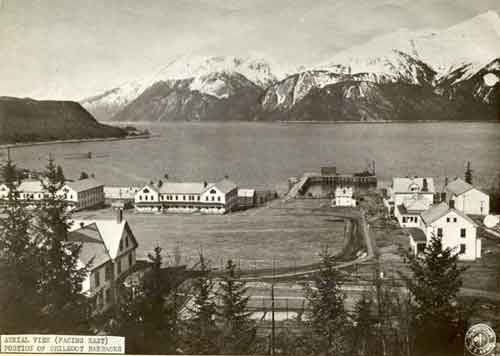
Alaska |
 |
fdsafdafdsa |
| Cuba | 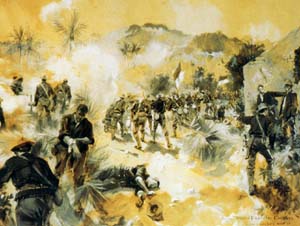 |
|
| China | ||
| Hawaii | ||
| Japan | ||
| Panama | ||
| Phillipines | ||
| Puerto Rico |
Credits
This webquest was not created by me.
A huge thank you goes to Taconic Hills Middle School in Craryville, NY.
I retrieved the original web quest from http://www.taconichills.k12.ny.us/webquests/imperialism/imperialism.html and adapted it for my own use in the classroom.
Resources Cited in this Web Quest:
http://www.dogpile.com/images/
http://www.homeofheroes.com/wallofhonor/spanish_am/01_intro.html
http://www.medalofhonor.com/JohnQuick.htm
http://www.floridamemory.com/OnlineClassroom/PhotoAlbum/n041322.cfm
http://www.canalmuseum.com/photos/panamacanalphoto010.htm
http://www.americaslibrary.gov/jb/recon/jb_recon_alaska_2_e.html
http://www.hoteltravel.com/philippines/guides/history.htm
http://www.trincoll.edu/~rrivera/newpage21.htm
http://www.janesoceania.com/samoa_chron_history/
http://www.unitedstreaming.com
http://us.history.wisc.edu/hist102/photos/html/1084.html
http://www.sagehistory.net/worldpower/imperialism.htm