
Introduction
Introduction
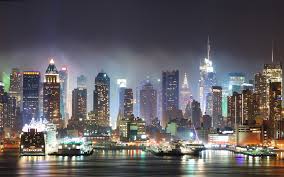
Mega Cities
As of 2014, there are 33 megacities in existence. The largest of these are the metropolitan areas of Tokyo, Delhi, Seoul, Shanghai, Mumbai, Mexico City, Sao Paulo, Beijing, Osaka, New York and Jakarta.
What students learn about when introducing Mega cities?
- The nature, character and spatial distribution of mega cities in the developing world.
- The challenges of living in mega cities such as housing, traffic infrastructure, water and power supplies, sanitation services, employment, and other social and health issues.
- The responses to these challenges such as self-help projects, community self-government, cooperation from NGOs, urban protest and the operations of informal economies.
Task
Case Study One:
Mexico City: A Megacity with BIG Problems
Mexico City today is one of the largest cities in the world. The environmental issues present in this megapolis are a good example of the problems that plague many cities around the world.
The population of Mexico City is over 20 million people. The population has gone from approximately 3 million people in 1950 to near 20 million in 1997, with an average growth rate close to 5%. Much of the high growth rate of the City is due to the continuous arrival of migrants from the economically depressed rural areas. Rapid urbanization has outstripped society's capacity to meet basic human needs, leaving enormous portions of the city's population with inadequate incomes, diets, housing, services and health care.
Waste
Approximately 4-5 m3/s of sewage water are treated and used mainly for irrigation in parks and public spaces. The remainder is eliminated from the Basin by means of the deep drainage system that was built in the early 1970s and by the old surface drainage canals. This waste is mostly used for irrigation, constituting an important source of agricultural pollution.
The health and environmental effects of inadequate solid waste disposal are felt far beyond the city in the form of water, land and air contamination over a wide area. The city produces approximately 10,000 tons of domestic garbage per day. In contrast to developed countries, which generate litter with a low proportion of organic residues, the garbage of Mexico City is rich in vegetable and fruit waste, and consequently could be used for making compost at a relatively low cost. Until 1987 most of the residues were disposed of in open fields. Recently, a more modern system of sanitary filling into dredged pits has become operational. Extending and improving waste collection, processing and disposal services is vital to control mounting health problems and prevent further damage to the environment.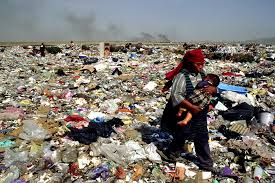
Water
Mexico City is built on an underground aquifer which significantly depleted. In general, much of the water in the Basin is heavily polluted; aquifers and rivers that supply its water are overextended and polluted; cholera recently have killed many people.Today, most of the food and water consumed within the Basin comes from outside its boundaries. Many parts of the city suffer from water shortage and industrial use of water is very inefficient. Water recycling uses only 7% of the sewage, and nearly 20% of the water supply is lost through deficient pipe systems. Pipe breakage represents a continuous health hazard, as microorganisms from the sewage system can contaminate the fractured pipes. Gastrointestinal diseases are among the most frequent health problems in the urban area and are a primary cause of infant mortality. In general, the Mexico City water resources should be protected through the introduction of a variety of techniques, including: sanitary waste disposal facilities, urban storm water runoff and drainage programs, the promotion of recycling and reuse of wastewaters and solid wastes, and the control of industrial pollution sources.
Air
City streets clogged with traffic and air pollution is perhaps the worst problem the city faces. Photochemical smog is critical during the winter months, when a temperature inversion stabilizes the atmosphere above the Basin and the air pollutants accumulate in the stationary layer of air that covers the city. Encircling mountains trap the smog generated by cars and factories.
Most of the air pollution originates from automobile exhaust, which are responsible for ~72% of all atmospheric pollutants in Mexico City. Mean ozone levels in Mexico City are ten time the normal atmospheric concentration, and are more than twice the maximum limit allowed in the United States. In order to alleviate this problem, the vehicles of Mexico City are under a permanent vehicular restriction program called "Hoy No Circula". All vehicles according to the last digit of their license plate are distributed by colors along the week, and are not allowed to be driven once in a week.
Earthquakes
The Pacific coast lies some 350 km south and west of Mexico City. This section of the coastline is close to the Acapulco Trench, a zone of demarcation where the Cocos Plate dives beneath the North American Plate. Almost due west is the Rivera Plate also moving beneath the North American Plate and separated from the nearby Pacific Plate by a transform fault. Not surprisingly this zone running parallel with the coast has a number of earthquakes caused by subduction. Although relatively minor damage has been caused to coastal settlements much greater damage has been caused in Mexico City hundreds of kilometres to the north and east. The reason for the damage is the geological structure of the Mexico Basin and the stratigraphy within the Basin. Earthquake waves propagated from the Trench travel through the Trans-Mexican Volcanic Belt and eventually reach the Basin where they are reflected around within the confining outline of the Basin, rather akin to ripples in a small bowl: - the interference patterns which are set up then impact on structures built within the Basin. The stratigraphy of the lacustrine sediments has also contributed to building failures. This occurs because smaller structures are built on the surficial aquitard clay. In some areas the substrate has liquified allowing foundations to shift or sink. More expensive public buildings are anchored to relatively firm volcanic tuff bands deep in the lacustrine sediments or have been designed to "float" during earthquake oscillations.
On September 25, 1985 a magnitude 8.1 earthquake originated in the Acapulco Trench. Damage in Mexico City was severe as the earthquake waves bounced around the Basin for almost four minutes. Buildings in the core area between 6 and 15 storeys were severely damaged. Smaller and larger buildings than this remained relatively unscathed. The low-rise buildings (like the older Spanish style structures) some of which dated back to the 1700's survived with minimal damage, although some subsided and tilted. The high-rise government and commercial buildings built to more exacting earthquake standards also stood up well. The intermediate buildings suffered major damage because the harmonics generated by the earthquake waves interferred with the integrity of the foundations, or caused damage to higher floors. Damage to the upper stories was caused by the top floors of smaller buildings immediately adjacent to larger buildings "hammering" the sides of the larger structures thus causing structural failure in the upper floors of the taller buildings. In many cases only the top (or bottom) stories pancaked; in other cases the mid stories collapsed leaving lower levels and top levels damaged but intact. In more tragic situations the entire building compacted leaving few survivors. Unfortunately several larger public buildings were in this category, including several hospitals.
YouTube Clip: Living in a Mexico City Garbage Dump - The Road to Juan's House - Mexican Poverty
[video:http://www.youtube.com/watch?v=FxqbwebKpX4 align:left]
Case Study Two:
Tokoyo: Japan
Tokyo, Japan is the original mega-city, a throbbing, dynamic metropolis of 32.5 million people, well over 50 percent more massive than the world’s next largest metropolitan areas. With populations clustering around 20 million people, the metro regions of Seoul, Mexico City, New York and Mumbai are all less than two-thirds the magnitude of the Tokyo metro area.
Tokyo’s ranking as the world’s number one city goes well beyond the sheer scale of its population. Its lively Shibuya district is home to the world’s busiest intersection, a vibrant pedestrian scramble which people traverse from every direction at the same time. Tokyo’s famously bustling Tsukiji Market plays fishmonger to the world as the largest wholesale fish and seafood market on the planet.
Waste management
Japan as of now has taken a much more proactive approach to waste management. In particular, Japanese city and prefectural authorities have focused on the reduction of solid waste going into landfills. This of course is in response to the lack of affordable space available for landfill sites. Their approach relies heavily on four major factors: 1) technological advancements in incineration, 2) technological advancements in plastics recycling, 3) Comprehensive production-side recycle stream package labelling, and 4) wide consumer-side/household participation in recycling and waste material separation).
Global warming
Japan is under treaty obligations to reduce its carbon dioxide emissions level by 6% less than the level in 1990, and to take other steps related to curbing climate change. Japan is the world’s fifth biggest emission emitter. The Cool Biz campaign introduced under former Prime Minister of Japan Junichiro Koizumi was targeted at reducing energy use through the reduction of air conditioning use in government offices.
Nuclear power
Japan maintains one third of its electric production from nuclear power plants. While a majority of Japanese citizens generally supported the use of existing nuclear reactors, since the nuclear accident at the Fukushima Dai Ichi power plant on March 11, 2011, this support seems to have shifted to a majority wanting Japan to phase out nuclear power. Former Prime Minister Naoto Kan was the first leading politician to openly voice his opposition to Japan's dependence upon nuclear energy and suggested a phasing out of nuclear energy sources towards other sources of renewable energy.(http://www.reuters.com/article/2011/04/08/japan-nuclear-debate-idUSL3E7F70K320110408)[8] Objections against the plan to construct further plants has grown as well since the March 11 earthquake and tsunami which triggered the nuclear melt down of three reactors at the Fukushima dai ichi plant in Eastern Japan. {http://www.theaustralian.com.au/news/breaking-news/japan-pm-naoto-kan-vows-nuclear-free-future/story-fn3dxity-1226109855727}
The treatment of radioactive wastes also became a subject of discussion in Japan. New spent-nuclear-fuel reprocessing plant was constructed in Rokkasho in 2008, the site of the underground nuclear-waste repository for the HLW and LLW has not yet been decided. Some local cities announced a plan to conduct an environmental study at the disposal site, but citizens' groups strongly oppose the plan.
Fishery and whaling
In the Japanese diets, fish and its products are more prominent than other types of meat. Because of the depletion of ocean stocks in the late 20th century, Japan's total annual fish catch has been diminishing rapidly. Japan, along with the United States and the European Union, occupies the large part of international fish trade. Japanese fish catches were the third in the world in 2000, following China and Peru. The United States, Chile, Indonesia, the Russian Federation and India were other major countries.[10]
By 2004, the number of adult Atlantic bluefin tuna capable of spawning had plummeted to roughly 19 percent of the 1975 level in the western half of the ocean. Japan has a quarter of the world supply of the five big species: bluefin, southern bluefin, bigeye, yellowfin and albacore.
Whaling for research purposes continued even after the moratorium on commercial whaling in 1986. This whaling program has been criticized by environmental protection groups and anti-whaling countries, who say that the program is not for scientific research.
Urban planning
The massive nationwide rebuilding efforts in the aftermath of World War II, and the development of the following decades, led to even further urbanization and construction. The construction industry in Japan is one of its largest, and while Japan maintains a great many parks and other natural spaces, even in the hearts of its cities, there are few major restrictions on where and how construction can be undertaken. Alex Kerr, in his books "Lost Japan" and "Dogs & Demons", is one of a number of authors who focuses heavily on the environmental problems related to Japan's construction industry, and the industry's lobbying power preventing the introduction of stricter zoning laws and other environmental protection efforts.
Credits
Ezcurra, E. and Maziri-Hiriat, M. 1996. Are Megacities Viable? - A Cautionary
Tale from Mexico City. Environment 38: 26-31.