Introduction
Last week we had so much fun reading and learning about tall tales. This week we were going to learn about a different type of folktale called a fable.
Only there is one little problem...
This weekend when the power went out,
I lost all of my lesson plans!

What can I do?
All I have is one book from the library: Aesop's Fables retold and illustrated by Brad Sneed.
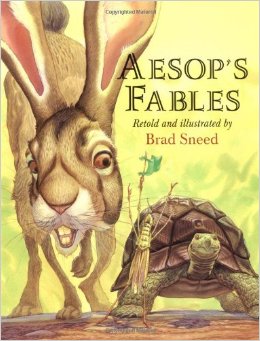
One book does not cover all of the cool and interesting fables we were going to learn about.
Oh man, I don't want to get in
trouble with the prinicpal. 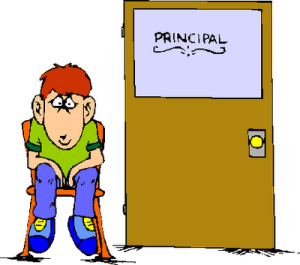 What can I do?

Wait a minute! I've got an entire class of bright and talented students. I wonder if you could help me out?
Task
This week you get to be the teachers.
Mrs. Runyon needs your help to teach
the class about fables.
Process
1. Select one of Brad Sneed's fables to read aloud to the class.
(Bonus points if you use voices or props)
2. Visit the Library of Congress Website and find one fable that has the same title as one we read from Brad Sneed's book of Aesop's Fables. Library of Congress Aesop's Fables
3. Compare the one you selected to the one of the same name from Brad Sneed's book. On a sheet of paper compare and contrast the two versions. Second, tell me which version you prefer and why?
3. Print this chart:Fables
4. Select 5 new fables to read from the following links. Fill out the chart with the information you collect from the Fables you choose.
Library of Congress Aesop's Fables
http://www.umass.edu/aesop/fables.php
5. Learn more about Brad Sneed and answer the following questions:
1. Where does Brad live?
2. What sports did Brad play as a child?
3. Where did Brad go to school?
4. What animal did he get from his Grandpa?
5. What was the animal's name?
6. Describe the animal.
7. What other activities did Brad enjoy as a child?
6. Watch the Ant and the Grasshopper
In your journal write about a time when you felt like either the grasshopper or the ants.
Tell the story and provide illustrations.
Evaluation
For each assignment I will grade each part using the following criteria.
| 1 | 2 | 3 |
|
Sections are partially complete or incorrect |
Instructions are mostly followed. Parts are somewhat complete. |
Instructions are followed. All parts are complete. |