
Introduction
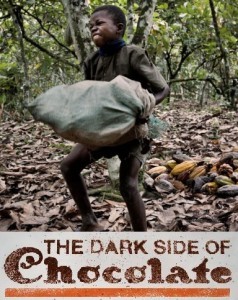
You will investigate the child slavery and chocolate human rights issue through a variety of sources: articles, videos, and images.
Child slaves are being used to work and harvest cocoa on the farms in West Africa. Many global companies make large profits from cocoa farmed by children in slavery working along the Ivory Coast. Child slavery keeps costs down, which allows major corporations to keep their chocolate cheap as it costs more to actually pay laborers a fair wage. Sustained action from concerned consumers has helped pressure some of the world’s major chocolate companies to take slight responsibility to help end the appalling practice of using child slaves within cocoa production. BUT chocolate companies, consumers, and the world at large MUST increase their efforts to end child slavery in the industry.
Task
CNN Freedom project video -Child slavery and chocolate: All too easy to find
[video:http://www.cnn.com/video/data/2.0/video/world/2012/01/16/cfp-abdul-chai… width:6 height:6 align:center]
- How long did Abdul work in the cocoa fields?
- How old is he?
- How old was Abdul when he began working? What were you doing at that age?
- Abdul isn’t paid for his labors, what does he receive instead?
- Why do you think Abdul wanted to move away from the group to talk to the reporter?
- What led Abdul to begin working on the cocoa farms?
- Has Abdul ever eaten chocolate?
- How did Yacou get the scars on his legs?
- What does Yacou want to do?
- Write about what you read. Explain what you think is a lesson people can learn from seeing this story. Use examples from the story and your own experience.
CNN Freedom project video- Admitting slavery exits in cocoa fields
[video:http://www.cnn.com/video/data/2.0/video/international/2012/01/18/cfp-ch… width:6 height:6]
- Where is the center of the cocoa trade?
- Who runs the farms?
- One of the cocoa farms share croppers says: “It’s’ the middle of the harvest we have no choice but to use children’.” Do you think the share cropper shave other options aside form child slave labor? What else could they do?
- How many children does UNICEF estimate work in cocoas plantations across the Ivory Coast?
- “We work to earn money. We work to earn money. We are not interested in other peoples’ problems. We are all born into this world with our own problems. We all go through hardships and we all fight to get through them as best we can.” What would happen if the world changed its philosophy -starting with the unnamed cocoa sharecropper who spoke those words- could the world be a better place?
- Since the protocol was signed to help monitor and control child labor in cocoa farms has the sharecropper seen or met with any government officials? What do you think is preventing the government from stepping in?
Food Empowerment Project: Child Labor and Slavery in the Chocolate Industry
http://www.foodispower.org/slavery-chocolate/
Complete the following sentences from the first 5 paragraphs of the article:
“The farms of Western Africa supply cocoa to international giants such as _______________________ , __________________________, and ____________________________—revealing the industry’s direct connection to the worst forms of child labor, human trafficking, and slavery.”
“On average, cocoa farmers earn less than _____________ per day, an income below the poverty line.”
“Most of the children laboring on cocoa farms are between the ages of _________________ and _____________________, but reporters have found children as young as 5.”
Food Enpowerment: Chocolate we feel comfortable recommending
http://www.foodispower.org/chocolate-list/
List 5 companies that provide ethical chocolate to consumers:
Nestlé, Cargill, Archer Daniels Midland Lawsuit
http://www.slavefreechocolate.org/Law-Suits.html
Read the article below and mark three sentences with one of each of the following marks:
- ! An exclamation point for something you agree with.
- X An x for something you don’t agree with.
- ? A question mark for something you would like to learn more about.
|
How could anyone enjoy chocolate knowing their indulgences are supporting child slavery? In a nutshell, on 14 July 2005, three former slaves from The Ivory Coast sued Nestle USA, Cargill and Archer Daniels Midland for aiding and abetting slavery. The court case was thrown out but the plaintiffs appealed and won their appeal in 2014. What winning the appeal means: By winning the appeal, the court that originally threw out the case has to reassess the lawsuit with additional parameters. It was granted that the former slaves were allowed to sue the candy companies under a statute called the Alien Tort Statute. ATS, written in 1798 allows foreign citizens to seek remedies in the United States courts for human-rights violations for conduct committed outside the U.S. So now the original US Court has to reexamine the laws suit under this framework. What does this means in reference to the children still enslaved on the plantations: We can assume that this court case will take numerous years to see a ruling. In the interim, creating awareness around this lawsuit is very powerful. The defendants in the case, (Nestle USA, Cargill and ADM) are not denying the use of forced labor on the coco plantations. Yet, the defendants argue that they are not liable for it. The fact that this lawsuit is in existence proves that they are well aware of the human-rights violation, yet they insist on finding the cheapest source of cocoa to maximize their profits. The more publicity on this lawsuit, the more apt the companies will be to remedy the situation as they once promised in 2001 under the Harkin-Engel Protocol. Our mission is not to boycott cocoa or chocolate, but to put pressure on the powers involved to implement what is already in place.
|
Turn to a shoulder buddy and share your 3 marked sentences. What did they choose? Why? Record their answers below.
! ________________________________________________________________________________________________
X _______________________________________________________________________________________________
? _______________________________________________________________________________________________
EXTRA! Anti-slavery: Act now to end child slavery in the chocolate industry
http://www.antislavery.org/english/campaigns/cocoa_traders/
Other steps you can take to help with this cause:
*Fill out Hershey's corporate responsibility online survey. Urge them to establish an ethical and slavery-free supply chain. Tell them you won't have your money contributing to human trafficking.
* EDUCATE YOURSELF AND OTHERS. Tweet about this article, pin it, and post it to your Facebook page. Spread the word until this issue is completely out in the open.