
Introduction
Kristina Young, Arizona State University-October 5th, 2014
Despite the numerous precautions taken in the operating room, some patients will develop a surgical site infection or SSI. Each year there are a reported 500,000 to 750,000 surgical site infections making SSI’s the most common type of hospital acquired infection (Zinn, 2013). As an operating room nurse you will have many responsibilities that revolve around preventing infection. One primary responsibility includes performing the surgical prep. Adhering to proper technique when prepping the surgical site is imperative for preventing surgical site infections.
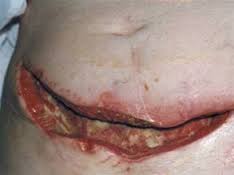
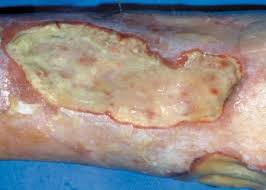
Task
At the end of this learning session you will be able to:
1. List three factors that contribute to surgical site infections.
2. Verbalize the proper procedure for prepping a surgical patient using a betadine prep kit.
3. Demonstrate how to prep a surgical patient for surgery using a betadine prep kit
In order to meet these objectives will need to complete the following learning activities:
1. Read the AST standards of practice for skin prep of the surgical patient and complete quiz questions.
2. Read the AORN Journal article Surgical Patients: A vulnerable population. Complete quiz questions.
3. Watch the instructional video. Write a summary and prepare to deliver a return demonstration.
Process
1. Review the AST standards of practice for skin prep of the surgical patient and complete quiz questions. Although all the information is informative please focus on Standard of Practice I and IV.
http://www.ast.org/uploadedFiles/Main_Site/Content/About_Us/Standard_Skin_Prep.pdf
2. Review the AORN Journal article Surgical Patients: A vulnerable population. Complete quiz questions.
3. Watch the Instructional video. Write a summary and prepare to deliver a return demonstration.
https://drive.google.com/file/d/0B6KdyZafIClzM081dG5kVkw5R2M/edit?usp=sharing
4. Review examples of different surgical skin prep areas.
https://docs.google.com/document/d/1ZTRas189FV_zXZuI-CJIYRKLsnsdPrDGyu1SuH-_glM/edit?usp=sharing
Evaluation
Test Your Knowledge
1. What are patient risk factors for developing a surgical site infection (SSI)?
a. Diabetes
b. Obesity
c. Smoking
d. All of the Above
2. National guidelines recommend patients shower using chlorhexidine gluconate ______
a. The morning of surgery.
b. The night before surgery.
c. Both A and B.
d. National guidelines do NOT recommend patient shower preoperatively.
3. Best practices vital to preventing SSI’s include sterile technique, hand washing, and prepping techniques.
a. True
b. False
4. Other ways of preventing SSI’s include maintaining patient’s temperature, maintaining a patient’s glucose levels, and using proper hair removal techniques.
a. True
b. False
5. The skin prep should be much wider than the planned incision.
a. True
b. False
Rubric for demonstration of surgical skin prep
|
Steps
|
Proficient (4)
|
Developing (2)
|
Beginner (0)
|
|
1. Assemble Supplies
|
Assembles all necessary supplies without assistance.
|
Assembles most of the necessary supplies without assistance.
|
Needs assistance assembling necessary supplies.
|
|
2. Check integrity of sterile package and expiration date
|
Checks integrity of package and expiration date without prompt.
|
Checks integrity of package but needs prompt to check expiration or vice versa.
|
Does not check integrity of package or expiration without prompt.
|
|
3. Expose Area to be prepped
|
Exposes proper area to be prepped with appropriate perimeter.
|
Exposes proper area to be prepped without appropriate perimeter.
|
Needs assistance exposing proper area and perimeter.
|
|
4. Wash and Dry Hands
|
Washes hands for 20 seconds and dry hands completely.
|
Washes hands for less than 20 seconds.
|
Does not wash hands.
|
|
5. Open Sterile Prep Tray
|
Opens sterile prep tray properly using sterile technique without assistance.
|
Opens sterile tray but needs assistance to open using sterile technique.
|
Contaminates prep tray while opening.
|
|
6. Don Sterile Gloves
|
Opens and dons sterile gloves using proper technique without assistance.
|
Opens and dons sterile gloves but needs assistance with sterile technique.
|
Contaminates gloves upon opening or donning.
|
|
7. Pour scrub and paint solution into appropriate reservoirs in prep tray
|
Pours scrub solution into one reservoir and paint solution into another reservoir without assistance or contamination.
|
Pours solutions into separate reservoirs but needs assistance to avoid breaks in sterility.
|
Contaminates gloves or prep kit.
|
|
8. Use cotton swabs if applicable.
(If umbilicus is included in prep area) |
Wet cotton swabs in scrub solution and gently cleans umbilicus.Discards cotton swab after use. Done without assistance or contamination. |
Wets cotton swabs in incorrect solution. Needs assistance maintaining sterile technique.
|
Contaminates gloves while using cotton swabs or returns used cotton swab to prep kit.
|
|
9. Wet sponges with Betadine scrub
|
Wets sponges with betadine scrub without assistance or contamination.
|
Wets sponges with incorrect solution or needs assistance.
|
Contaminates sponges, prep kit, or gloves.
|
|
10. Starting scrubbing at the site of incision and work outward using a circular motion-do not go over an area twice with the same scrub sponge
|
Begins scrubbing at site of incision and works outward using a linear circular motion. Discard used sponge. Does not go over area twice with the same sponge.
|
Begins scrubbing at site of incision. Does not use linear circular motion or goes over same area twice.
|
Does not use proper technique. Re-wets used sponge in solution or uses same sponge twice.
|
|
11. Repeat steps nine and ten until the surgical site has been scrubbed for 5 minutes
|
Repeats steps without assistance or contamination.
|
Repeats steps but needs assistance or does not scrub for the appropriate length of time.
|
Does not repeat steps or contaminates gloves or prep tray.
|
|
12. Use sterile towel to blot dry the prepped area
|
Carefully unfolds sterile towel and places it over prepped area to blot dry.
|
Needs to be directed when unfolding sterile towel.
|
Does not use sterile towel to blot dry prepped area or contaminates towel or prepped area.
|
|
13. Wet stick sponges with Betadine paint
|
Wet stick sponges in paint solution while holding on to the stick. Do not touch sponge.
|
Wets sponges with incorrect solution or needs assistance.
|
Contaminates sponges, prep kit, gloves, or prepped area.
|
|
14. Starting painting at the site of incision and work outward using a circular motion-do not go over the same area twice with the same sponge stick.
|
Begins painting at site of incision and works outward using a linear circular motion. Discard used sponge. Does not go over area twice with the same sponge.
|
Begins painting at site of incision. Does not use linear circular motion or goes over same area twice.
|
Does not use proper technique. Re-wets used sponge in solution or uses same sponge twice.
|
|
15. Repeat step 14 using second and third sponge stick.
|
Begins painting at site of incision and works outward using a linear circular motion. Discard used sponge. Does not go over area twice with the same sponge.
|
Begins painting at site of incision. Does not use linear circular motion or goes over same area twice.
|
Does not use proper technique. Re-wets used sponge in solution or uses same sponge twice.
|
|
16. Let area dry completely before draping
|
Ensures area is dry prior to draping.
|
Allows area to dry some but not completely prior to draping.
|
Allows draping before prep is dry.
|
Comments:
Conclusion
Please evaluate this course
1. The objectives were clearly stated:
___Strongly Agree
___Agree
___Neutral
___Disagree
___Strongly Disagree
2. The course content was consistent with the objectives:
___Strongly Agree
___Agree
___Neutral
___Disagree
___Strongly Disagree
3. The content was organized and easy to understand:
___Strongly Agree
___Agree
___Neutral
___Disagree
___Strongly Disagree
4. The method used for delivery was user friendly:
___Strongly Agree
___Agree
___Neutral
___Disagree
___Strongly Disagree
5. What did you like the most about this course?
6. How could this course be improved?
Credits
Author Biography
Kristina Young
I am a registered nurse and am currently enrolled at Arizona State University in the master's of nursing education program. I started working in the operating room as a surgical tech in the Army. After being discharged from the military I went back to school for nursing. Once I received my nursing license I returned to the operating room.
Permissions
We all benefit by being generous with our work. Permission is granted for others to use and modify this WebQuest for educational, non-commercial purposes as long as the original authorship is credited. The modified WebQuest may be shared only under the same conditions. See the Creative Commons Attribution • Non-Commercial• Share-Alike license for details.
Teacher Page
Using the proper prepping technique is just one of the many precautions taken in the operating room in order to protect patients against acquiring a surgical site infection. Best practices recommend “bundling”, or taking multiple precautions in order to achieve positive patient outcomes.
References
CDC definitions of nosocomial surgical site infections. 1992. Retrieved from:
http://www.surgical-tutor.org.uk/core/preop1/wound_infection.htm.
Intervention for preoperative, intraoperative, postoperative clients care. Retrieved from:
Mastrian, K. (2011). Integrating technology in nursing education: Tools for the knowledge era.
Sudbury, Mass.: Jones and Bartlett.
Molnlycke health care. 1987. Retrieved from:
http://www.molnlycke.com/situations/surgical-site-infections-ssi/.
Zinn, J. (2013). Surgical patients: A vulnerable population. AORN Journal, 98(6), 647-652.
doi:10.1016/j.aorn.2013.09.004