
Introduction
Obesity
Childhood obesity is one of the most serious public health challenges of the 21st century. The problem is global and is steadily affecting many low- and middle-income countries, particularly in urban settings. The prevalence has increased at an alarming rate. Globally, in 2010 the number of overweight children under the age of five, is estimated to be over 42 million. Close to 35 million of these are living in developing countries.
Overweight and obese children are likely to stay obese into adulthood and more likely to develop noncommunicable diseases like diabetes and cardiovascular diseases at a younger age. Overweight and obesity, as well as their related diseases, are largely preventable. Prevention of childhood obesity therefore needs high priority.
Task
1. Teacher shows Ss. a video where they can learn about good and bad habits that rise or reduce the obvesity.
2. On the whiteboad T. writes 2 lists and Ss. have to identify "good or bad" habits.
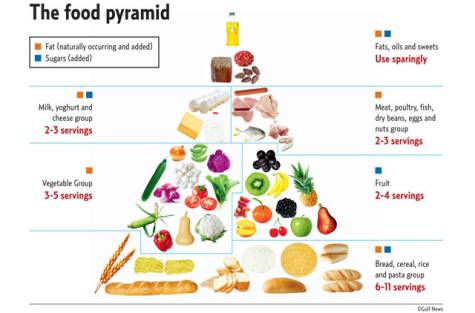
3. T. handout students the "Food pyramid" and explains Ss. what are the benefits of each group of food
T. focuses on fruits and ask students identify in pairs the names in a puzzle.
Disscus: General recommendations to prevent obesity:
- Increase consumption of fruit and vegetables, as well as legumes, whole grains and nuts;
- limit energy intake from total fats and shift fat consumption away from saturated fats to unsaturated fats;
- Limit the intake of sugars; and
- Be physically active - accumulate at least 60 minutes of regular, moderate- to vigorous-intensity activity each day that is developmentally appropriate.