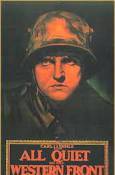
Introduction
NZ'S FIRST WORLD WAR CENTENARY 2014-2019
World War memorials can be found in hundreds of locations across New Zealand. Rolls of Honour, Honours Boards, Memorial Prize Cups, Trees for the Fallen - often all around us and often without realising we find names, references and fragments of stories from the First World War.
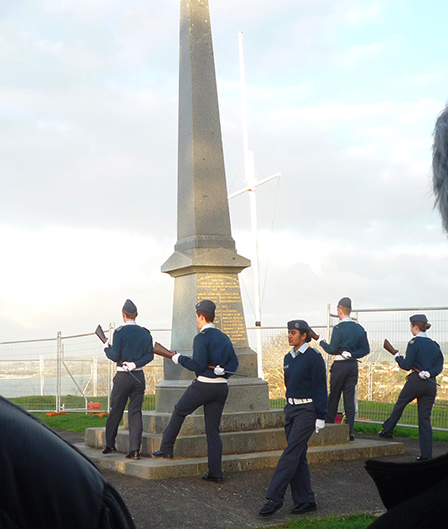
This WEBQUEST is about understanding the bigger story via the smallest story.
You will get a SNAPSHOT overview of the First World War but your focus will be on an individual - on someone who grew up, went to school, b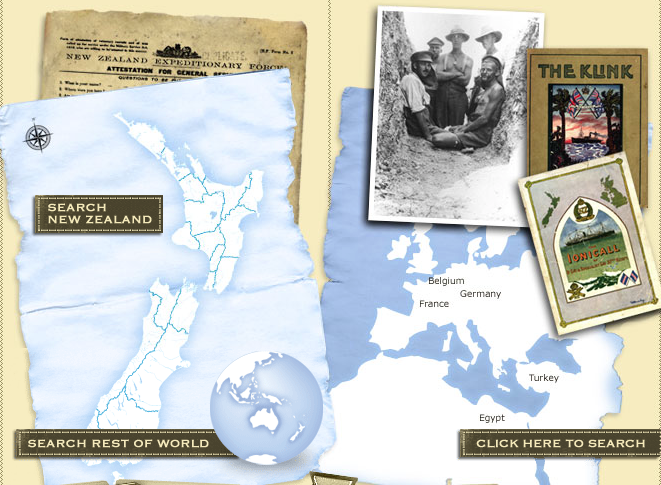 ought lollies at the local dairy, but got on a ship and went to the other side of the world to be part of the First World War.
Task
You are going to investigate an individual New Zealand Soldier who was involved in World War One. You will find out about them using records,documents, and archives. You will present your work by creating a layered artwork which will include a photo, an archive and a symbol to create a piece which puts the full life of each soldier in context.
BIG PICTURE
But let's begin with the big picture .
It will help you make sense of the smaller picture later.

Think about the following questions....
When was the First World War? Who was involved? Where did it happen? Why did it happen?
Begin with a MINDAP.
You have 3 minutes record a brainstorm on WW1. Use a pen/paper or googledoc with mindmeister add-on.
.

Record anything and everything which you know relating to WW1. It doesn't matter if you're unsure of whether it is right or wrong.
Go!!!
Now watch this fast facts video from Auckland Museum.
[video:http://youtu.be/i9hPEwXMGFk?list=UUDo4HyAsT28SL9elBxtRyYQ]
Add to your mind map after watching the video. You could stop and start the video while you are recording the information.
Keep on adding to your mind map and making connections.
You should now have a very brief overview of WW1.
We will move on to using primary sources – diaries, letters, photographs, archives – but if you read/view what others have written first, you’ll find it easier to locate and understand primary resources. Taken out of context or without any background knowledge, primary sources can be dense and difficult to understand.
The information that you get from secondary sources will make it easier for you to use primary sources in your research.
Extra information and videos can be found in the credits section at the end. It is well worth looking at these!
Process
WHAT WAS LIFE LIKE 100 YEARS AGO?
Either on a google doc or using pen and paper
(Use the title" Life 100 years ago")
Look at these daily quotes from diaries, letters, newspapers... shared in 'real-time' exactly 100 years later. Record 3 quotes, the dates, and who they were from.
Look at Paperspast? What was going on in New Zealand? Record brief details of two news articles from the time. Include date and which paper they were from.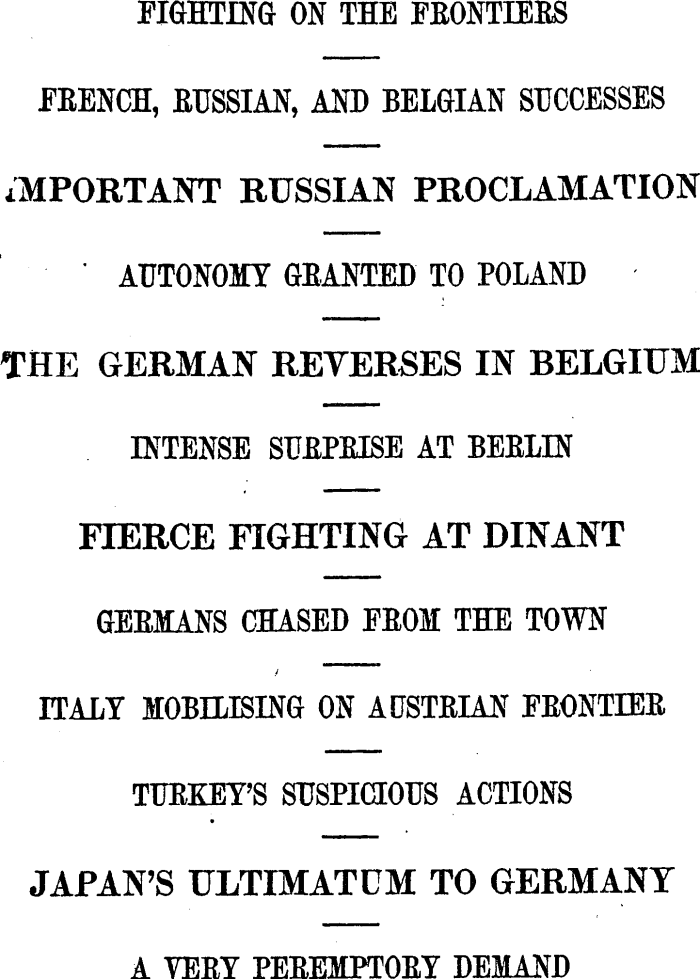
View this clip from Archives New Zealand of images of New Zealanders serving in the First World War at Gallipoli, Sinai/Palestine, and the Western European Front.[video:http://youtu.be/NoVd-jW_QIQ?list=PLFjRz3quvmyB1_MJwGuDhYDaSJ31_3tdi].
Record 3
CECIL MALTHUS
One soldier who went to fight in the First World War was a man called Cecil Malthus.Timaru-born Cecil Malthus wrote two books about his war-time experiences. Born in 1890, he spent three years in service in the 1st Canterbury Battalion from 1914. A collection of Malthus’ letters has been digitised and made available online by Christchurch City Libraries. The letters are penned to his future wife, Hazel Watters. Malthus died on 25 July 1976.This collection of letters and documents dates from April 1914 to his discharge in April 1917. The collection is not complete, and portions of some letters are missing. The letters follow Malthus’ progress from training in New Zealand to his experiences throughout the war, including time in Egypt preparing for Gallipoli, and his time in France. Malthus was injured in September 1916 and returned to New Zealand in March 1917.
- READ some of his letters.
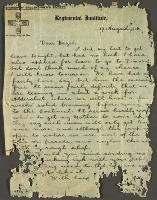
- They tell a remarkable story from a very personal angle.
Cut and paste the following questions into a google doc entitled Letters from Cecil Malthus/ or write on a piece of paper.
Using the letters above answer the questions.
1. 27/8 Why was Cecil dissapointed?
2. 15/9 What does he think will happen on Thursday?
3. 1/10 Where was he when he wrote this letter?
4. 4/10 What does he say is annoying?
5. 18/10 What does he write about in Para 1? When does he leave Wellington? Where is he heading to?
6.13/11 What does he say will happen to his letters? Why do you think this will be done?
7. 22/11 What 'risky things' might he have been referring to?
8. Why do you think Cecil wrote so many letters?
YOUR LOCAL COMMUNITY
Find some photos or images of your local community 100 years ago. You could search on google/use the Encyclopedia of New Zealand online.
Paste these images into the google doc "Life 100 years ago"or save them onto a word doc/print . Add details of where and what the photos are of.
Go to historypin and layer your historic photos of local places over google street view.You will need to log in with your google account.
SEARCH FOR A SOLDIER
Open a new document called "My soldier" ( either google doc or word doc). You will use this doc to record all your research. Add to this doc over the next few tasks.
Do you have a local First World War memorial? If you can, visit it and photograph it. Add this to your doc.
Go to the NZ memorials register on NZ History below and look at the enormous quanity of war memorials. Can you find your local memorial?Each red pin is for a memorial. Nearly every town and settlement in NZ has one.

Upload an image of it to your research file.
Make a list of the names on it in your google doc.
Use the "where were they from" Cenotaph records to search for a soldier you have listed? Can you find them? If not try another soldier.
Find out and record the following information in your file.
- Full name
- Serial No
- First known rank
- Marital status
- Enlistment address
- Embarakation Unit
- Date and place of embarkation
- Transport details
- Vessel
- Destination
- Last Unit served
- Place of death
- Date and year of death
- Cause of death
- Cemetry name
Add any images from his cenotaph record which you think may be useful later.
YOUR SOLDIER IN WW1
You now have a few details about your soldier. The rest of the task is for you to research the the story of your soldier in WW1?
Research Information of his journey from the time he left home until the end of his war. Collate information(images and facts) about the places he went and any battles he was involved in.
Research information about at least one battles or places he was involved in INDEPTH. eg. Gallipoli. Try to find out as much as possible from a variety of sources (Where /when/why/what and who).
You can record the key information in your research file or have a go using Timetoast to create a time line.
FINDING OUT - information overload !!!
There is a huge amount of material on the internet. Many primary sources have been digitised now and are easily accesible.
Below is a starting point for your research
The Cenotaph data base can be used to Search can be used for biographical and service details for over 115,000 New Zealand service men and women from the 19th century till today and especially from World War One and World War Two
If your soldier was involved in Passchendale information can be found here for some on their casualty forms.
Personnel files

Personnel files are the most useful source for researching First World War soldiers, and should be the researcher’s first port of call. They are held by Archives New Zealand, and can usually be located on their Archway database:
Soldiers who were killed
Over 18,000 New Zealand soldiers were killed in the First World War. The quickest way to trace them is through the Commonwealth War Graves Commission website:
Troop ships
Auckland museum has a data base to look for information about the ships NZ soldiers travelled on.
War memorials

See the NZHistory.net.nz memorials register for links to over 500 war memorials around the country.
Toitu Settlers Museum
Exhibition: Dunedin’s Great War 1914-1918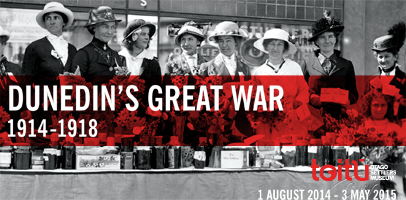
1 Aug 2014 – 3 May 2015
One hundred years ago Dunedin went to war. Thousands of citizens signed up to become soldiers. They fought and died at Gallipoli, in Palestine and on the Western Front in France and Belgium.
Almost 1,900 were killed, their remains left far from home. Those who returned came back changed forever, with scars in mind and body that marked the rest of their lives.
Dunedin’s Great War explores the stories of enlistment and departure, conscientious objection and conscription, the horrors and honours of war. Learn of the relief efforts by those left at home, the tales of those who returned and the many fallen who did not.
Dunedin Public Art Gallery
LAURENCE ABERHART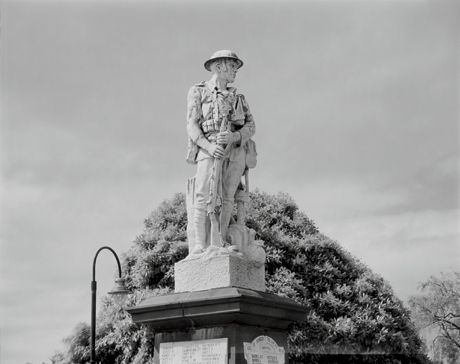
ANZAC
12th Apr 2014 - 31st Aug 2014
Late last year the acclaimed New Zealand artist Laurence Aberhart completed the final phase in a photographic series, which he has been working on for over thirty years. This major exhibition of over sixty prints brings together a series of World War One memorials that include a single figure, and in the process it shrinks a sense of geographical and historical distance. ANZAC is the stunning result that will be launched at the Dunedin Public Art Gallery as part of the WWI commemorations.
YOUR SOLDIER OUTSIDE THE MILITARY
Can you find out some more information?
Extend your examination of the life of your soldier outside his military life.
Where was he from? His family? etc. Add as much detail as possible.
Either add this to your research file or perhaps create a pinterest board.
Use cenotaph to include his official army photograph.
Evaluation
Have you completed all the tasks?
- Brainstorm
- Cecil Malthus Letters task
- Life 100 years ago task
- Research file including
- detailed information about one soldier and their time in the war
- Background info
- Details of at least one battle or place they were involved in.
- Details of sources/websites visited
- Details of any extra tasks completed ( Timetoast /Pinterest/ Extra resources used)
The final task is to bring all your work together. This details of this task are on the conclusion page of this webquest. Before you move to this final task please read carefully the assessment details below.
Assessment
Your teacher will have discussed your assignment with you throughout the research process, and given you feedback and feed forward along the way.
On completion of the assignment your work will be assessed against the assessment matrix below.
Conclusion
FINAL TASK - PULLING IT ALL TOGETHER

OPTION ONE
Look at the art work of Mark Powell.
Use techniques emoplyed by Powell to create a layered artwork that puts the full life of your soldier in context. Incorporate the information, archives and documents you have been studying with images of the First World War.
This can be done physically or digitally.
OPTION TWO
If you have a different idea of how to present your research please discuss this with your teacher.
FOLLOW UP
This work can lead on to so many further areas of study. It should have raised more questions than you have answered ...
What caused the First World?
How did it end?
What was it like to be a soldier in the trenches?
Why did so many soldiers die?
What was life like in NZ during and after the war?
What do soldiers involved think about their involvement?
What writers and poets have written about WW1?
What were the War Horses?
... on the credits page you can find some additional links which my help in your continued studies
SELF EVALUATION
Write a paragraph to share your own evaluation of your work.
Some possible questions to answer?
How did you find the webquest?
What did you learn?
What was most interesting?
Did you find anything surprising or shocking?
What went well for you?
What were the challenges of this task?
Were there any barriers which made it tricky?
What would you differently if you were to do it again?
How will you continue your learning?
Credits
Follow up ....Extra resources A global guide to the first world war - interactive documentary
Ten historians from 10 countries give a brief history of the first world war through a global lens. Using original news reports, interactive maps and rarely-seen footage, including extraordinary scenes of troops crossing Mesopotamia on camels and Italian soldiers fighting high up in the Alps, the half-hour film explores the war and its effects from many different perspectives.
John Green's Crash Course on World History
Images from WW100NZ
An infographic overview of the First World War
Poets of the WW1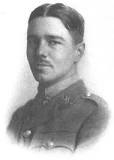
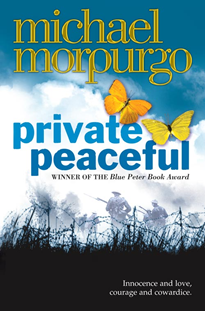
Stories and films set in World War One