
Introduction
Introduction:
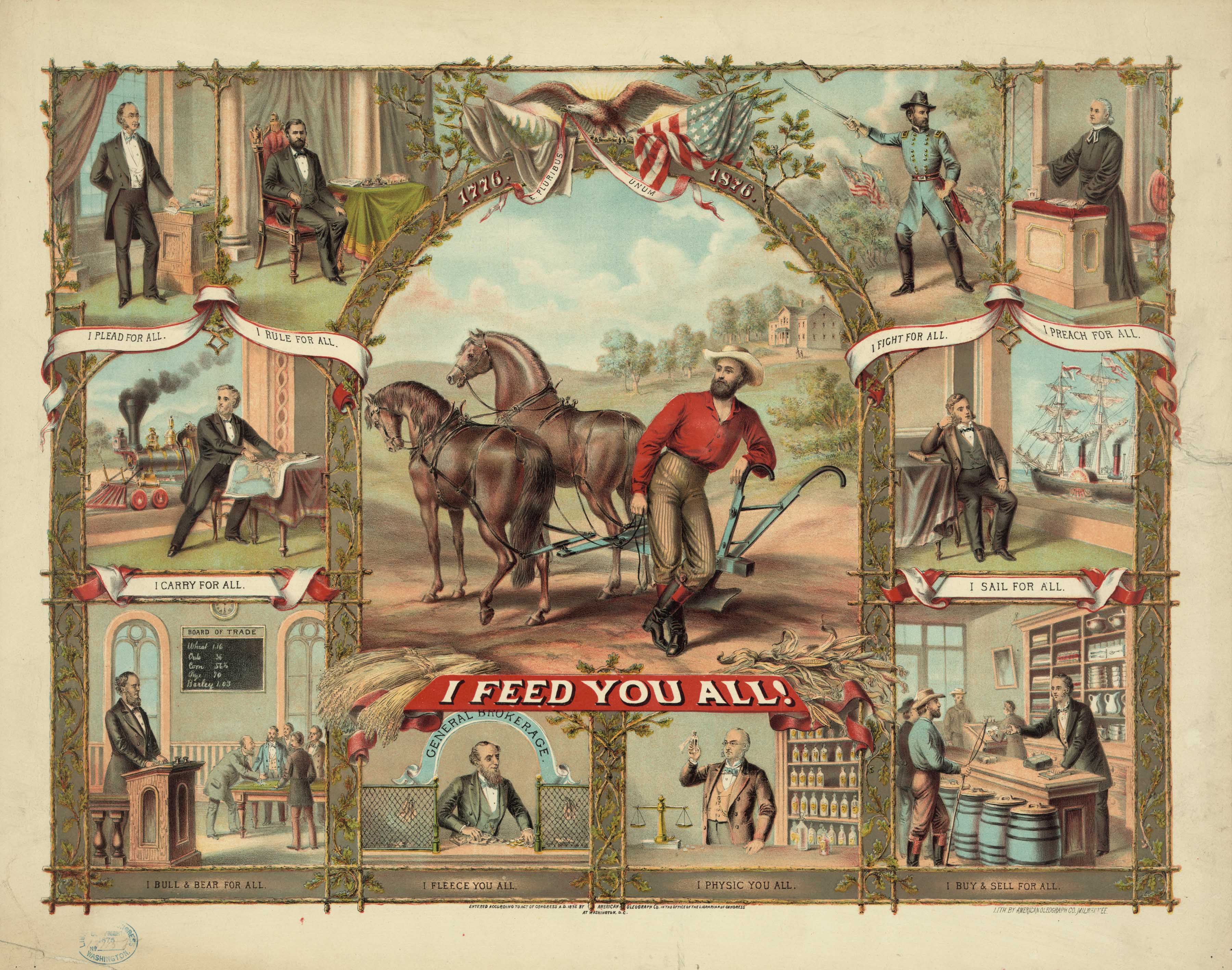
In the late 1800s, many farmers were trapped in a vicious economic cycle. Prices for crops were falling, and farmers often mortgaged their farms so that they could buy more land and produce more crops. Good farming land was becoming scarce, though, and banks were foreclosing on the mortgages of increasing numbers of farmers who couldn’t make payments on their loans. Moreover, the railroads were taking advantage of farmers by charging excessive prices for shipping and storage. What could the farmers do???
“What you farmers need to do is to raise less corn and more Hell! We want the accursed foreclosure system wiped out… We will stand by our homes and stay by our firesides by force if necessary, and we will not pay our debts to the loan-shark companies until the Government pays its debts to us.” – Mary Elizabeth Lease, quoted in “The Populist Uprising”
Task
Task:
You are a political cartoonist for a prominent newspaper, and your task is to work with your group to gather enough information to incorporate into a political cartoon about the plight of farmers. You must answer the following questions:
- How did economic issues affect farmers in the late 1800s?
- How did the farmers’ complaints and subsequent actions impact American politics?
You and your group members will use a series of websites to do your research. You will record your information on a graphic organizer and then share what you have learned with the rest of your group.
After completing your graphic organizer, you will synthesize your answers to the two questions in order to create a political cartoon that reflects farmers’ issues during the time period. Each person will create his/her own cartoon.
Process
Process:
Step 1 –
In groups of four, assign each of the following research categories to one group member. Use the information you find to complete your portion of the graphic organizer. You may also use your textbook or other resources.
(1) Farmers’ Challenges/Issues:
Farmers, Grange, and Farmers' Alliance (video)
Populism in the Late 19th Century
(2) Causes and Effects of the Grange Movement (Including Interstate Commerce Act):
Populism in the Late 19th Century
(3) Populist Party Platform (Omaha Platform):
(4) Silverites v. Gold Bugs and the Election of 1896
Silverites, Populists, and the Movement for Free Silver
Step 2 –
Share your research with your group so that everyone has all of the information for the graphic organizer. Be sure to explain the information rather than just letting your group members copy it.
Step 3 –
Study the political cartoons on pages 220 and 223 in your textbook and think about how they relate to the information in your graphic organizer and our two questions:
- How did economic issues affect farmers in the late 1800s?
- How did the farmers’ complaints and subsequent actions impact American politics?
Step 4 –
Individually, create a political cartoon from the viewpoint of a farmer that illustrates:
- at least one economic issue that affected farmers and how it affected them.
- at least one impact of the issue on American politics.
Evaluation
Evaluation:

Conclusion
Conclusion:
You have just researched the economic challenges facing farmers in the late 1800s and how those challenges resulted in political action. Through your work, you found out how groups of people can mobilize in order to attempt to bring about change. Take some time to reflect back on what you have learned. Consider these questions:
What factors contributed to the beginnings of the Populist party?
What impact did the Populist Party (a third party) have on the election of 1896 and beyond?
Can you think of other examples of third parties in the United States?