Introduction
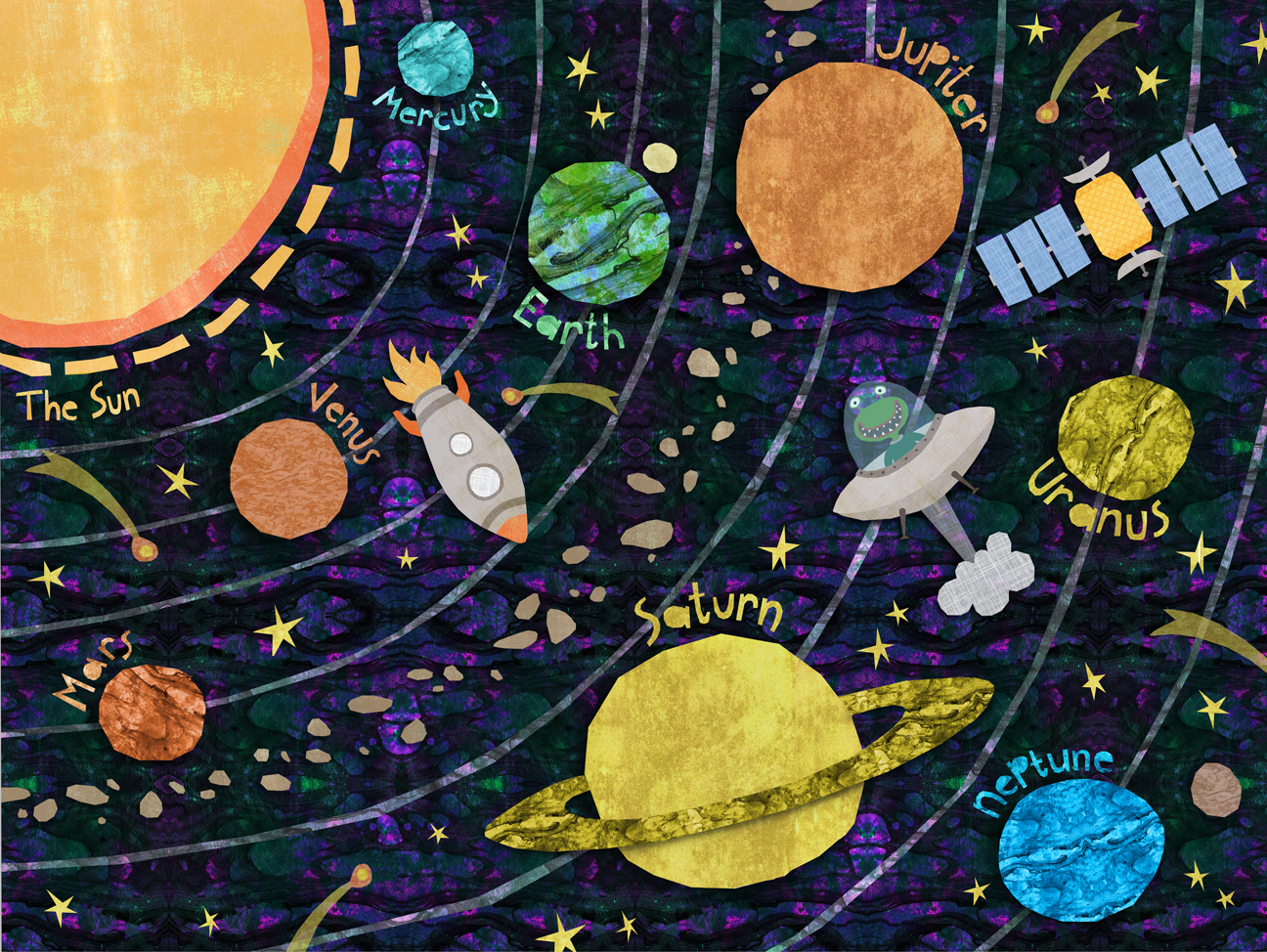
 Since we live on Earth one of the planets in the Solar System it is only fit we learn about our neighbors! What are their names, location, size, and those fun facts about each planet!!!
Task
Your task is to divide into groups of three and choose a planet. Learn about your planet of choice, create a model and present to class. Once everyone is done presenting, we will put all the planets together in the back of the class wall to create a mural.

Remember be creative and precise with your models!!!!
Process
Now that you have split into groups of three, chosen your planet it is time to begin your project!!! Use the following website to learn about your planet.
http://www.windows2universe.org
Read and answer the questions on the following worksheet that pertain to the planet you are presenting only.
Name _____________________________
Solar System Worksheet
Click on the picture of Mercury.
1. List three important facts about this planet that you read from the title page.
A. _______________________________________________
B. _______________________________________________
C. _______________________________________________
Click on Planetary Facts to answer the following:
A. Diameter: _______________
B. Density: _______________
C. Minimum distance from earth: _______________ (in miles)
D. Number of satellites/rings: _______________
Click on the Back button and then click on Discover Mercury to answer the following:
A. Why is Mercury difficult for us to see?
B. How many earth days equal a Mercury day?
C. What spacecraft visited Mercury?
Click on the Back button and then click on Image Archive to check out the pictures.
Click on the Back button and visit other links on this page to find four new and important facts about this planet.
A. ____________________________________________________________
B. ____________________________________________________________
C. ____________________________________________________________
D. ____________________________________________________________
Click on the Back button until your get back to the Solar System WebQuest. Click on the picture of Venus.
1. List three important facts about this planet that you read from the title page.
A. _______________________________________________
B. _______________________________________________
C. _______________________________________________
Click on Planetary Facts to answer the following:
A. Diameter: _______________
B. Density: _______________
C. Minimum distance from earth: _______________ (in miles)
D. Number of satellites/rings: _______________
Click on the Back button and then click on Discover Venus to answer the following:
A. Why is Venus normally visible on earth?
B. What two times of the day should you look in the sky to see Venus?
C. Why does the Sun rise in the west and set in the east on Venus?
D. Describe the atmosphere and surface of Venus.
Click on the Back button and then click on Image Archive to check out the pictures.
Click on the Back button and visit other links on this page to find four new and important facts about this planet.
A. ____________________________________________________________
B. ____________________________________________________________
C. ____________________________________________________________
D. ____________________________________________________________
Click on the Back button until your get back to the Solar System WebQuest. Click on the picture of Earth.
1. List three important facts about this planet that you read from the title page.
A. _______________________________________________
B. _______________________________________________
C. _______________________________________________
Click on Planetary Facts to answer the following:
A. Diameter: _______________
B. Density: _______________
C. Minimum distance from earth: _______________ (in miles)
D. Number of satellites/rings: _______________
Click on the Back button and then click on Interior and Surface to answer the following:
A. When was the earth formed?
B. What is unique about the earth’s surface?
C. What is the term for the slow movement of the Earth’s outer layer.
Click on the Back button and then click on Image Archive to check out the pictures.
Click on the Back button and visit other links on this page to find four new and important facts about this planet.
A. ____________________________________________________________
B. ____________________________________________________________
C. ____________________________________________________________
D. ____________________________________________________________
Click on the Back button until your get back to the Solar System WebQuest. Click on the picture of Mars.
1. List three important facts about this planet that you read from the title page.
A. _______________________________________________
B. _______________________________________________
C. _______________________________________________
Click on Planetary Facts to answer the following:
A. Diameter: _______________
B. Density: _______________
C. Minimum distance from earth: _______________ (in miles)
D. Number of satellites/rings: _______________
Click on the Back button and then click on Discover Mars to answer the following:
A. Why was Mars named after a god of war?
B. Describe the largest volcano on Mars.
C. What are the names of this planet’s two moons?
Click on the Back button and then click on Image Archive to check out the pictures.
Click on the Back button and visit other links on this page to find four new and important facts about this planet.
A. ____________________________________________________________
B. ____________________________________________________________
C. ____________________________________________________________
D. ____________________________________________________________
Click on the Back button until your get back to the Solar System WebQuest. Click on the picture of Jupiter.
1. List three important facts about this planet that you read from the title page.
A. _______________________________________________
B. _______________________________________________
C. _______________________________________________
Click on Planetary Facts to answer the following:
A. Diameter: _______________
B. Density: _______________
C. Minimum distance from earth: _______________ (in miles)
D. Number of satellites/rings: _______________
Click on the Back button and then click on Discover Jupiter to answer the following:
A. What is the most famous feature on Jupiter, and what is it really?
B. Why could we not breathe the air on Jupiter?
C. What spacecraft have we sent to Jupiter?
Click on the Back button and then click on Image Archive to check out the pictures.
Click on the Back button and visit other links on this page to find four new and important facts about this planet.
A. ____________________________________________________________
B. ____________________________________________________________
C. ____________________________________________________________
D. ____________________________________________________________
Click on the Back button until your get back to the Solar System WebQuest. Click on the picture of Saturn.
1. List three important facts about this planet that you read from the title page.
A. _______________________________________________
B. _______________________________________________
C. _______________________________________________
Click on Planetary Facts to answer the following:
A. Diameter: _______________
B. Density: _______________
C. Minimum distance from earth: _______________ (in miles)
D. Number of satellites/rings: _______________
Click on the Back button and then click on Discover Saturn to answer the following:
A. What did the two humps observed by Galileo turn out to be?
B. What spacecraft is supposed to visit Saturn this year?
C. What is the name of Saturn’s largest moon?
Click on the Back button and then click on Image Archive to check out the pictures.
Click on the Back button and visit other links on this page to find four new and important facts about this planet.
A. ____________________________________________________________
B. ____________________________________________________________
C. ____________________________________________________________
D. ____________________________________________________________
Click on the Back button until your get back to the Solar System WebQuest. Click on the picture of Uranus.
1. List three important facts about this planet that you read from the title page.
A. _______________________________________________
B. _______________________________________________
C. _______________________________________________
Click on Planetary Facts to answer the following:
A. Diameter: _______________
B. Density: _______________
C. Minimum distance from earth: _______________ (in miles)
D. Number of satellites/rings: _______________
Click on the Back button and then click on Discover Uranus to answer the following:
A. What is unusual about the north and south pole and why is this so?
B. What are two important facts about the moons of Uranus?
C. What made Uranus appear to blink?
Click on the Back button and then click on Image Archive to check out the pictures.
Click on the Back button and visit other links on this page to find four new and important facts about this planet.
A. ____________________________________________________________
B. ____________________________________________________________
C. ____________________________________________________________
D. ____________________________________________________________
Click on the Back button until your get back to the Solar System WebQuest. Click on the picture of Neptune.
1. List three important facts about this planet that you read from the title page.
A. _______________________________________________
B. _______________________________________________
C. _______________________________________________
Click on Planetary Facts to answer the following:
A. Diameter: _______________
B. Density: _______________
C. Minimum distance from earth: _______________ (in miles)
D. Number of satellites/rings: _______________
Click on the Back button and then click on Discover Neptune to answer the following:
A. What was first used to discover Neptune?
B. What made the scientist think that Neptune must exist?
C. Click on most of the time and figure out in what year Neptune will become the ninth
planet again.
D. What is the name of Neptune’s largest moon?
Click on the Back button and then click on Image Archive to check out the pictures.
Click on the Back button and visit other links on this page to find four new and important facts about this planet.
A. ____________________________________________________________
B. ____________________________________________________________
C. ____________________________________________________________
D. ____________________________________________________________
Click on the Back button until your get back to the Solar System WebQuest. Click on the picture of Pluto.
1. List three important facts about this planet that you read from the title page.
A. _______________________________________________
B. _______________________________________________
C. _______________________________________________
Click on Planetary Facts to answer the following:
A. Diameter: _______________
B. Density: _______________
C. Minimum distance from earth: _______________ (in miles)
D. Number of satellites/rings: _______________
Click on the Back button and then click on Discover Pluto to answer the following:
A. How is Pluto’s discovery similar to that of Neptune?
B. What three facts made Pluto difficult to find?
C. Click on isn’t a planet at all and explain the controversy about Pluto.
Click on the Back button and then click on Image Archive to check out the pictures.
Click on the Back button and visit other links on this page to find four new and important facts about this planet.
A. ____________________________________________________________
B. ____________________________________________________________
C. ____________________________________________________________
D. ____________________________________________________________

Then create a model of your planet using the following materials:
styrofoam ball
Paint (choose the color according to your planet)
String and thumb tack (to hang your planet in classroom)
Remember everyone in the group must present and work on the model!!!!!!
Evaluation
You will be evaluated on your presentation and planet model, be creative and stay on task!!!!
Oral Report Evaluation Rubric
|
Beginning to Meet (2) |
Meeting (3) |
Exceeding (4) |
Total |
|
|
Jot Notes |
-few jot notes |
-sufficient jot notes |
- numerous jot notes |
|
|
Rough Draft |
-some spelling errors |
-few spelling errors |
-all words spelled correctly |
|
|
Final Report |
-some errors corrected |
-all errors corrected |
-all errors corrected |
|
|
Oral |
-good use of voice |
-good use of voice |
-good use of voice |
|
|
Teamwork |
- works well in group |
-helps to organize and facilitate group |
-provides leadership |

Conclusion
By now you are familiar with all the planets in our solar system. You have learned to work well as a team and to stay on task. You created a model of your planet using the list of materials provided, and used lots of creativity. The collective models are being displayed in the back of the classroom orbiting the Sun which I created. I hope everyone had fun making those models and learning about our Solar System.

Credits
Thank you google.com for the images and http://etc.usf.edu/flstandards/sss/pdf/sci5.pdf
Teacher Page
This webquest was created by Gloria Baez from Carlos Albizu University, Miami Fl. The Webquest can be used on 5th grade students and it follows the standards for 5th grade under the Sunshine State Standards.
Earth and Space
• knows the orbit of the Earth is slightly elliptical and the Earth is closest to the Sun in the
Northern Hemisphere in winter.
• knows that the angle that the rays of the Sun strike the surface of the Earth determines the
amount of energy received and thus the season of the year.
• knows the effect of the tilt of the Earth on polar climates.
• knows the relative positions of the Moon, Earth, and Sun during each of the phases of the
Moon.
• knows that the planets differ in size, characteristics, and composition and that they orbit the
Sun in our Solar System.
• knows the arrangement of the planets and the asteroid belt in our Solar System.