
Introduction
Figure of speech and Punctuation
Figure of speech:
Onomatopia: The formation of a word by imitation of a sound made by or associated with what it is referring to.
Example: “Bark! Bark!” went the dog as he heard the doorbell ring.
Personification: The attribution of a human nature or character to inanimate objects or abstract notions.
Example: The sun opened its sleepy eyes.
The sun is doing something a human would do. He is opening his eyes.
Hyperbole: A figure of speech that uses an extravagant or exaggerated statement to express strong feelings.
Example: She was as light as a feather.
Verb: Action verbs are doing words that involve an action.
Example: She ran the cross-country.
The verb is ran.
Linking verbs are verbs that join other words in a sentence (was, is, are)
Example: There are thirteen kids in the classroom.
Metaphor: A figure of speech in which term is applied to something to which is not literally applicable, in order to subject a resemblance.
Example: The tree was a swaying blade of grass.
Simile: A figure of speech directly expressing a resemblance, in one or more points, of one thing to another.
Example: He ate like a pig.
Punctuation:
Parentheses are used to:
1.Explain what a difficult word means.
2.Show some ones thoughts.
3.Add extra information to help the reader.
Example:
a) The diagram (shown on the previous page) is of a school.
b) The Eiffel Tower (found in Paris, France) was made by an architect called Gustave Eiffel.
Semi-colon: Like commas and full stops they mark the places where you would pause when speaking.
A semi-colon can sometimes be used to replace a full stop. It links two complete sentences and turns them into one.
Example: She opened the cupboard; it was empty.
The comma is the weakest mark, then comes the semi-colon. The colon is stronger than the semi-colon, but weaker than the full stop.
. : ; ,
Colons: They are used:
a) Before a list of words, phrases or clauses.
b) Colons and semi-colons are also used in a list.
c) A colon is also used in a glossary between a word and its definition.
Dash: Showing repetition or hesitation.
Example: “St-stop!” cried the cold boy.
Showing interruption.
Example: “The girl is my-”
“Best friend. She does everything with you.”
Speech marks: Showing repetition or hesitation.
Speech marks: They are used to show what the character is saying.
Example: “Hello,” said the girl.
“Hello.”
Task
Activity
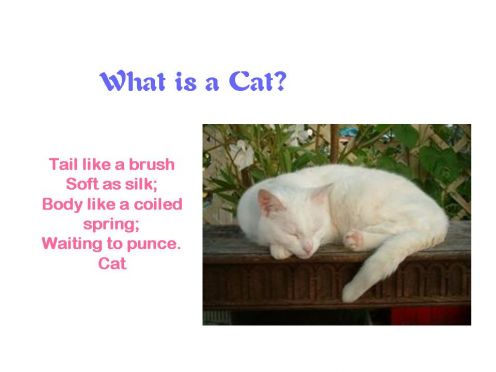
Your activity is to write a poem. It has to make sense or you won't have a good mark. It doesn't have to rhym.
Process
What to do
You need to write a poem that has most of the punctuation and most of the figure of speech. It doesn't have to rhyme but it would be good if it could. You can chose what you write about
Evaluation
Evaluation
I will be evaluating your poem by how much figure of speech you put into your poem. It also has to make sense.
|
Poem Marks |
Highly Developed |
Developing |
Under-Developed |
|
Figurative speech
10 |
You have understood what you need to do. You have followed the instructions. There are no spelling mistakes. It makes sense. |
You have understood what you need to do. There are a few spelling mistakes. You have used the figure of speech correctly but it doesn’t really make sense. |
You haven’t understood what you need to do. There are more than 5 spelling mistakes. The poem is unfinished. It doesn’t make sense. |
Conclusion
Conclusion
Punctuation is really helpful because you need punctuation otherwise you can't read it very well.
Example: we did the edu dance concert i think we did really well and it was fun
It would be harder to read if it was a paragraph.
What it should be is this:
We did the edu dance concert. I think we did really well and it was fun.
When you want a character to talk you need to put the punctuation inside the speech marks.
Example: "Hello," she said. "How are you?"
Credits
Credits