
Introduction
Elements of choreography
Dancing that follows set choreography requires that the form of the types of music be clear so that dancers can begin and end the dance patterns in time with the music. Many of these dances are symmetrical. Choreographed dances also require an introduction long enough so that dancers can take their places, and a clear ending so that they can conclude the choreography.
Task
We are going to see a video about the different types of music.
[video:https://www.youtube.com/watch?v=7uxF9CsxW88 align:center]
Process
Shape
The first element is body shape - not the dancer's figure or proportions, but rather the configuration of his or her torso and limbs into positions that change over time.
Professional dancers train for many years to make their bodies flexible and responsive, able to assume long lines that are straight or curved, or jagged, angular contours. The choreographer designs these shapes and links them with transitional movements.
Space
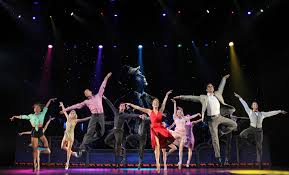
The next element of composition is design in space: the paths and patterns the dancer traces in the performance area. The choreographer arranges dancers on the stage and plans their travel around the available space to create visual interest and dramatic effect.
Choreographers are like architects who build dynamic structures with human bodies.
Timing
With the third element of dance composition and timing.
Movement
The fourth element of dance composition is energy or dynamics. This is the most complex component since it encompasses all the other elements.
Dynamics is hard to put into words - it has to be experienced. We often describe it as the quality of movement, the intangible factor that adds uniqueness, richness and power.
Evaluation
Dance Elements Checklist
For Dancers and Observers
Group members:
______________________________ _______________________________
______________________________ _______________________________
|
Axial Movements |
□ Bend □ Turn □ Stretch □ Reach □ Twist |
|
Locomotor Movement |
□ Run □ Jump □ Leap □ Gallop □ Skip □ Walk □ Hop □ Slide □ Leap |
|
Qualities of Movement |
□ Heavy □ Shaky □ Light □ Sharp □ Smooth □ Choppy □ Flowing |
|
Time |
□ Fast □ Moderate □ Slow |
|
Levels |
□ High □ Medium □ Low |
|
Pathway |
□ Curve □ Zigzag □ Straight □ Spira |
|
shape |
□ Open □ Wide □ Closed □ Curled □ Narrow |
Ss divided in two groups, have to create their own choreographic choosing a music genre. They have to make a video clip using movie maker and present to the class. Their video clip has to include the name of the song, the name of the singer and what music genre they chose.
Conclusion
The emergent form of the dance performance derives not only from the choreography, but also from the quality of the music, the ability of the caller, the skill level of the dancers, and the physical environment in which the dance is performed.
Credits
Webquest
done by:
Leythe Tenes 076-08-13562
Evelyn Gonzalez 076-09-208
To:
Lic. Celeste Lemus
Teaching Techniques IV
http://www.balletaustin.org/education/documents/ElementsofChoreographyHandout.pdf
http://www.thetoptens.com/most-popular-types-of-music/
http://www.sandi.net/cms/lib/ca01001235/centricity/domain/176/lessons/d…