
Introduction
Why do we study literature? "The past is always in the present" (William Faulkner). We have a lot to gain from a good book--notice I said a good book. What I mean by this is that authors entertain us as they take us on their journey. If we were to simply read textbooks all day, well that would be a different story. Fortunately, there are many different authors and genres that appeal to us. We'll also see why it's important to view literature outside of our culture and the dangers of only viewing "the single story." Now, let's get started. This is a Web Quest. You can view what is expected from you on the "Task" page. Then, you will go through the "Process," page, or how to get there. The evaluation page shows how requirements are weighed. Remember, this is about having fun!
Task
During this quest, you will:
- Explore American, British, and World Literature
- Access and explore novels, poems, and short stories
- Study some of the many genres in young adult literature
- Create your own "Cultural Bag"
- Write your own book review
- Create your own "must read" list as you stumble upon great literature
- Write a reflective essay including: what you find helpful, what your goals are, and what you didn't know before that you're glad you know now
Process
Begin by watching the following speech by Chimamanda Adichie:
http://www.ted.com/talks/chimamanda_adichie_the_danger_of_a_single_story

An author biography can be found here:
http://chimamanda.com/about-chimamanda/
Now, isn't it easy to see the dangers of only seeing things from one perspective? That's why it's important to read multiple types of literature. Teachers often (accidentally) kill students love of reading, also known as readicide. Because my goal is to create lovers of reading, I'm going to let you explore and find what interests you.
Before we look at literature, I want you to create a "Cultural Bag." Everyone has a culture! It's what makes us, as individuals, unique. What make you, you? It's not simply your ancestry, though that may be a big part of it. It's also about the things you enjoy! Take a look at my Cultural Bag.
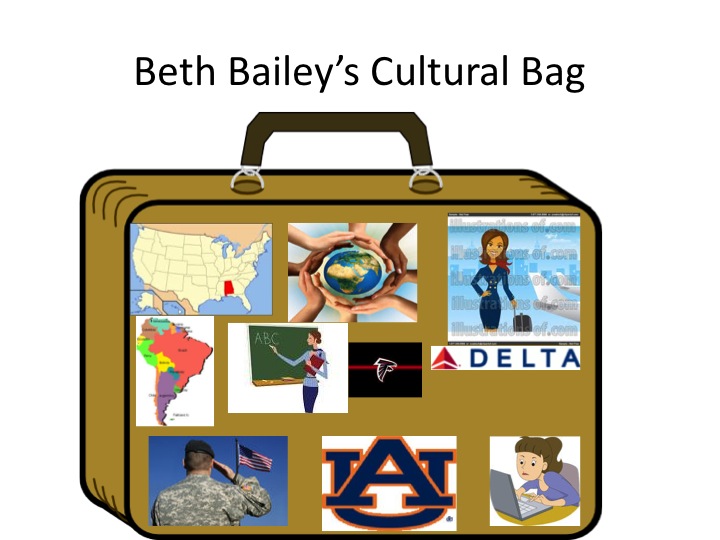
Now, create your own by clicking here: https://www.google.com/#q=suitcase+image. You can save an image to the desktop. Next, "Google" pictures that show your culture, and drag them on to the suitcase. We can share and discuss these during class.
Before we immerse ourselves in "all things" literature, let's refresh our memory with some basics, like genres and where to go to select books. The following sites all have recommended books and reviews for American Literature, British Literature, and World Literature. I suggest you read a couple, because I'm going to have you write your own review.
Literature may be true (nonfiction) or true (fiction). Each work is separated into a genre (a category of artistic composition characterized by similarities in form, style, or subject matter). Some books may fall into multiple categories. I encourage you to explore some of the following (young adult) subgenres; I also encourage you to go ahead and start your potential reading log (what you would like to read) You will be required to sumbit three for each of the following genres, and I would like to see a well-rounded list, not only with American Literature authors, for example:
- Classics: http://www.npr.org/2012/08/07/157795366/your-favorites-100-best-ever-teen-novels
- Historical Fiction: https://www.goodreads.com/shelf/show/young-adult-historical-fiction
- Poetry (often found in nonfiction): https://www.goodreads.com/shelf/show/young-adult-poetry
- Realistic Fiction: https://www.goodreads.com/list/show/8460.Best_Young_Adult_Realistic_Novels
- Science Fiction: https://www.goodreads.com/shelf/show/young-adult-science-fiction
- Fantasy: https://www.goodreads.com/shelf/show/young-adult-fantasy
- Picture Books: http://www.amazon.com/Picture-Books-for-Young-Adults/lm/R2W74UORTMS7PZ
- Graphic Novels: http://www.ala.org/yalsa/great-graphic-novels
- Biography: http://info.infosoup.org/lists/biosForTeens.asp
- Autobiography: http://info.infosoup.org/lists/biosForTeens.asp
Let's begin with taking a look at "World Literature." This is typically taken as a course in high school, perhaps in tenth grade. Let's take a look at some young adult world literature here: http://www.worldliteraturetoday.org. Do any of the titles look familiar? Scroll through them, and add some to your potential reading log.
World literature is rich in culture. It shows the diversity in all of us. To read one of my personal favorite short stories, click here: http://www.ndsu.edu/pubweb/~cinichol/CreativeWriting/323/MarquezManwithWings.htm. Is this what you pictured?
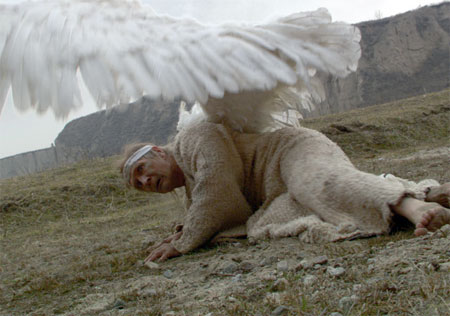
Gabriel Marcia Marquez' works are often loaded with magical realism (real people in imaginary places or imaginary people in real places). This craft is often perfected by South American authors. Though it's different and maybe even seem a little complicated at first, it's lovely when you let your imagination go.
For an author bio, click here: http://www.biography.com/people/gabriel-garc%C3%ADa-márquez-189132
Now. Once you have looked at "World Literature," you have a broad range of titles, likes, and maybe even some dislikes. It's time to narrow the focus a little or zoom in on specifics.
Most students take American Literature during eleventh grade. Don't panic; I'm not going to give you a list of Scarlet Letter and Huckleberry Finn type novels. Of course, these are all well and good, but I want you to choose books that you will identify with. I want you to be able to take the journey with the protagonist and feel his/her pain. I want you to love to read!
Here is one my my favorite American Literature short stories; it is classified as "Southern Gothic." Click here: http://plaza.ufl.edu/lacy.hodges/GoodCountryPeople.pdf
Flanner O'Conner wrote several fabulous short stories. For an author bio, click here: http://www.biography.com/people/flannery-oconnor-9426760
More American Literature:
If you like short stories, click here: http://info.infosoup.org/lists/biosForTeens.asp
If you're more the poetry type, click here: http://www.barnesandnoble.com/s/?category_id=795037
And, novels: http://www.ala.org/yalsa/booklists/bbya
And, finally... Let's explore a little British Literature. If you're wondering where the Harry Potter and Lord of the Rings books are, well, you've found them! Click here: https://www.goodreads.com/list/show/7170.Young_Adult_fiction_by_UK_authors
Here's a short story that I recommend: http://www.theshortstory.eu/stories/dilys-rose
And, here's the author's bio: http://literature.britishcouncil.org/dilys-rose
Okay, so I mentioned that you would be writing your own book review. Book reviews are strictly formatted. They should be no more than 200 words. The beginning is always a brief summary and the opinion follows. Here is an example:
Many of us have known persons in our lives who have committed suicide, and we often ask ourselves why. In Jay Asher’s Thirteen Reasons Why, we are able to take a voyeuristic peek into the life of sixteen-year-old Hannah Baker, who has given us her reasons, though after her suicide, through a series of tapes left behind for those who wronged her. Through our narrator, Clay Jenson, we journey through the heartbreaking events that led to a charming teen’s death.
What makes Thirteen Reasons Why such an enjoyable read is Asher’s brilliant characterization, the difficult theme of suicide, the realistic nature of the events that led to her suicide, and the novel’s structure. By moving in reverse, beginning with Hannah’s death, the reader knows it’s too late to save her. Knowing Hannah is already dead impacts the reader emotionally.
Thirteen Reasons Why is splendidly crafted—at times heart breaking, other times humorous, and at times will leave the reader completely raw. It’s a novel that may hit close to home. It’s a novel that we can all learn a lesson from, and it’s a novel that will cause many people to make a change.
Thirteen Reasons Why has won multiple book awards including: California Book Award, Best Books for Young Adults, Barnes & Noble Top Ten Books for Teens, International Reading Association—Young Adult’s Choices, and KirkusReviews. The debut novel by Jay Asher was also on the New York Times children’s hardcover best-seller list for over two years.
I hope you've been keeping a potential reading log! Here is an example However, you are not required to read as many as are listed here. However, feel free to add them to your list. This was one that I constructed:
Potential Reading Log
|
Defining Classics (Required 2) |
Ender’s Game, by Orson Scott Card (student pick and academic director recommendation) The Absolutely True Diary of a Part-time Indian, By Sherman Alexie Looking for Alaska, by John Green |
|
Award Winning Titles (Required 2) |
Schooled, by Gordon Korman The Absolutely True Diary of a Part-time Indian The Watsons Go To Birmingham—1963, by Christopher Paul Curits
|
|
Novel to Pair With A Classic (Required 1) |
Scrambled Eggs at Midnight, by Brad Barkley and Heather Hepler (to pair with Romeo and Juliet) Perfect Chemistry, by Simone Elkeles (to pair with Romeo and Juliet) The Absolutely True Diary of a Part-time Indian (to pair with The Scarlet Letter) This book fills many categories, and the students enjoy it The Hunger Games (to pair with 1984)—Need to read 1984, too! Lady Macbeth’s Daughter, by Lisa Klein (to pair with Macbeth)
|
|
Novel to Use Outside an English Class (Required 1) |
The Kiterunner, by Khaled Hosseini (Professor Wadham says it’s marketed for adults); must be able to argue the value for young adults; the content is questionable (rape of male by male). Chasing Vermeer (trying to pair art with English and should coordinate with art teacher) |
|
Novel for a Reluctant Reader (Required 1) |
Ender’s Game (should capture the reader), The Absolutely True Diary of a Part-time Indian (my reluctant readers love this) The Awakening, by Michael Carroll (instructor recommended) |
|
Censored Books (Required 2) |
Are You There God? It’s Me, Margaret, by Judy Blume (and other Judy Blume works) |
|
Contemporary Realistic: Romance (Required 1) |
The Loser’s Guide to Love, by A.E. Cannon (instructor pick—romance)
|
|
Contemporary Realistic: Sports (Required 1) |
Love, Life, and the Pursuit of Free Throws, by Janette Rallison (instructor pick—was checked out at the library during the course or would have been my choice)
|
|
Contemporary Realistic: Self Selection (Required 1) |
Thirteen Reasons Why, by Jay Asher (read this one, and it was my favorite for the term—have been recommending it and including it in various assignments). Look for other titles by Jay Asher. |
|
Adventure (Required 1) |
The Planet of Junior Brown, by Virginia Hamilton; Scorpions, by Walter Dean Myers; The Terrorist, by Carolyn Cooney (all textbook recommendation that have exciting plots) Peak, by Roland Smith (this plot will interest my male student audience)—teacher pick |
|
Mystery (Required 1) |
Reality Check by Peter Abrahams (have really enjoyed his writings in this course, and he has many. This author will make a lovely addition to the shelves (need to read to approve—read during course)—teacher pick; The Killer’s Cousin, by Nancy Werline; |
|
Humor (Required 1) |
Sleeping Freshman Never Lie, by David Lubar; The Hitchhiker’s Guide to the Galaxy, by Douglas Adams—book recommendation and one I’ve eyed for a very long time; The Earth, my Butt, and other Big Round Things, by Carolyn Mackler (the title alone interests me, but it’s a book pick, too) |
|
Science Fiction (Required 1) |
1984, by George Orwell (simply because I’ve heard great things and never read it—would love to experiment with this, but need to read to expand my knowledge, and see if it’s fitting for my diverse group of students. |
|
Fantasy (Required 1) |
Harry Potter and the Order of the Phoenix, Harry Potter and the Half-Blood Prince, Harry and the Deathly Hallows 1, 2 (these become more difficult as the series progresses). The library has copies. Scholastic offers suggested activities for students, and these will be great for reluctant readers. Dragonfly, by Julia Golding (teacher pick) |
|
Horror (Required 1) |
The Body Finder, by Kimberly Derting (read for the course and enjoyed); The Skeleton Man, by Joseph Bruchac; Stephen King novels (though he’s not marketed as young adult fiction, my students love his books). I would like to incorporate The Green Mile into magical realism (even if we only view the movie). |
|
Historical Fiction (Required 2) |
The Kiterunner, by Khaled Hosseini. Though this is marketed to adults, there are benefits to high school students (juniors and seniors/should be approved reading). This book explores culture, friendship, and rape. The prose is eloquent. The Secret Life of Bees, by Sue Monk Kidd—this is a book recommendation and one that I currently own. I should read to possibly select for the library bookshelves. |
|
Biographies (Required 2) |
Charles and Emma: The Darwins’ Leap of Faith, by Deborah Heleigman (read for the course) and would love to pair with science in some way; John Lennon: ALL I want is Truth, by Elizabeth Partridge (teacher pick) |
|
Nonfiction (Required 3) |
Say What? The Weird and Mysterious Journey of the English Language, by Gena K. Gorrell (recently read an essay focused on linguistics and would like to read more)—teacher pick |
|
Poetry (Required 1) |
The Music of What Happens: Poems That Tell Stories (read for the course and loved)—teacher and book pick; Looking for Your Name: A Collection of Contemporary Poems; Stone Bench in an Empty Park; Blushing: Expressions of Love in Poems and Letters (all book picks)—need to read to see if they will interest my students, especially those that are terrified of poetry |
|
Drama (Required 1) |
A Raisin in the Sun, by Lorraine Hansberry; Driving Miss Daisy; Short Plays for Young Actors (read and would like to bring into my curriculum for my 9th grade class) |
|
Short Story (Required 1) |
Up All Night: A Short Story Collection, by Peter Abrahams (loving this author—book and teacher pick; Lord of the Fries and Other Stories, by Tim Wynne-Jones (teacher pick); Angry Management: Three Novellas, by Chris Crutcher (teacher pick) |
|
Graphic Novel (Required 1) |
Outlaw: The Legend of Robin Hood, by Tony Lee, Sam Hart, and Artur Fujita; Fruits Basket series (made it through Fruits Basket, crossing it from the list). |
|
Picture Book (Required 1) |
The Lion and the Mouse, Jerry Pinckney (read for course); The Goblin and the Empty Chair, by Mem Fox and Leo and Diane Dillon (teacher pick); Where the Wild Things Are, by Maurice Sendak |
|
Author or Genre Study (Required 4) |
Read the entire Harry Potter series for a feel on the genre of fantasy (read 1-4 for author study); read 5-7 and review Scholastic reviews to teach. Read The Hobbit and The Lord of the Rings series (students love these, and I believe they offer literary quality. This will also improve my knowledge of not only the authors, but the genre of fantasy, as well. |
Evaluation
Reflective Essay (65 points) includes: 1. What you learned 2. What you enjoyed most 3. What your future goals are.
The point values are: 15 for each of the 3, 5 for MLA format, and 15 for a five paragraph essay free of grammatical errors and smooth transitions.
Cultural Bag: 25 points
Potential Reading Log: 50 points
Review a book: 25 points.
Conclusion
Shew. That was a lot to ingest! I hope you have "shelved" several of the books that you intend to explore for future reading. Reading isn't simply about reading what's required in school; it's about reading for pleasure. Though you have experienced a small touch here, it's really about turning the pages and finding yourself within the story.
Hopefully, this Web Quest will get you started on a long journey of happy reading.