
Introduction
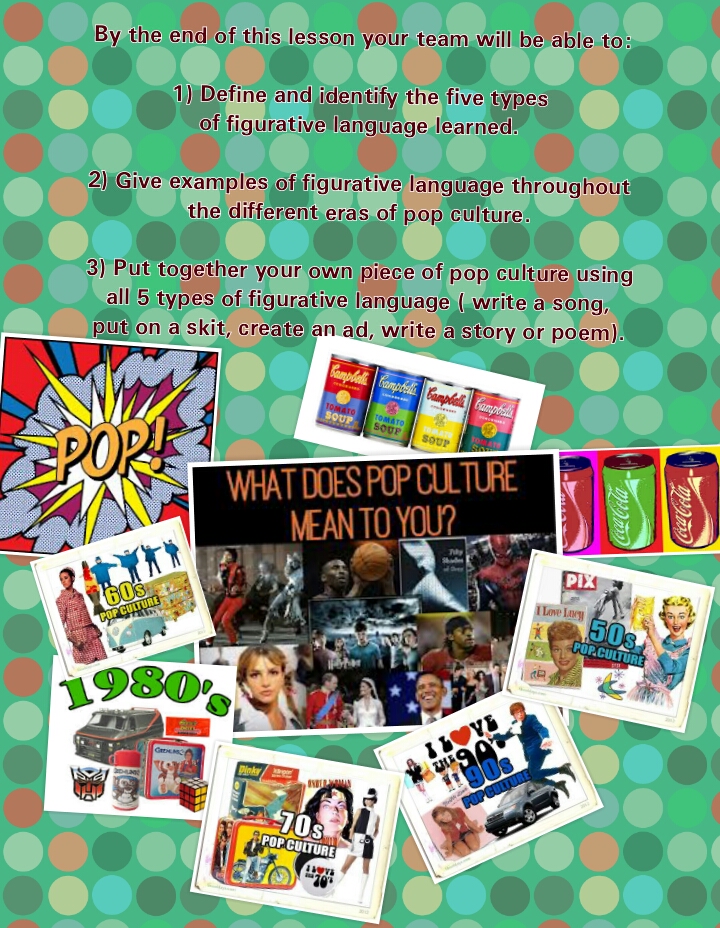
In this webquest, students will use the internet to find examples of figurative language and how it is involved in their everyday lives. They will use their creativity and imagination using figurative language to show how it is used in pop culture.
Introduction
In this webquest students will use their knowledge of five types of figurative language learned; metaphor, simile, personification, onomatopoeia and imagery, and relate them to pop culture. They must be able to use and explain these five types as well as why they are used.
Students will pair up and create their own piece of pop culture using all five types of figurative language. They will create; a magazine article, commercial, skit or song and present it to the class.
Let your creativity sail on the sun kissed waters of your imagination.

Task
Process

Evaluation
|
||||||||||||||||||||||||||||||||||||||||||
|
Conclusion

Congratulations on completing this webquest. Way to go! Not only have you sucessfully learned about some significant times in cultural history, but you have learned how deep of an effect language has played in inspiring the talent, and the youth of the generations. You have been able to recognize different types of figurative language in different areas of popular culture and you have learned how important figurative language is on that culture. Explain what you have learned. Create your own unique and creative form of pop art using figurative language in today's changing culture. How is today's culture different linguistically? Are there any similarities between the culture today and the cultures of the past and how figurative language is used in music?
Credits
Credits:
This webquest is used for the purpose of UNCC MDSK 6162 Technology Assignment. Professor James Davis.
March 25, 2014
By Morgan Vasseur
Bio:
I am currently getting my grad certificate for teaching English Language Arts in Middle Grades. I have my Bachelors of Arts in English. I am obsessed with the power of the imagination, creativity and individuality. My number one goal in life and as a teacher is to show others the importance of being proud of who you are, no matter what because we are all individuals, we are all original and we all have something wonderful to give.