
Introduction
At one point during our history, American society was know as a “melting pot,” because there were people from all over the world, each with their own distinct cultures and customs. Contrary to common belief, America is not actually a “melting pot,” but more like a “salad bowl.” A melting pot implies people who come into a society, assimilate, and adopt the standard of their new adopted society. A salad bowl implies that you hold onto your culture even after you arrive. The different cultures mix, but also remain distinct in certain aspects; however, you can still tell them apart like in a salad. This American “salad bowl” is especially apparent in the various unique styles of dance portrayed across the nation.
Task
In this webquest, you will visit the following websites regarding the four styles of cultural dance mentioned above. Read the necessary content to answer each question below. After visiting each of the websites, answer each question listed below the website in complete sentences. The student will be given 3 days.
Process
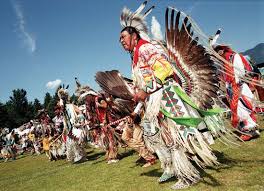
I. Native American Dance Style
Go to the following site and read the web page.
www.powwows.com/category/articles/powwow/dancing/
a) Name the nine (9) Native American dance styles.
b) What is the most popular style?
c) What style is considered the newest for women?
- On the top right search bar, type Pow Wow Trail The Drum, then select this video.
Watch the first 15 minutes of the video and answer the following questions:
a) What is a Pow Wow?
b) Describe the relationship of the drum to Native Americans.
c) What is the drum compared to? List all and the reasons why.
2. Search the calendar to see when the next Pow Wow will be in your state.
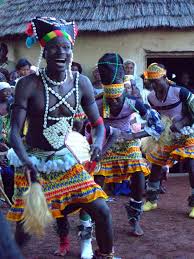
II. African Dance
1. Go to the following site and read the web page.
http://www.afrotonic.com.au/performances.htm
a) How did African's keep the tradition of dance alive when they came to the new world?
b) What were reasons for dancing?
c) Give examples of how the dancers made their music in Africa.
2. Using the navigation bar, click on Performances. Scroll down to the first video and view it. After watching the video, respond to the questions listed below:
a) What parts of the body are typically used in the dance?
b) How can you compare the traditional African dance styles to today's dance styles?
c) What is something new you have learned about African dance?
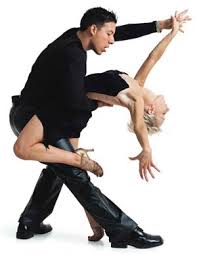
III. Latin Ballroom dance
Go to the following URL. Read the passages entitled "Salsa", "Rueda de Casino", and "Meringue". After reading the passages, answer the following questions.
http://www.danceintime.com/history.htm
1. What kinds of music influenced Salsa dance as a result of Latino immigration to the U.S. in the 1950's?
2. How would a dance leader indicate dance move changes in the Rueda de Casino dance, which is done in loud dance halls and clubs?
3. Describe the characteristics of music used in Meringue dancing, and explain the basic moves of the dance.
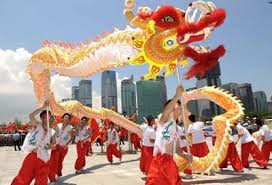
IV. Chinese Dragon Dance; Celebrating the New Year
Go to the following site, read the web page, then answer the following questions:
www.dragondanceperformance.com/about.html
- Why do many Chinese people use the term “Descendants of the Dragon”?
- What are the five qualities of the dragon that reflect why it is believed to bring good luck?
- (Fill in the blanks): In the dance, a team of people carry the dragon on _______________, and can be composed of up to ______________ people.
- Length of the Dragon:
a) What is the range of length of the dragons used in the dances? (Give answer in meters)
b) The longest dragon discussed had how many sections?
c) What is the myth behind the length of the dragon?
d) Inferring from the previous question, would it be better for the community to have a long dragon or a short dragon?
- What are the four main colors used to paint the dragons, and what does each of those colors symbolize?
- List at least three different patterns of the dragon dance.
- What does the movement “dragon chasing the pearl” symbolize?
- On the top right-hand-side of the page, click “HOME,” then answer the following question:
~How much would it cost to have the Wushu Shaolin Productions Dragon Dance Show
brought here to Louisiana and what would the show include?
Evaluation
Student/Group Name: _______________________________________ Date: ____________________
|
CATEGORY |
1 |
3 |
5 |
TOTAL |
|
Participation (x5) |
Contributes little or irrelevant information during presentation. |
Contributes some information during presentation--most is relevant. |
Contributes extensively to presentation--all information is relevant. |
|
|
Mechanics (x4) |
Many grammatical, spelling or punctuation errors. |
A few grammatical, spelling or punctuation errors. |
No grammatical, spelling, or punctuation errors. |
|
|
Organization (x4) |
The information appeared to be disorganized. |
Information is organized, but sentences are not well-constructed. |
Information is very organized with well-constructed sentences. |
|
|
Quality of Information (x4) |
Information clearly relates to the main topic. No details and/or examples are given. |
Information has little or nothings to do with the main topic. Information clearly relates to the main topic. |
It includes several supporting details and/or examples. |
|
|
Attention to Detail & Creativity (x4) |
Presentation was messy and not well organized. |
Presentation was neat but not well organized. |
Presentation was neat, well organized and showed extensive creativity |
|
|
Amount of Information (x4) |
One or more topics were not addressed. |
All topics are addressed and most questions answered with 1 sentence about each. |
All topics are addressed and all questions answered with at least 2 sentences about each. |
|
Total Points = _____/100
Conclusion
Conclusion: In conclusion, different cultures express their beliefs and traditions through dance. Although cultural dance is most often used to worship deities or tell stories, in many parts of the world, it is regarded as a popular recreational activity. Dances of different cultures are greatly influenced by the location where the dance originated and the cultural music of the area. When people begin to migrate to parts of the world where diverse cultures exist, dances may evolve to integrate new music.
Credits
Josetta Cunningham
Kaysee Carrere
Lacey Faucheux
Nashanta Benjamin
Maranda Law
Fabiola Brown
Teacher Page
Cultural Dance Webquest
Subject Area: Fine Arts
Grade Level: 10th – 12th
Lesson Topic: Cultural Dances: Chinese, Native American, African, Latin Ballroom
Objective: After completing the webquest, the student will be able to write a multi-paragraph essay describing ways in which each of the four different cultures celebrate their ancestry through dance.
GLE/Benchmarks: LA.ARTS.AP.2D.H2 ...analyzing the unique characteristics of dance as it reflects the quality of everyday life in various cultures; (1, 2, 3, 4, 5)
Description: The purpose of this webquest is to help the student develop an understanding of how different cultures represent themselves through dance.