
Introduction
THIS PRESENTATION IS MADE BY: DAYANA BERMÚDEZ STUDENT AT SOFIA CAMARGO DE LLERAS.
WHAT IS GENETIC?
Genetics is the area of study in biology that seeks to understand and explain how biological inheritance is transmitted from generation to generation through DNA.
To study and understand this branch of science more thoroughly, we must enter the field and for this we will enter the world of Mendel's laws
WHAT IS THE MENDEL'S LAWS?
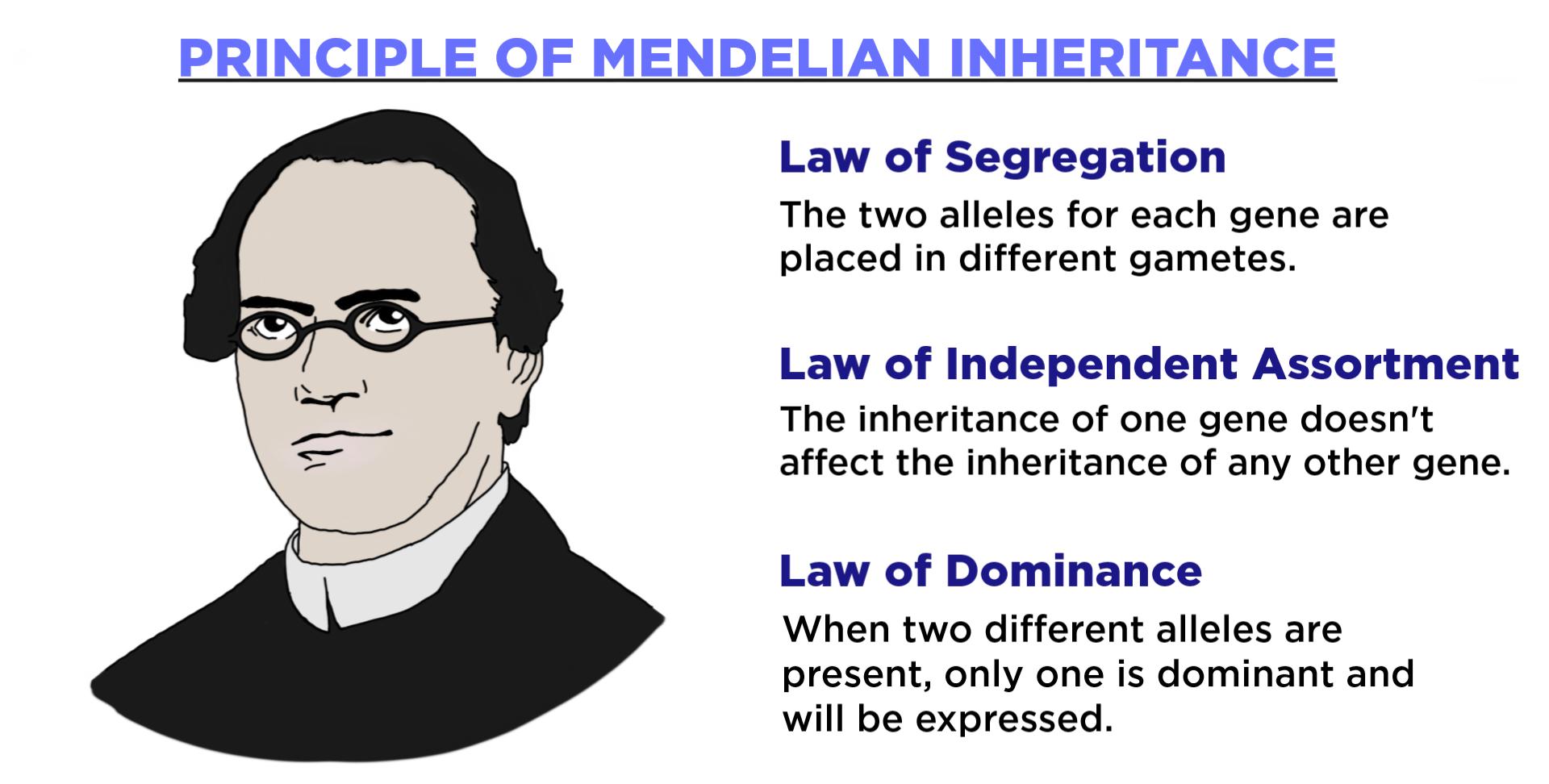
Mendel's laws are three postulates that Gregor Mendel established to explain the inheritance of characters from parents to children. They are also known as the Mendelian laws of inheritance.
Mendel's first law: law of uniformity
This principle states that when two individuals homozygous for a different trait are crossed, the individuals of the first filial generation (ie, the offspring) will have the same genotype and phenotype of the dominant trait. Mendel proposed that each organism has two factors for each character. When gametes are formed by meiosis, these factors separate and each gamete now carries one of the factors. Today we know that these factors are genes, and the different versions of a gene are alleles.
Mendel's Second Law: Law of Segregation
Mendel's second law or principle of segregation establishes that the hereditary factors of a character are separated equally in the gametes or sexual cells. In this case, a homozygous parent (two identical alleles) will produce gametes with one allele, while a heterozygous parent will produce gametes with one or the other allele equally. Thus, at fertilization, a gamete with one allele will join another with another allele, and the resulting individual will have two alleles, each coming from one parent.
Third law: principle of independent transmission.
Mendel's third law or Mendelian principle of independent distribution states that the different characters are transmitted separately. That is, the color of the seeds is transmitted regardless of the shape of the seed or the color of the flowers.
EXAMPLES OF MENDEL'S LAWS
*Mendel's first law: law of uniformity:
The color character of the pea seed is defined by a gene (or hereditary factor as Mendel called it) that can be green or yellow: these are the alleles of the gene. All individuals carry a pair of alleles for a given gene:
*If he has two green alleles, he will be homozygous for the dominant color;
*if it has two yellow alleles, it will be homozygous for the recessive color;
*if it has one green and one yellow allele, it will be heterozygous and show the dominant color, in this case green
*Mendel's Second Law: Law of Segregation
A homozygous parent with red flowers and another homozygous parent with white flowers are crossed. The first generation of children will be heterozygous, that is, they will have two different alleles, one for red and one for white. If all the individuals of that generation have red flowers, this means that red is the dominant color and white is the recessive color.
*Third law: principle of independent transmission.
A plant homozygous for long stem (LL) and terminal flowers (TT) is crossed with a plant with short stem (ll) and axial flowers (tt). The first filial generation will be 100% heterozygous for the two characters (Ll Tt) and the phenotype will be the dominant one: long stem with terminal flowers.
When two plants of the F1 generation are crossed, the F2 progeny will have the following genotype and phenotype:
| Genotipo | Proporción | Fenotipo |
|---|---|---|
| LLTT | 1/16 |
Tallo largo, flor terminal |
| LLTt | 2/16 | Tallo largo, flor terminal |
| LLtt | 1/16 | Tallo largo, flor axial |
| LlTT | 2/16 | Tallo largo, flor terminal |
| LlTt | 4/16 | Tallo largo, flor terminal |
| Lltt | 2/16 | Tallo largo, flor axial |
| llTT | 1/16 | Tallo corto, flor terminal |
| llTt | 2/16 | Tallo corto, flor terminal |
| lltt | 1/16 | Tallo corto, flor axial |
As can be seen, the predominant phenotype is the plant with a long-stemmed terminal flower in a proportion of 9 out of 16. The plants with a long-stemmed axial flower are 3 out of 16, the plants with a short-stemmed terminal flower are 3 out of 16 and finally only 1. 16 will have a short stem with an axial flower. This is also expressed as the ratio 9:3:3:1.
MENDELIAN EXPERIMENTS:
Between 1856 and 1865, Gregor Mendel carried out experiments with the pea Pisum sativum, taking advantage of the different characteristics that this plant could present, such as:
seed texture: rounded and wrinkled;
seed color: green and yellow;
pod shape: swollen or wrinkled;
trunk size: long or short;
flower colors: white or red;
flower position: axial or terminal.
The other advantage that Mendel took advantage of for his discoveries was the self-fertilization capacity of the pea plant. This made it easy for him to do the crosses and self-crosses experiments to obtain homozygous inbred lines.
NON-MENDELIAN INHERITANCE:
Although the principles established by Mendel contributed greatly to the explanation of the transmission of characteristics from generation to generation, there are other alternative mechanisms of inheritance.
CODOMINANCE:
Codominance is the condition where the heterozygous individual shows the characters of the two alleles, without one being dominant over the other. That is, alleles for the same trait are expressed simultaneously. For example, if a white-flowered plant is crossed with a red-flowered plant, the first generation will have both red and white flowers.

INCOMPLETE DOMINACE:
When the phenotype that appears in the children is an intermediate combination of the two parents. This means that neither of the contrasting alleles dominates over the other. This is called incomplete dominance.

SEX-LINKED INHERITANCE:
There are some characters that are found on the sex chromosomes. In fact, the inheritance of sex-linked genes is different between males and females. In humans, the female has XX chromosomes and the male has XY.
Example: hemophilia
The gene for coagulation factor VIII is located on the X chromosome in humans. When this gene suffers a mutation, this protein does not work and coagulation problems with bleeding occur, a disease known as hemophilia. A female with one of the defective XNXd alleles can have the following offspring with a normal XNY male:
A normal daughter XNXN;
A normal son XNY;
One XNXd carrier daughter;
A son with hemophilia XdY.
MULTIPLE ALLELES:
In Mendel's experiments, this implied that there were only two alleles for a given gene, dominant and recessive. However, there are characters that are determined by more than three alleles in a species.
Example: the color of rabbits

Task
SOLVE THE FOLLOWING EXERCISES:
SCIENCE THAT IS IN CHARGE OF THE STUDY OF INHERITANCE
GENETICS
ANATOMY
BIOLOGY
ECOLOGY
HOW MANY ARE THE LAWS OF MENDEL?
1
2
4
3
FATHER OF GENETICS
MENDEL
ARISTOTLE
NEWTON
GABRIEL GARCIA MARQUEZ
MENDEL'S LAWS ON THE SEGREGATION OF ALLELES SAYS
A. Alleles of different genes separate in gametes.
B. The two alleles of the same gene separate when gametes are formed.
C. Gametes carry one allele from each parent.
D. Each parent carries at least two alleles.
THE BASIC LAWS OF GENETIC INHERITANCE WERE ENUNCIATED.
A. In 1866.
B. All answers are correct
C. By Gregor Mendel.
D. From analysis of pure and hybrid strains of pea plants
WHAT DID MENDEL EXPERIMENT WITH?
A. Peas
B. Flowers.
C. Rats.
D. Flies.
ANSWERS:
1. GENETICS
2. IS 3
3. MENDEL
4. B.The two alleles of the same gene separate when gametes are formed.
5.B. All answers are correct
6. A. Peas.
Process
This work was done with the help of web pages that will appear in the credits.
Conclusion
It is finished at the end of all the work
Credits
Credits will be given at the end of all work