
Introduction
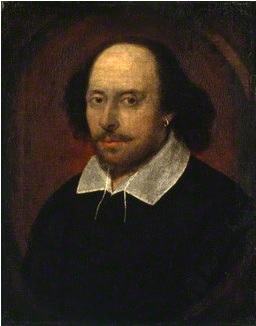
Today you will look at some websites to gain an understanding of the ideas on families, gender roles, parental authority and economic class dynamics during the time of Romeo and Juliet.
Task
Directions: In your group of three, split the sections up so each person is responsible for researching four questions (1-4, 5-8, 9-12). Your ultimate product is going to be to synthesize a Google Slide symbolically representeing the information you read here with what has appeared in the play so far.
Process
Influences
Begin by comparing the original text which we are studying in class, written by William Shakespeare, with the poem which is thought to have inspired the play. Click HERE to look at the document.
1. What influenced the writing of the play?
2. Explain what the theme of the poem is according to this source. (Hint: look at "To the Reader".)
3. Read "The Argument" and compare it to the prologue of the play. List at least two details for each using specific language in both the play and the poem. Use THIS link to access the prologue in No Fear.
| Similar | Different |
4. Look at one more detail (at least) from the poem and explain how it is both similar to and different from the play. You can use the No Fear site opened for question 3 to navigate for details from the text.
Families
Read over the information HERE and answer a few questions about family life in the play's context and how it is reflected in the text.
5. Who was most likely to initiate a marriage arrangement and for what reasons? How is this mentality reflected in the play? (Hint: Check out Act 1 Scene 2 on the No Fear tab (Question 3) for supporting evidence.)
6. Look at the quote at the top of the page by Francesco Guicciardini. Explain how he feels about marriage based on the tone of his words.
7. Skim some of the information about weddings HERE and explain how Romeo and Juliet reject this popular custom at the end of Act 2. (Feel free to use the No Fear link to review their talk of weddings in Act 2.)
Parental Authority
8. Look over the information on parenting during this time found HERE and note evidence of how boys and girls were treated. Pay attention to similarities and differences in their treatment. Note which of these similarities and differences are reflected in the play.
| Similarity | Difference | How it appears in the play |
Gender Roles
9. Read through the description of the lives of women in this time period HERE and reflect on how this lifestyle is confirmed by the play.
10. Now look at THIS conflicting information on some of the female rulers of England. Find evidence in Act 1 or 2 of this influence within the play.
Class Dynamics
11. Look at the article HERE, focusing specifically on the section "Poor Laws." How are these contradictory? Is there any evidence of this in the play so far?
12. Glance at the Education section of the website and explain how the information here might relate to that in the "Poor Laws" section. What evidence of this is in the play?
Evaluation
Synthesis:
1. Discuss your four questions with your group mates.
- Explain what the answers were to the questions.
- What aspects of this background are clearly reflected in the play?
- What aspects of this background are absent in the play?
- What theme (message) comes from this reflection? (Why did Shakespeare include some elements and not others?)
2. Write your theme in a full arguable sentence with author and title. (Example: In Romeo and Juliet by William Shakespeare... the inclusion of... indicates that... (arguable theme here).
3. Together with your peers, develop a Google slide (just 1) in which you include a quote from the play (properly cited) and an image which symbolically represents that element which is noted as similar to or different from his background.
* Use THIS link to start your Google Slide.
Conclusion
√ Check
* Did you put your names on your slide?
* Did you include proper citation? (Act, Scene, Line #)
* Did you add Noodletools citations to the bottom or submitted in the class dropbox?
Submit your slide to the dropbox in Managebac when you are done.
Credits
Works Cited
Brooke, Arthur. Brooke's Romeus and Juliet 'Being The Original of Shakespeare's 'Romeo and Juliet' Newly Edited By J.J. Munro. Ed. J.J. Munro. New York: Duffield and Company; London: Chatto & Windus, 1908. Source for Web Quest Questions 1-4
"Daily Life in the Elizabethan Era." Elizabethan World Reference Library. Ed. Sonia G. Benson and Jennifer York Stock. Vol. 1: Almanac. Detroit: UXL, 2007. 181-194. World History in Context. Web. 28 Jan. 2015 Source for questions 11-12 in the Web Quest
“Elizabethan Age begins.” 2015. The History Channel website. Jan 28 2015, 3:09 <http://www.history.com/this-day-in-history/elizabethan-age-begins>. Source for question 9 in the Web Quest
Krohn, Deborah L. "Weddings in the Italian Renaissance". In Heilbrunn Timeline of Art History. New York: The Metropolitan Museum of Art, 2000–. http://www.metmuseum.org/toah/hd/wedd/hd_wedd.htm (November 2008) Source for question 7 in the Web Quest
"Picturing Family and Friends - Children." Italian Renaissance Learning Resources. Ed. Robyn Asleson, Carla Brenner, and Debra Pincus. Oxford UP, 2013. Web. 28 Jan. 2015. <http://italianrenaissanceresources.com/units/unit-2/essays/children/>. Source for question 10 in the Web Quest
"Picturing Family and Friends- Husbands and Wives." Italian Renaissance Learning Resources. Ed. Robyn Asleson, Carla Brenner, and Debra Pincus. Oxford UP, 2013. Web. 28 Jan. 2015. <http://italianrenaissanceresources.com/units/unit-2/essays/husbands-and…;. Source for questions 5-6 in the Web Quest
Shakespeare, William. No Fear Romeo and Juliet. Ed. John Crowther. New York: Spark, 2003. Spark Notes. Web. 28 Jan. 2015. <http://nfs.sparknotes.com/romeojuliet/page_2.html>.
Taylor, John. William Shakespeare. 1600. National Portrait Gallary, London. National Portrait Gallery. Web. 28 Jan. 2015. <http://www.npg.org.uk/collections/search/person/mp04051/william-shakesp…;.
"Women in the Renaissance." Victoria and Albert Museum. Victoria and Albert Museum, London, 2014. Web. 28 Jan. 2015. Source for questions 8-9 in the Web Que