
Introduction
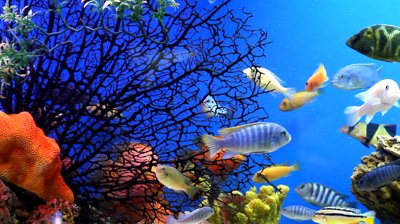
Our town is building a new aquarium and they are asking for YOUR help! In groups of 4, you will be deciding on what animal you think should be in this aquarium. You will investigate what your animal looks like, what it eats, it's health needs, and explore their habitat. It's up to you to find out what your animal needs to be happy and survive in our aquarium!
Task
As a group, you will watch a video telling you about aquariums and possible animals that live there. When finished, you will brainstorm and come up with an animal you think should be in our new aquarium. Run this animal by the teacher to ensure that noone researches the same animal!
When all your research is done, you will create a fact sheet about your animal that will tell the aquarium staff and all vistors about the animal you chose. Each person should write a paragraph on what they researched for this fact sheet.
Fact sheet: Using a word document, you will type up the research you have done into a well organized "fact sheet." When done and printed, the Keeper will draw their picture of the animal. If other drawings are needed, draw and label them clearly.
Cite your sources on a different word document, print it, and hand it to the teacher with your fact sheet.
Process
Watch this video and decide which animal you would like to research:
https://www.youtube.com/watch?v=XvuxiWecImQ
(You can also visit some of the websites below to help chose an animal!)
After deciding on your animal, break up into these 4 jobs- these will tell you what you will be researching for your project.
Vetrinarian- Your job will be to research possible health risks your animal may face. You will find out what your animal needs to stay healthy and safe.
Curator- Your job will be to create your animal's habitat in the aquarium. You will research how your animal lives- what needs to be in that animal's exhibit to help it survive and be happy? Examples include what plants need to be in the exhibit, what temperature does your animal like, does it live in water or land or both?
Keeper- You job is to research what your animal is like. What does it look like, how big is it, what are it's physical features and characteristics? You also get to draw a picture of this animal.
Nutritionist- Your job will be to investigate your animals diet. What can or can't your animal eat? How many times a day does it eat?
Here is a list of resources to help you find some information:
http://animalguide.georgiaaquarium.org/home/aquarium-animals
http://www.montereybayaquarium.org/animal-guide
When you answer all these questions, get together as a group to make your fact sheet. Using a word document, you will type up the research you have done into a well organized "fact sheet." When done and printed, the Keeper will draw their picture of the animal. If other drawings are needed, draw and label them clearly.
Cite your sources on a different word document, print it, and hand it to the teacher with your fact sheet.
Evaluation
| Research Report : Creating an Aquarium Webquest | ||||
| Teacher Name: Ms. L\'Heureux | ||||
| Student Name: ________________________________________ | ||||
| CATEGORY | 4 | 3 | 2 | 1 |
| Amount of Information | All topics are addressed and all questions answered with at least 2 sentences about each. | All topics are addressed and most questions answered with at least 2 sentences about each. | All topics are addressed, and most questions answered with 1 sentence about each. | One or more topics were not addressed. |
| Quality of Information | Information clearly relates to the main topic. All questions have been answered clearly. | Information clearly relates to the main topic. Almost all questions have been answered clearly. | Information clearly relates to the main topic. No questions have been answered clearly. | Information has little or nothing to do with the main topic. |
| Mechanics | No grammatical, spelling or punctuation errors. | Almost no grammatical, spelling or punctuation errors | A few grammatical spelling, or punctuation errors. | Many grammatical, spelling, or punctuation errors. |
| Internet Use | Successfully uses suggested internet links to find information and navigates within these sites easily without assistance. | Usually able to use suggested internet links to find information and navigates within these sites easily without assistance. | Occasionally able to use suggested internet links to find information and navigates within these sites easily without assistance. | Needs assistance or supervision to use suggested internet links and/or to navigate within these sites. |
| Diagrams & Illustrations | Diagrams and illustrations are neat, accurate and add to the reader\'s understanding of the topic. | Diagrams and illustrations are accurate and add to the reader\'s understanding of the topic. | Diagrams and illustrations are neat and accurate and sometimes add to the reader\'s understanding of the topic. | Diagrams and illustrations are not accurate OR do not add to the reader\'s understanding of the topic. |
| Date Created: Nov 23, 2014 08:43 pm (CST) |
Conclusion
Thanks for helping our town! I'm sure our community will love the animals you have chosen to be in our new aquarium!
Credits
Resources:
Aquarium Animals. (n.d.). Retrieved November 17, 2014, from http://animalguide.georgiaaquarium.org/home/aquarium-animals
My Rubric. (n.d.). Retrieved November 18, 2014, from http://rubistar.4teachers.org
Pictures:
http://media-cdn.tripadvisor.com/media/photo-s/01/20/68/84/jellyfish-ge…

http://ak5.picdn.net/shutterstock/videos/1460326/preview/stock-footage-…

http://www.aquariumfish.net/images_01/peruvian_Pictus_100807b3_w0480.jpg

Teacher Page
Next Generation Science Standard
4-LS1-1. Construct an argument that plants and animals have internal and external structures that function to support survival, growth, behavior, and reproduction.
Learner Outcomes
Students will be able to...
- do research using the Internet
- organize research into clear facts
- create a fact sheet using their research
- work together in a group effecticely and efficiently