
Introduction
Welcome: Inferences and Sensory Language
Description: Using sensory language from reading to make inferences.
Grade Level: 6th Grade
Curriculum: English Language Arts
Author(s): Kaleigh Yenney
Task
I can draw and support sensory language inferences using a graphic organizer.
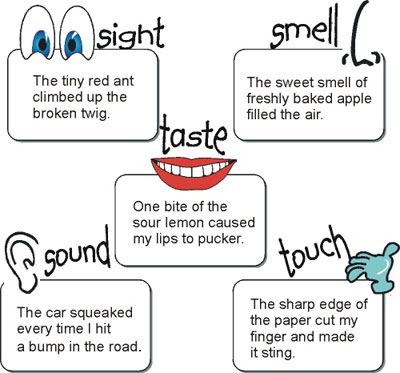
As a reader, I make inferences using different sensory language elements in a text.
The use of details from the five senses to add color and depth to writing. It helps readers visualize the scene a writer is setting.
Process
To make inferences about setting, I pay attention to the sensory language and how it activates my senses.
(Which senses do you THINK will be activated when you are reading about setting?)
We'll be using this graphic organizer to make inferences today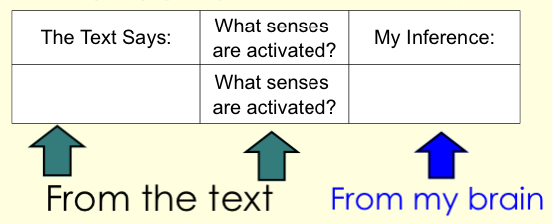
Evaluation
You will be evaluated by the number of STRONG inferences you've made!
Please remember that the number of inferences you've made are assesed by the quality! I am looking for quality NOT quantity...
Use this assessment:
Does my inference directly point to something the writer said?
Is my inference using my personal prior knowledge?
How did I make this inference?
Conclusion
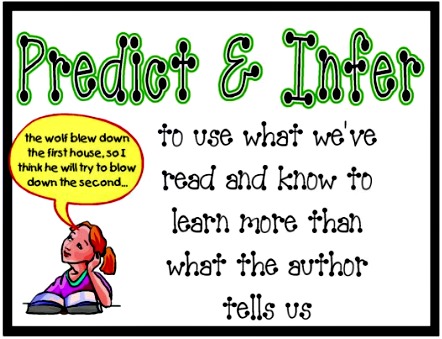
Remember: When I make inferences, I think beyond what the text says to what I think or believe is true based on what I know about life (background knowledge).
If I can point to the information in the text, I'm NOT making an inference.
Making inferences can be fun! The inferences make the story come alive and create a great adventure! The writer shouldn't just give us all of the information because that would be boring.

Teacher Page
Students will need to have some computer experience
Standards:
6th Grade Common Core Standards
RL.6.1: Cite textual evidence to support analysis of what the text says explicitly as well as inferences drawn from the text.
RL.6.7: Compare and contrast the experience of reading a story, drama, or poem to listening to or viewing an audio, video, or live version oft the text, including contrasting what they “see” and “hear” when reading the text to what they perceive when they listen or watch.