Introduction
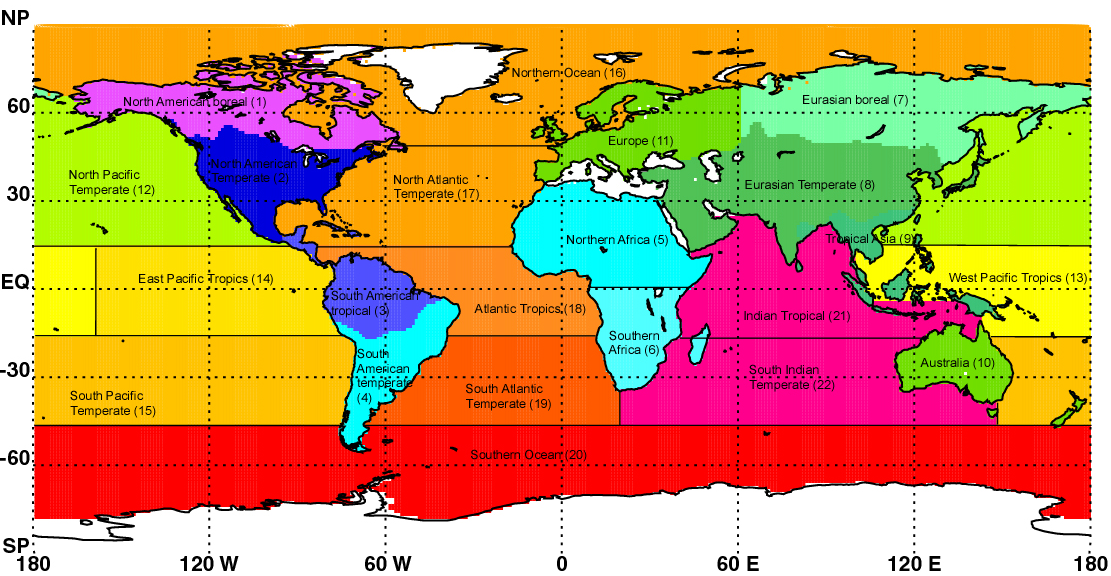
Ecosystems are a biological community of interacting organisms and their physical environment. In simplier words, all an ecosystem is , the plants and animals that are found in a particular location. There are 6 different ecosystems. They are the desert,temperate forests, tropical rainforest, savanna, tundra, and marine/coastal.
Deserts are ecosystems that recieve very little rainfall, less than 25 cm a year. Htere can be hot or cold deserts, both are very cold at night but the hot deserts bake during the day. The vegatation is normally on the ground, like bushes or a few trees. Soil is very dry and low in nutrients. Deserts cover about a fifth of the world, Antartica being the largest. The Sahara isthe largest of the hot deserts.
Temperate forests are woodlands of a usually rather mild climatic area within the temperate zone that receives heavy rainfall, usually includes numerous kinds of trees, and is distinguished from a tropical rain forest especially by the presence of a dominant tree. Most temperate forests are located in eastern United States, Canada, Europe, China, Japan, and some parts of Russia. There are five zones in the temperate forest, the tallest being the tree stratum zone like maple, elm, and oak trees. The second zone is the small tree and sapling zone, short young trees charaterize this zone. The shrub zone is the third, shrubs include mountain laural, huckleberries and others. The fourth zone is called herb zone, this contains plants like ferns. The final zone is the ground zone where plants grow directly near the ground, like moss.
Tropical rainforests are typically found between 30 degrees north, and 30 degrees south covering 6-7% of Earth's land. Tropical rainforests can be found all around the world, in places like Central and South America, Western Africa, Eastern Madagascar, the Zaire basin, the Indio-Malaysia along the coast of western India, and Australia. Average temperature in the rainforest is 70 to 80 degrees Farenheit, maintaining a 77-88% humidity year round. Very often found in the rainforest is Epiphyte which lives on the surface of other plants. There are many types of plants, alone there are 2,500 types of vines growing and 20,000 varieties of orchids.
The savanna is compromised mostly of grasses and a few scattered trees. They cover half the surface of Africa, large areas of Australia, South America, and India. The climate is usuaslly warm and ranges 68-86 degrees Farenhiet. Savanna's have a wet season of 6-8 months a year recieving 10 to 30 inches of rainfall, and a 4-6 dry months a year, during this season lightning strikes the ground, igniting the dry grasses that cover the savanna. Many animals in the savanna are herbivores because there is a bountiful supply of grasses, but during the dry season mammals migrate in search of water.
Tundra ecosystem is the coldest of all and it is also quite big. It covers about a fifth of the Earth. "Tundra" comes from a Finnish word which means treeless plain which describes the tundra perfectly. Summers in the Tundra last about 6-10 weeks and rarely get over 50 degrees F. There's a very low diversity of animals. Many lykens, mosses, and small shrubs flourish in the artic tundra.

The marine ecosystem is the biggest ecosystem in the world! It covers about 70% of the earth. It includes five main oceans: the Pacific, Atlantic, Indian, Arctic, and Southern, as well as many smaller Gulfs and Bays. Marine regions are usually very salty! There is about one cup of salt per gallon of water in the ocean.The ocean is divided up into three vertical zones. The top layer is called the euphotic zone and it is the area of the ocean where light can come through. The next layer is the disphotic zone. This area is too deep for lots of light to reach. Instead, the light here looks like our twilight on land. The deepest part of the ocean is called the aphotic zone, or deep sea. The water here is very cold, completely dark, and low in nutritional content. The deep sea comprises 80% of all the habitats on earth, which makes it the largest habitat on the planet. The deepest point is the Mariana Trench. The Mariana Trench is about 36,200 feet deep.
Task
Project Ideas
1. Pick an ecosystem and be any organism you want. Write a "diary" of it's life.
2. Make a slideshow of at least 2 different ecosystems. (13 slide minimum.)
3. Pick an ecosystem and pretend you are stranded alone in it's worst part. Write a creative writing on how you would survive. (At least 1 page long)
Process
Links for help on your project:
1) Desert-
Hot: http://www.desertanimals.net/
Cold: http://wildtracks.wordpress.com/world-ecosystems/desert-ecosystems/cold…
Temperate Forest:
http://www.skyenimals.com/browse_habitat.cgi?habitat=temperate_fores
Tropical Rain Forest- http://www.enchantedlearning.com/subjects/rainforest/animals/Rfbiomeani…
Savanna-
http://www.blueplanetbiomes.org/savanna_animal_page.htm
Tundra-
Marine/Coastal-
http://www.eniscuola.net/en/life/contenuti/animals/left/animals-knowled…
2) Use Information from The Introduction, and here is more suggestions
http://www.defenders.org/desert/basic-facts http://www.softschools.com/facts/biomes/temperate_deciduous_forest_biom…
http://www.srl.caltech.edu/personnel/krubal/rainforest/Edit560s6/www/fa…
http://www.uvm.edu/~inquiryb/webquest/sp09/lstacey/The%20Savanna.html
http://www.softschools.com/facts/biomes/tundra_biome_facts/171/
http://www.defenders.org/marine/basic-facts
3) Use links above and infornation in the Introductioin to find the conditions of the ecosystem you've chosen and what natural resources can help you.
Evaluation
| 1 | 2 | 3 | 4 | |
| Completion | Did hardly any of the assignment. | Did around half of the steps in the assignment. | Did most of the steps to complete the project. | Did all of the steps to finish the project completely. |
| Accurate Information | All facts used to do the project were wrong or did not make sense. | Some of the facts used in the project were wrong or did not make sense. | Very few facts in the project were wrong or did not make sense. | No facts used to do the project were wrong or did not make sense. |
| Creativity | Project was not creative. | Project showed a little creativity. | Project was somewhat creative. | Project was very creative. |
| Spelling/Grammar | Project contained a lot of gramatic and spelling errors. | Project contained some gramatic and spelling errors. | Mostly everything was gramatically correct and spelled right. | Everything was gramatically correct and spelled right. |
Conclusion
Congradulations! You have completed the webquest, "Ecosystems!" Now discuss what you learned with your friends and class. Remember, where you live is very unique!

Credits
- Emma Best
- Jaela Heath
- http://www.carbontracker.eu/images/TCregionmap.png
- http://oceanservice.noaa.gov/facts/ecosci.html
- http://www.kidsgeo.com/geography-for-kids/0164-ecosystems.php
- http://www.pbs.org/earthonedge/ecosystems/index.html?PHPSESSID=3a990aa0…
- http://environment.nationalgeographic.com/environment/
- http://kids.nceas.ucsb.edu/biomes/
Teacher Page
Congratulations! You have now completed the webquest called "Ecosystems!" Now, discuss with your class all you have learned! Remember, where you live is very special.