
Introduction
A hazard is a potential source of harm to a person, community, property or infrastructure.
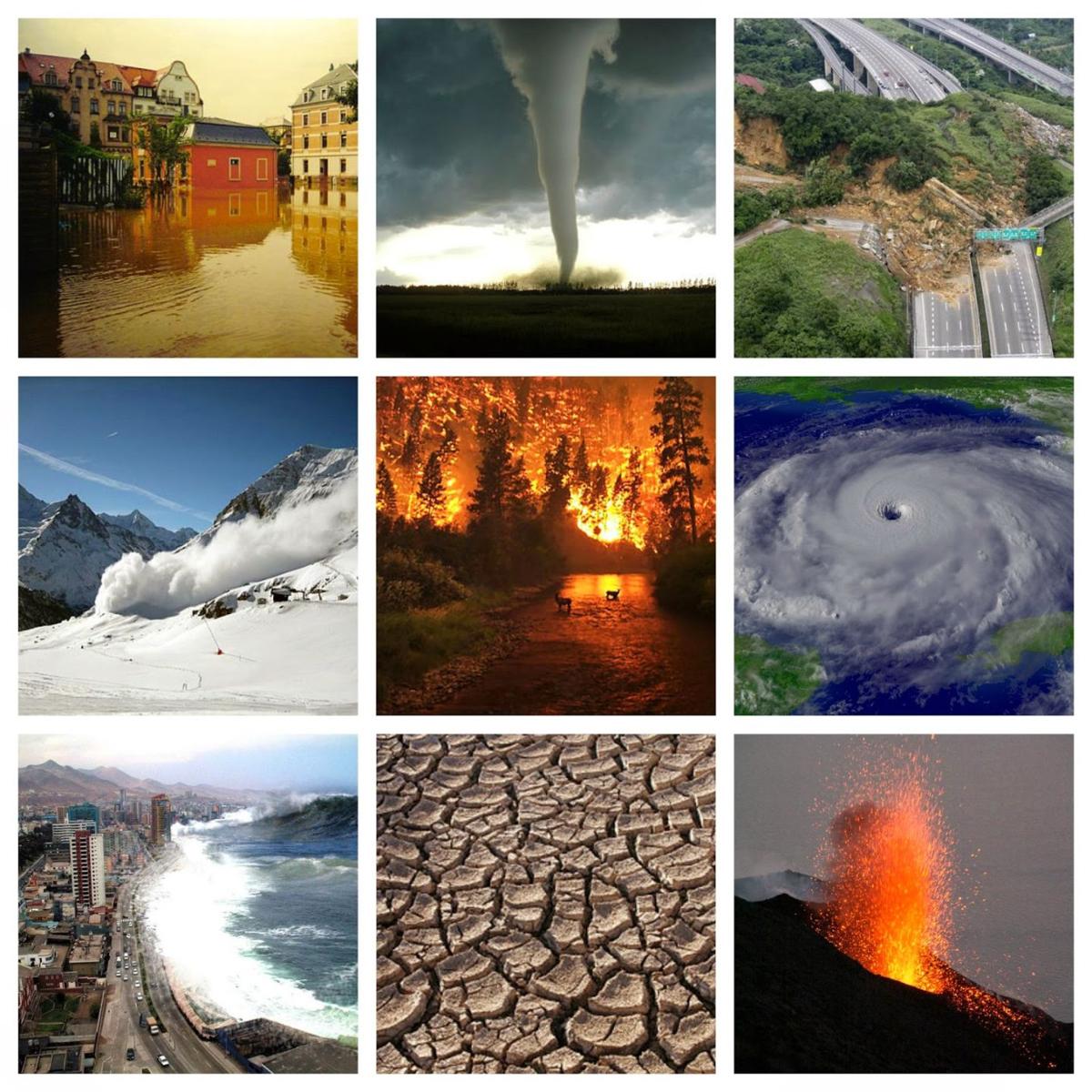
They come in many different forms and this week it is your mission, using this WebQuest, to find out what types of hazard are out there and where they occur (classification & distribution).
Task
Your job is to find the following information using the Internet (you can use your textbook also) to research the five topics below. As you research, record your answers to the questions on a word document saved under your name.
Information to find:
1. What is a natural hazard and how is it different to a natural 'disaster' or 'extreme event'?
2. We have four Earth sphere's (shown below). Name each classification/group of hazard associated with each of the four Earth sphere's.
3. Find three examples of hazards that would occur under each of the classifications you found in question 2.
4. How do human hazards differ to natural hazards?
5. What is 'spatial distribution? Why is it important to understand spatial distribution when studying hazard geography?
6. Research the spatial distribution of one hazard of your choice and discuss the pattern that emerges. (*Recommendation: Geomorphic hazards)

Process
Use the following websites to find answers to the questions listed. Feel free to do additional research and find other sources of information!
Resources:
What is a Natural Hazard? | GEOG 30N: Environment and Society in a Changing World (psu.edu)
Facts for Kids about Four Spheres of Earth (easyscienceforkids.com)
Definition Of A Natural Hazard - definitionus (bursahaga.com)
untitled (gw.govt.nz) (Human vs natural hazards)
Difference Between Natural and Man Made Disaster | Cause, Examples, Effect, etc. (pediaa.com)
Spatial distribution - Wikipedia
What Is Spatial Distribution in Geography? (reference.com)
What Is a Tectonic Earthquake? (sciencing.com)
Where Do Most Earthquakes Occur? - WorldAtlas
Remember to record your answers on a Word document to be submitted via SEQTA.
Also remember! This is just an intro activity - you don't need to have a complete understanding of everything right away!
Evaluation
1. What are three questions you now need to ask to get a grip on 'natural hazards' as we begin our studies?
(Add these questions to the Word Doc before you submit!)
2. Submit via SEQTA
Conclusion
Your next Webquest will ask you to research severity and impact of hazards so keep an eye out for words such as
- Magnitude
- Frequency
- Duration
- Probability