
Introduction
Welcome, Little Explorers! Melissa Wilches L.
Today we are going on a very special adventure to discover our feelings! Did you know that every day we feel many different things?
Sometimes we feel happy, sometimes sad, sometimes angry or surprised. In this WebQuest, we will learn our emotion words in English and practice describing how we feel!
Are you ready? Let's go! 🚀
Task
Our Big Adventure Tasks
By the end of this special adventure, you will become a true Emotion Expert! Here is the mission you will complete:
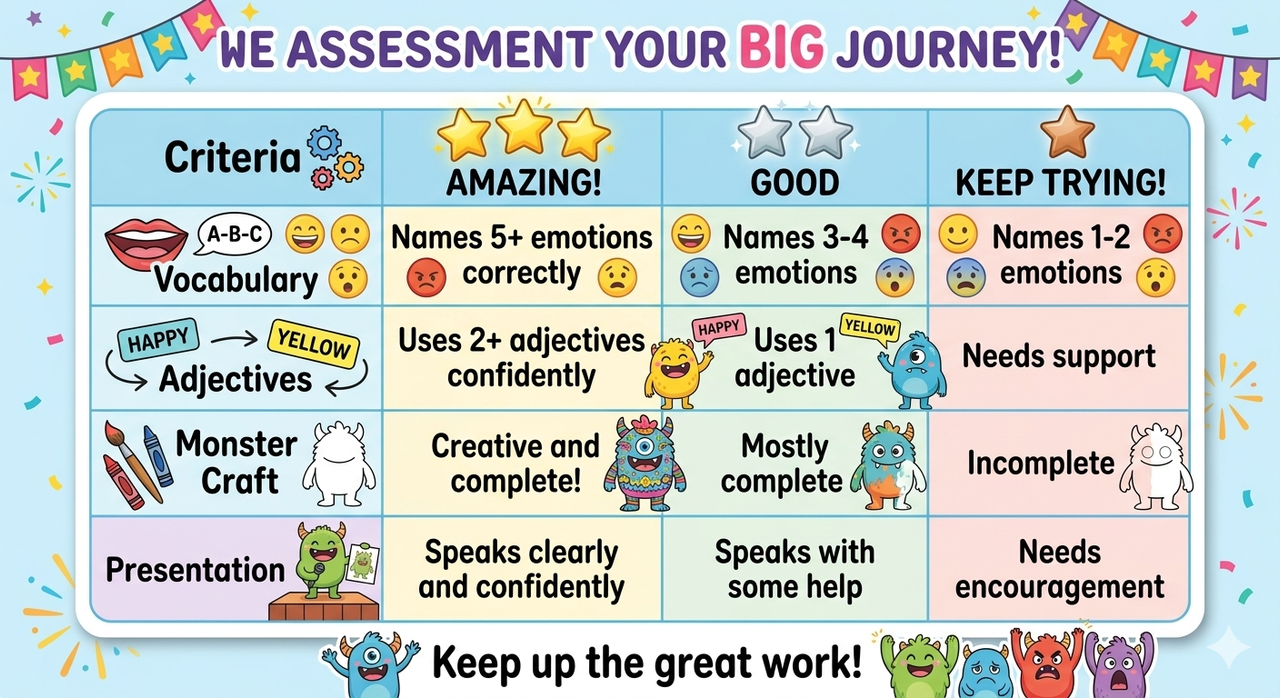
- Name Emotions: Find and name at least 5 different feelings in English!
- Describe Feelings: Practice using words to tell how you feel each day.
- Create a Monster: Design your very own Emotion Monster and share its mood with your classmates!
To achieve this, we will sing a song, play a memory game, draw, and talk together. Let's start our mission!
Process
Step 1 — Watch and Listen 🎬 Watch this video about emotions: 👉 https://www.youtube.com/watch?v=l4WNrvVjiTw&list=RDl4WNrvVjiTw&start_radio=1
Listen carefully and try to repeat the words!
Step 2 — Learn the Words 📚 Look at these emotion cards and repeat each word out loud: Happy — Sad — Angry — Scared — Surprised — Excited — Tired
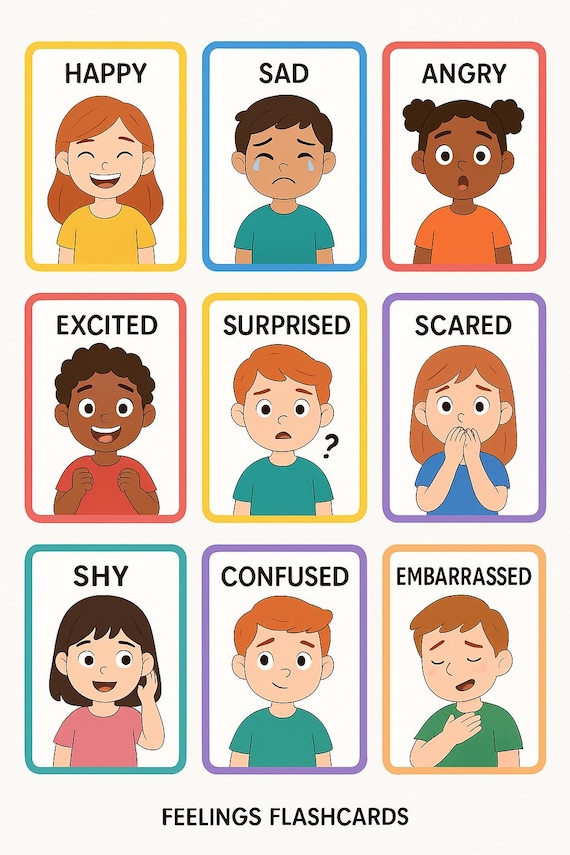
Step 3 — Match the Faces 🎯 Look at the faces below and match them with the correct emotion word.
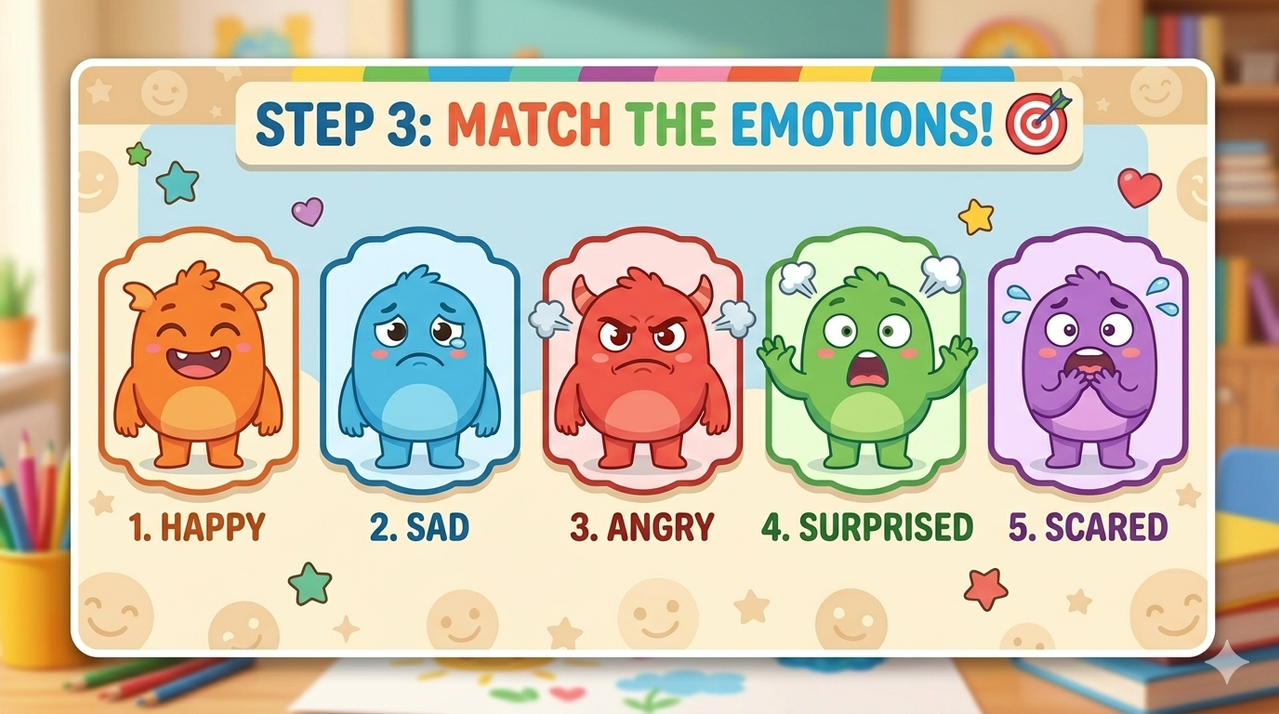
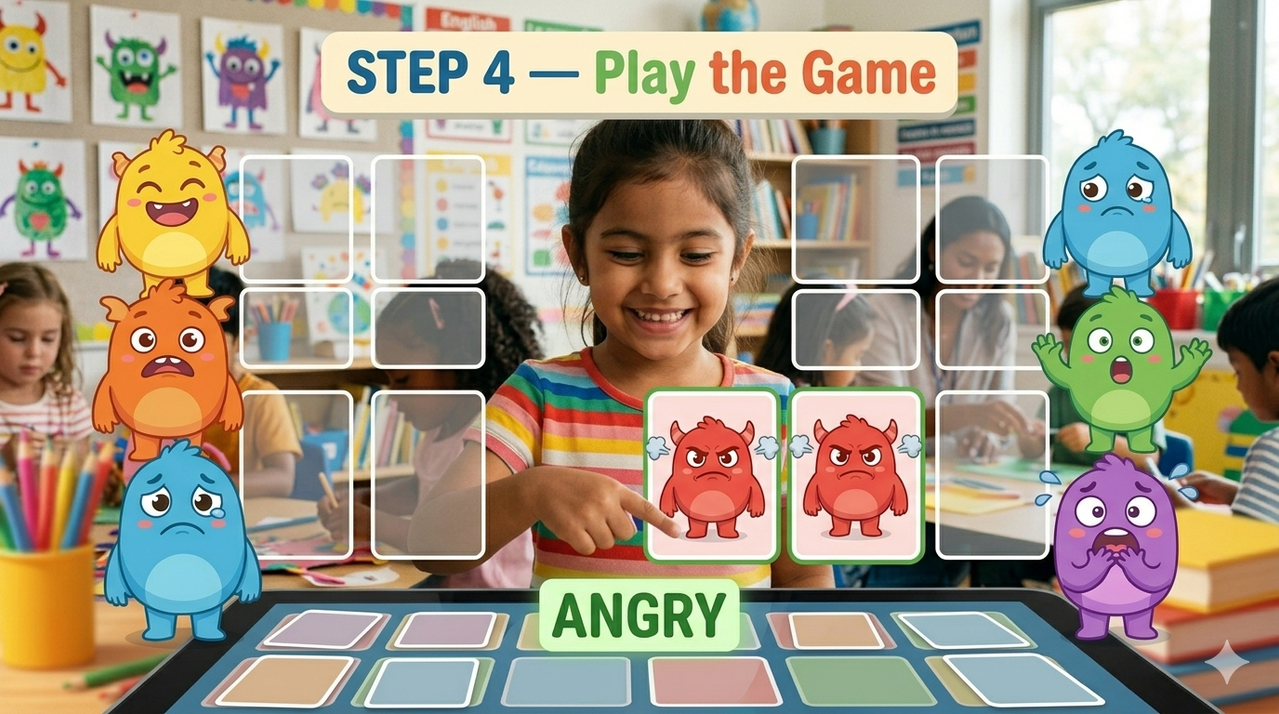
Step 4 — Play the Game 🎮 Click here and play the emotions memory game: 👉https://www.educaplay.com/learning-resources/8201973-emotions_memory.html Find the pairs !
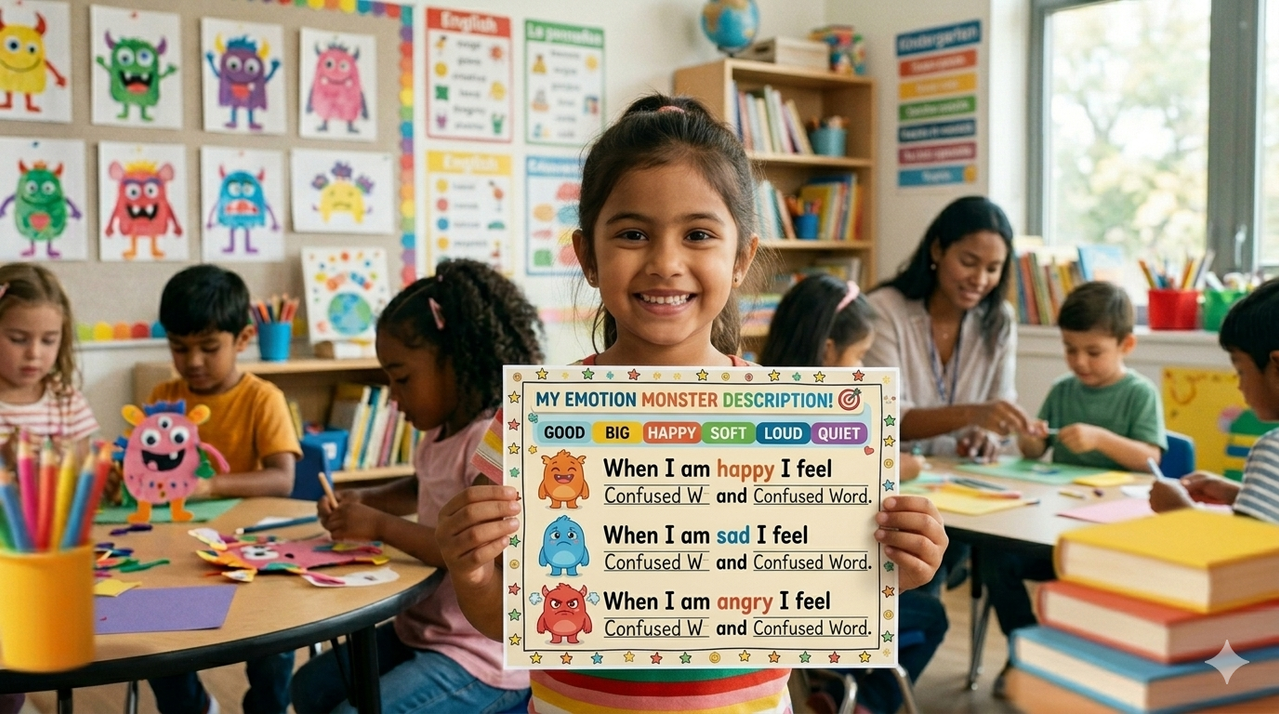
Step 5 — Describe the Feeling ✏️ Now practice using adjectives! Complete these sentences:
- When I am happy I feel _______ and _______
- When I am sad I feel _______ and _______
- When I am angry I feel _______ and _______
Step 6 — Create Your Emotion Monster 🎨 Draw or use Canva Kids to create your own Emotion Monster! Choose one emotion and give your monster these details:
- What emotion does it feel?
- What color is it?
- What does its face look like?
- Write 2 adjectives to describe it

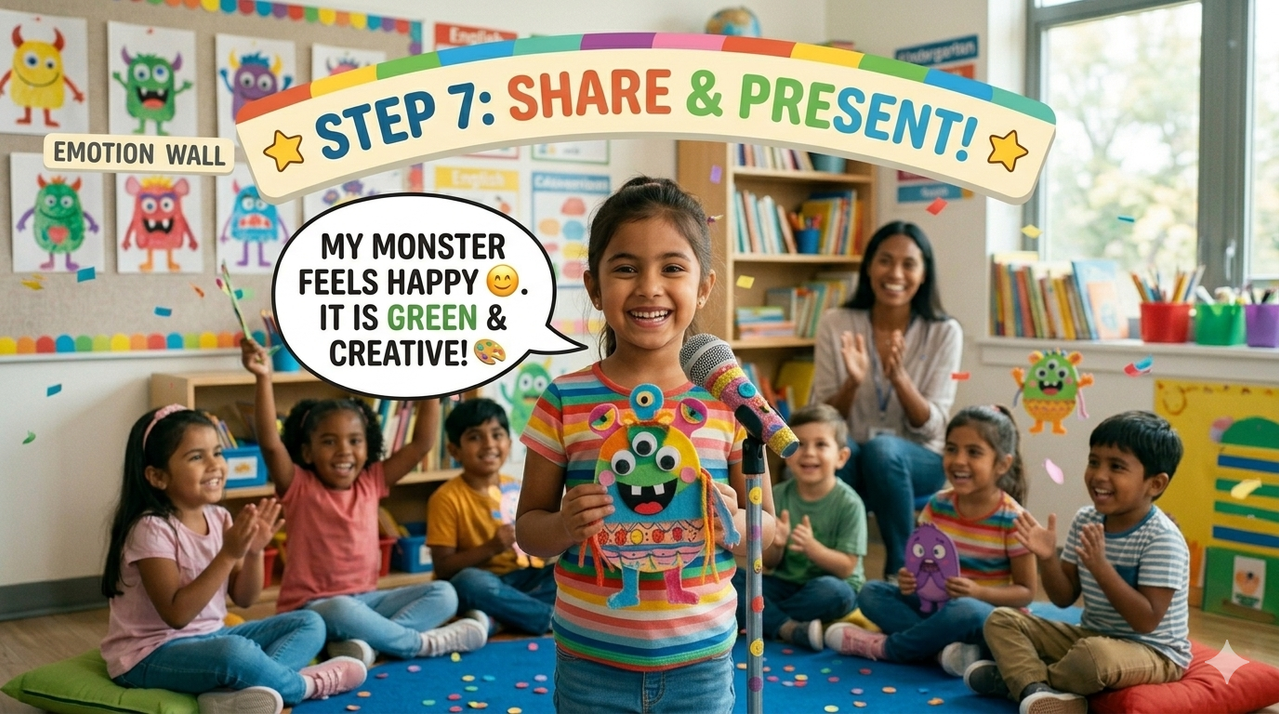
Step 7 — Share and Present 🌟 Show your Emotion Monster to the class and say: "My monster feels _______ . It is _______ and _______."
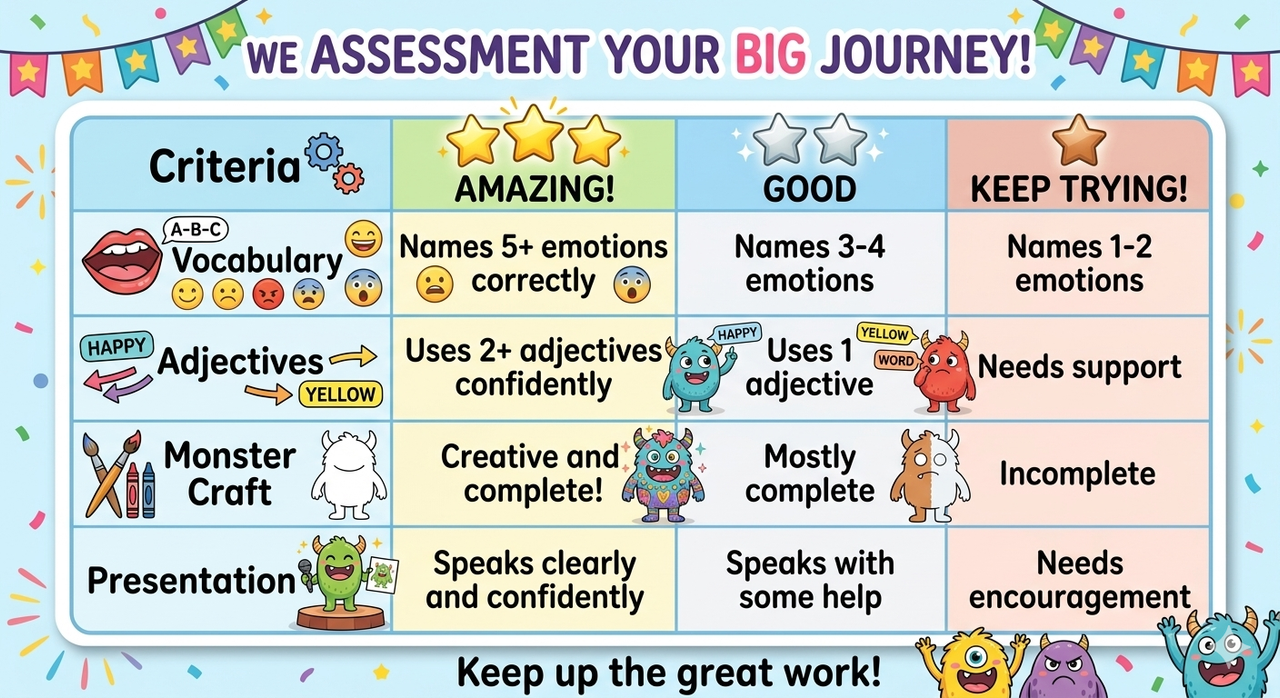
Evaluation
Conclusion
🌈 You Did It, Little Explorer!
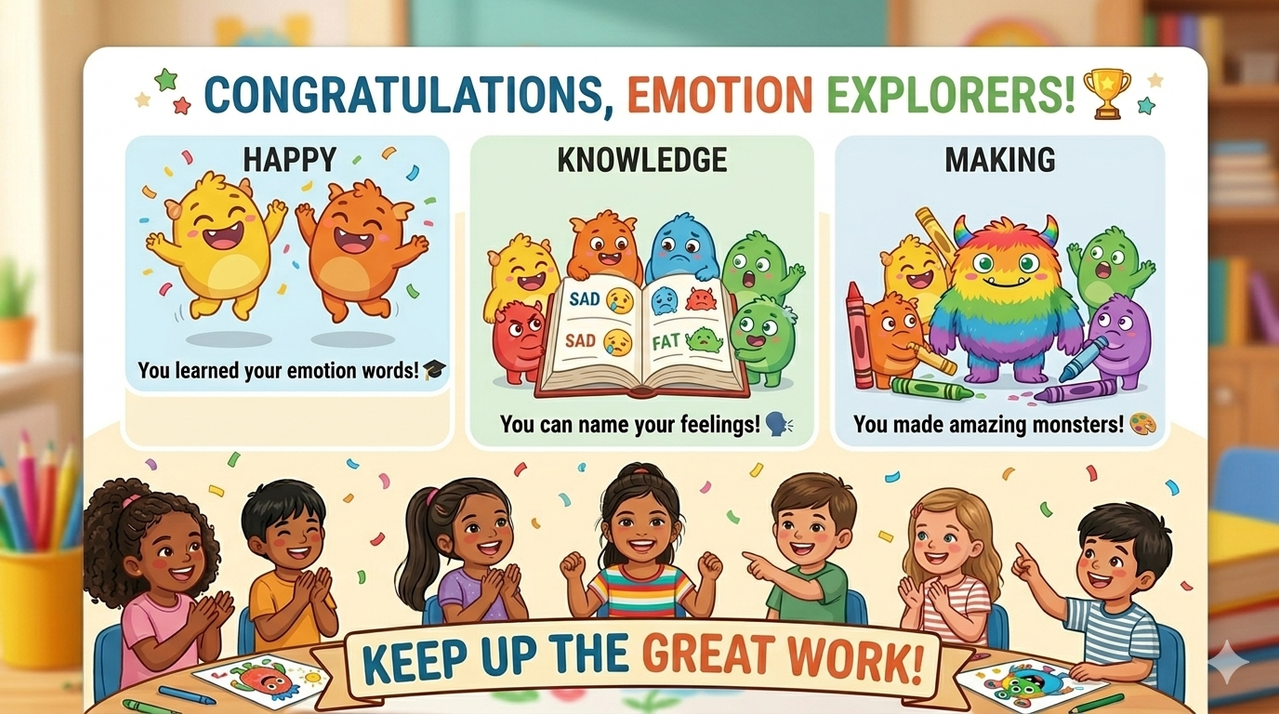
Congratulations! You have finished your adventure and you are now officially an Emotion Expert.
What did we learn today?
We did so many amazing things!
-
We learned to identify and name many emotions in English.
-
We practiced special words (adjectives) to describe how we feel.
-
We created a unique and super fun Emotion Monster!
Remember always...
The most important thing I want you to keep in your heart is this: All emotions are okay! It's okay to feel happy, it's okay to feel sad sometimes, and it's okay to feel angry. The most important thing is to know what you are feeling and be able to share it with your friends and teachers.
The next time someone asks you in English: "How are you feeling today?", you will know exactly what to say.
Thank you for being a great explorer! 🌟
Credits
- Stanley, G. (2013). Language Learning with Technology. Cambridge University Press.
- The Feelings Song. YouTube.
- Educaplay.com — Interactive Learning Games
- Canva.com and Gemini AI — Design Tool
Teacher Page
Learner Profile
-
Target Age: 5 - 6 years old (Kindergarten / Early Years).
-
Language Level: Beginner / Pre-A1 English Learners.
-
Classroom Context: Ideal for diverse, multilingual classrooms where visual scaffolding and multisensory learning are key.
Pedagogical Objectives
-
Linguistic: Identify and name at least 5 core emotions (Happy, Sad, Angry, Surprised, Tired) and use simple descriptive adjectives to express mood.
-
Social-Emotional Learning (SEL): Recognize that all feelings are valid and learn how to express them appropriately with friends and teachers.
-
Creative: Develop fine motor skills and creative expression through the "Emotion Monster" craft project.
Classroom Implementation Tips
-
Use Total Physical Response (TPR): Before starting, model the emotions using your whole body and exaggerated facial expressions. Have students mimic you physically.
-
Peer Collaboration: Encourage students to complete the matching activities in pairs. This reduces anxiety and promotes verbal interaction.
-
Visual Scaffolding: Since students are in the pre-literacy phase, keep the flashcards and image references visible at all times.
Differentiation Strategies
-
For Struggling Learners: Provide word banks with pictures. Focus on oral production (repeating the word) rather than reading.
-
For Advanced Learners: Encourage them to use longer descriptive sentences (e.g., "My monster is sad because he dropped his toy").
-
Multilingual Support: Allow students to state the emotion in their home language first to build confidence before introducing the English term.