
Introduction
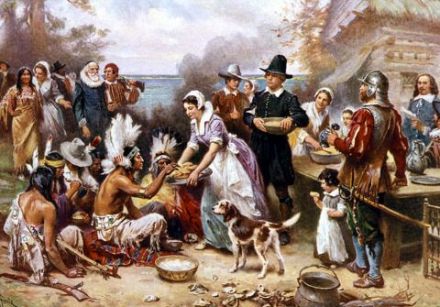
A group of settlers first arrived in the New World in 1607. These settlers were from England and by the year 1610 when John Rolfe arrived, were nearly starved to death. While participating in this webquest, remember that there were settlers already in the New World. You will need to remember that you are coming over with the Third Supply fleet from England that included John Rolfe who later meets Pocahontas.
Task
The students will be broken up into groups of 4. Each student will have a role:
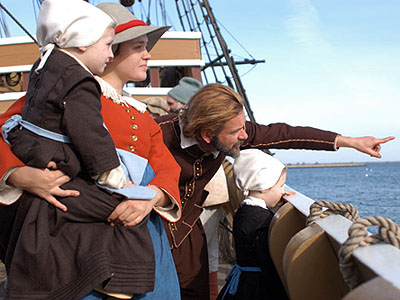
1. Male settler - The student will research and explore what it was like to be a male settler coming to a new country. What were some of the commodities the settlers were leaving behind? How were things different in the New World? What was the voyage across the ocean like? What did the settlers think of the Indians? What were some of the jobs a male settler would have?
2. Female settler - The student will research and explore the same questions as above but tell how things were different for a female settler and from her perspective.
3. Captain - The student will research and explore what it was like to be the captain of a ship. What struggles and difficulties did the captain of the ship face while on the ship? How did the settlers respond to the captains commands? What did the captain do once the ship had landed?
4. Indian (young or old, your choice) - The student will research how the Indians felt about the new settlers. What did the Indians think about the new settlers? What new things did the Indians learn and experience with the settlers? What good things did the Indians gain? What bad things happened to the Indians with the settlers arrival?
Process
STEP 1: First, your teacher will break you up into groups of 4 and decide which role (male settler, female settler, captain, Indian) each team member will get.
STEP 2: Once you are in a group and given a role, you will look back at the task page to find information about your role and what additional information you will need to find.
STEP 3: After each group member has finished researching his/her role, you will meet back with your group and create a small informational packet to hand out to the other students in the class.
STEP 4: Along with creating the packet, the members of each group will look at the packets of the other groups and see what similarities and differences exist in what was found by each group.
STEP 5: Each group will now present what they have learned to the class. One person in each group will take notes on the other groups' presentations and determine what new information the other group has discovered as well as what information was similar. Each group will then take turns making a posterboard chart of similarities and differences. These will be displayed around the room.
STEP 6: At the conclusion of the webquest, the entire class will watch the movie Pocahontas and we will compare and contrast the differences we found with what the movie portrays.
Evaluation
New World Web quest Rubric
|
Beginning 40 |
Developing 60 |
Accomplished 80 |
Exemplary 100 |
Score |
|
|
Individual Research
|
Student found one piece of information about role. |
Student found two to three pieces of information about role. |
Student found several pieces of information about role but no real thought was put into research. |
Student found many pieces of information about role and it is evident student researched role thoroughly. |
|
|
Group Packet
|
Students show little effort with information in packet. |
Students show minimal effort with information in packet. Group provides a couple of informational topics. |
Students show proficient effort with information in packet. Packet includes multiple pages with many different informational topics. |
Students show lots of effort with information in packet. Group provides pictures or graphs and goes in detail with information provided. |
|
|
Group Presentation
|
Group presentation is short with little to no effort on all participants’ parts. |
Group presentation is short (2-3 minutes) but shows effort on all participants’ parts. |
Group presentation is 5-7 minutes long and shows great effort on all participants’ parts. |
Group presentation is 10-15 minutes long and shows great effort on all participants’ parts. |
|
|
Packet and Presentation Comparisons
|
Group puts forth very little to no effort to find differences and similarities in presentations. |
Group puts forth minimal effort to find differences and similarities in presentations. Venn diagram is incomplete with only one similarity and/or difference. |
Group puts forth sufficient effort to find differences and similarities in presentations. Venn diagram is at least half way filled out. |
Group puts forth lots of effort to find differences and similarities in presentations. Group fills out Venn diagram completely and thoroughly. |
Written by Heather Mullins. Last updated 04/23/14.
VA SOL HISTORY 3.3b
3.3 The student will study the exploration of the Americas by
b) identifying the reasons for exploring, the information gained, the results of the travels, and the impact of the travels on American Indians.
Conclusion
Congratulations! You have now gained new information about how different groups of people felt and what they experienced with the discovery of the New World.
Hopefully this information will stay with you and you will appreciate the courage and sacrifices the new settlers had when settling the New World, as well as see how the Indians felt about the new settlers.
Credits
http://www.americaslibrary.gov/aa/pocahonta/aa_pocahonta_newworld_1.html
http://www.wvculture.org/history/indland.html
http://www.loc.gov/teachers/classroommaterials/presentationsandactiviti…
http://www.historypressblog.net/2013/06/03/the-clash-of-cultures-unders…
http://historymatters.gmu.edu/d/6226
http://www.manythings.org/voa/history/5.html
http://www.virtualjamestown.org/jrolfe.html
http://www.history.com/topics/john-rolfe
https://www.nwhm.org/online-exhibits/jamestownwomen/index.htm
https://www.nwhm.org/online-exhibits/jamestownwomen/5.htm
http://www.nps.gov/jame/historyculture/the-indispensible-role-of-women-…
http://nationalhumanitiescenter.org/pds/amerbegin/settlement/text1/text…
Photo Credits
- http://www.divinedinnerparty.com/thanksgiving-customs.html
- http://www.sarahdessen.com/livephotos/annamo.jpg
- http://www.theguardian.com/books/2012/mar/16/great-divide-peter-watson-…;
- http://cartoonpapers.com/pocahontas-wallpaper-for-free-ipad/
- https://encrypted-tbn1.gstatic.com/images?q=tbn:ANd9GcSom8iN3NYLCOpKpNOVH_sMy0fhqi9-u3hWNBdBysGXvnT21dvsJg
- http://www.nps.gov/jame/historyculture/images/Smith-trading.jpg

Teacher Page
Heather Mullins
3rd Grade
WHO? |
My targeted audience is for the entire third grade social studies class. All students would be included and would be able to work on this project.
|
WHY? |
In this lesson students will find information on the settlers and the Indians in the New World for Social Studies SOL 3.3b. The student will compare what they learn to what they already know. The student will also look for similarities and differences in what each group finds compared to other groups.
|
WHAT? |
Students will be able to use what they already know as well as the internet to find information about how the settlers and Indians in the New World felt and how they interacted with each other.
|
WHEN? |
The technology would be integrated at the beginning when the students are allowed to use the internet for research purposes.
|
WHERE? |
The original instruction will take place in the regular classroom. All research will also be done in the regular classroom. |