
Introduction
Welcome To Your Self-Paced
Learning Adventure!
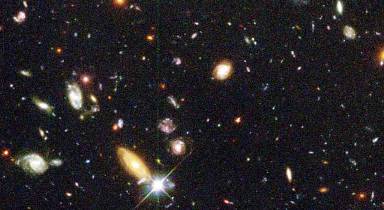
Look at this picture. It shows a small part of the universe. You can see many stars and galaxies in this image. But the universe also contains many things you cannnot see.
In this WebQuest you will explore the answers to some important questions such as:
- How do scientits study the universe?
- What makes up the universe?
- How does gravity affect the universe?
Task
(Photo Credit: chsweb.lr.k12.nj.us)

Process

(Photo Credit: Clipartpanda.com)
This section of your WebQuest is designed to allow you to show what you have learned by completing some short quizzes and other assessments. The scores you make on these quizzes and assessments will count toward to your final score for this Quizlet.
Next week, we will review the entire chapter that includes this section on the stars and galaxies and you will have a test that covers all the material.
Evaluation

(Photo Credit: Questgarden.com)
This section of your WebQuest explains how you will be graded (evaluated) on your lessons. It contains the rubrics that are referred to in other sections of the WebQuest. I recommend you review this page prior to beginning the lesson so that you can evaluate your own work as you are progressing through the Webquest.
Written Summary Rubric
|
Not Acceptable (0) |
Below Average (2) |
Above Average (4) |
Superior (6) |
Score |
|
Mind map |
No mind map was developed during the viewing of the video. |
A mind map was developed, but it was incomplete and did not show organization. |
A mind map was developed in a way that allowed a summary to be written from it. It could have included more details. |
A detailed mind map was developed with excellent clarity and organization. |
|
|
Main Ideas and Supporting Ideas |
The main ideas were missing and had few supporting ideas. |
Some main ideas were present with some supporting ideas. |
The main ideas were present and supported. However, more details could have been used. |
The main ideas and supporting ideas were clear and concise. They supported the content. |
|
|
Format |
No format was evident. No introduction or conclusion. |
Some format was evident, but it was not organized well. Introduction and conclusion could have been better. |
Format was good and showed planning. The introduction and conclusion could have been better. |
Excellent format, including an effective introduction and conclusion and supporting details. |
|
|
Mechanics |
Frequent misspellings and grammar errors. Syntax was poor. |
Some misspellings and grammar errors. Syntax was average for your grade level. |
Few misspellings and grammar errors. Syntax was above average for your grade level. |
No misspellings or grammar errors. The writer obviously has a good command of English. |
|
|
TOTAL SCORE: |
|
Conclusion
Congratulations!
You've completed this WebQuest. Hopefully, you have learned a lot about the table and chemistry in general. And I hope you've had some fun along the way too.

(Photo Credit: troll.me)
Credits
Photo Credit: b.vimeocdn.com)
Photo and video credits are noted below each photo and/or clip art appearing in the WebQuest.
Teacher Page

(Photo Credit: teacherflies.com)
This WebQuest is an inquiry-based project that is designed to facilitate 8th-grade students learning about space science. Students have already studied lessons on the planets and the life and death of a star. This WebQuest focuses on the stars and galaxies.
Standards Covered With This Lesson
Science content standards covered in this lesson include the following:
• Convey results of investigations using scientific concepts, methodologies, and expressions (1.1.1.3)
• Convey results of investigations using scientific concepts, methodologies, and expressions (1.1.1.4)
• Examine the scientific processes and logic used in investigations of past events (1.1.11.6)
• Create multiple displays of data to analyze and explain the relationships in scientific investigations (1.1.111.1)
• Identify and apply measurement techniques and consider possible effects of measurement errors (1.1.111.4)
• Describe trends in properties (e.g. ionization energy or reactivity as a function of location on the periodic table) (11.1.1.4)
• Understand how the type and arrangement of atoms and their bonds determine macroscopic properties (11.1.1.9)
• Know that each kind of atom or molecule can gain or lose energy only in discreet amounts (11.1.11.9)
ISTE Student Standards covered include the following:
• Creativity and innovation
• Communication and collaboration
• Critical thinking, problem solving, and decision making
Common Core Reading and Writing Standards for Science include the following:
9-10.RST.1 Cite specific textual evidence to support analysis of science and technical texts, attending to the precise details of explanations or descriptions.
9-10.RST.2 Determine the central ideas or conclusions of a text; trace the text's explanation or depiction of a complex process, phenomenon, or concept; provide an accurate summary of the text.
9-10.RST.3 Follow precisely a complex multistep procedure when carrying out experiments, taking measurements, or performing technical tasks, attending to special cases or exceptions defined in the text.
9-10.RST.6 Analyze the author's purpose in providing an explanation, describing a procedure, or discussing an experiment in a text, defining the question the author seeks to address.
9-10.WHST.2 Write informative/explanatory texts, including the narration of historical events, scientific procedures/ experiments, or technical processes.
9-10.WHST.2a Introduce a topic and organize ideas, concepts, and information to make important connections and distinctions; include formatting (e.g., headings), graphics (e.g., figures, tables), and multimedia when useful to aiding comprehension.
9-10.WHST.2c Use varied transitions and sentence structures to link the major sections of the text, create cohesion, and clarify the relationships among ideas and concepts.
9-10.WHST.2d Use precise language and domain-specific vocabulary to manage the complexity of the topic and convey a style appropriate to the discipline and context as well as to the expertise of likely readers.
9-10.WHST.4 Produce clear and coherent writing in which the development, organization, and style are appropriate to task, purpose, and audience.
9-10.WHST.6 Use technology, including the Internet, to produce, publish, and update individual or shared writing products, taking advantage of technology's capacity to link to other information and to display information flexibly and dynamically.
9-10.WHST.9 Draw evidence from informational texts to support analysis, reflection, and research.