
Introduction
Adapted from a webquest created by Daniel Laabs, Marcy Luckritz, Christine Wood, and Amber Wright
Introduction
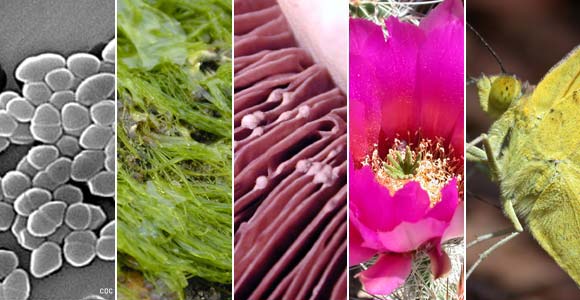
More than 2,000 years ago, Aristotle began grouping plants and animals into various categories. Although he did not consider the idea that different organisms were related by descent, he devised a system that placed these organisms in a heirarchy. Animals were classified by blood type, way of life, and body parts. Plant life was grouped according to size and appearance. Later, Carolus Linnaeus created a more specific classification system. Through this system, scientists have found it easier to find answers to important questions such as, How many known species are there? What are the characteristics of each? and What relationship exists between these species? At the conclusion of this WebQuest, you will be able to list the seven levels of classification, explain the importance of having scientific names for species, provide characteristics for each of the levels, and form sound justifications for grouping animals and plants within each level.
Task
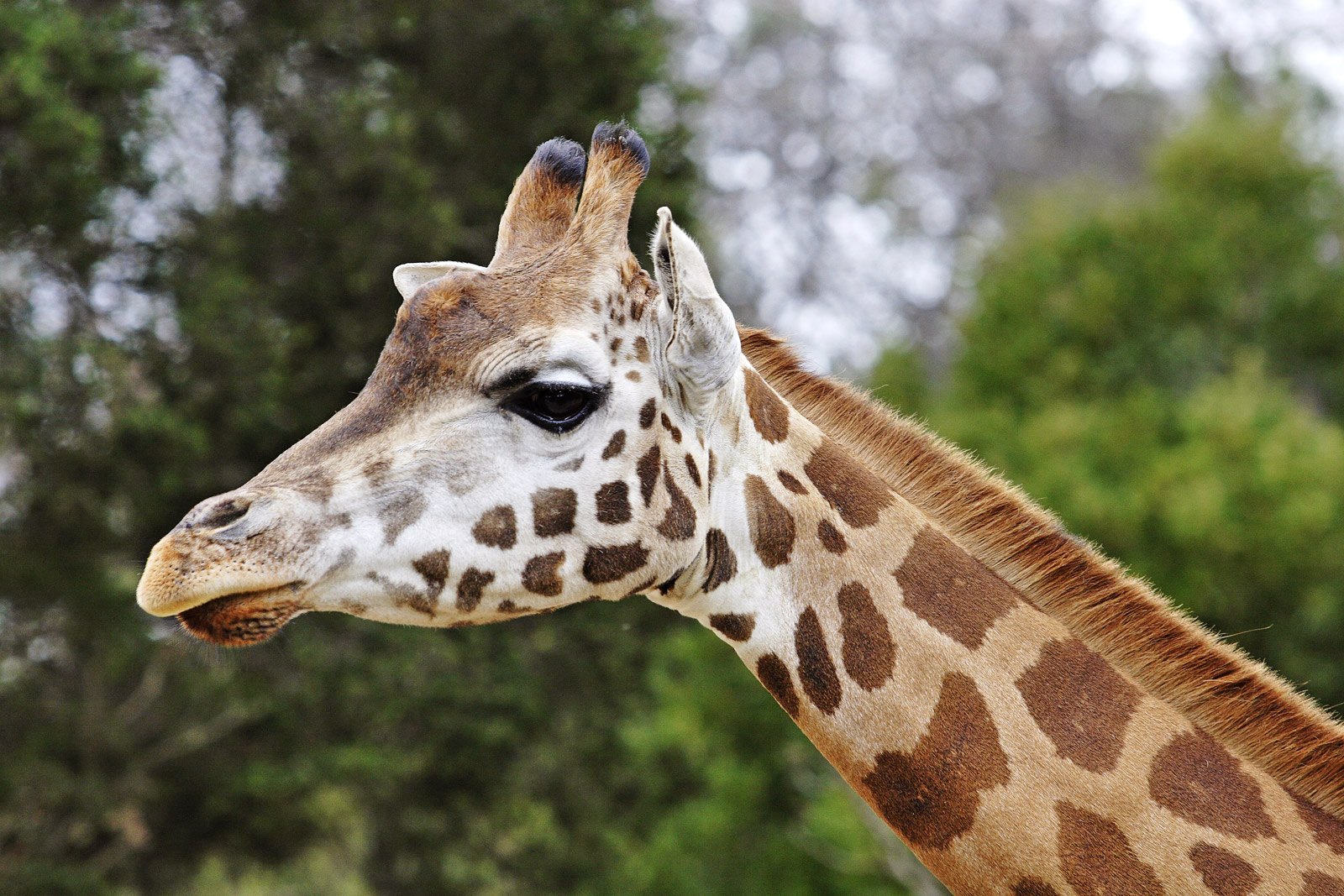
Carolus Linnaeus has decided to build a new zoo. You and your team have been chosen as the design team for this zoo, which will include both animal and plant life. Your job is to create a layout that reflects the classification system studied in life science. Determine which animals/plant life should be grouped together and where they should be placed within the zoo property lines. You must include at least two examples of all kingdoms in your design. You will also be in charge of creating a name for this new zoo. Be creative in your efforts! At the end of this WebQuest, you will present a map of your zoo, including a written justification of the decisions you made.
Process
Task 1:
In order to complete Task 1, you must first complete the linked graphic organizer of the characteristics of your five kingdoms.
The internet is vast! And also contains a lot of incorrect information, so here are some links to valid websites you will find useful for your task that I would like you to use:
http://perspective.com/nature/
http://www.davidlnelson.md/Cazadero/FiveKingdoms.htm
http://www.mcgee.berlinschools.org/Library/five_kingdoms_of_life.htm
Here is the link to the Graphic Organizer your team needs to fill out:
Task 2:
In this task, your group of zooligists are in the process of creating a new zoo in your area of the country. Zoo life is different than life in the wild, as the zoo is a microcosm of life on our planet, and as such, cannot contain all living organizms in a small confined area. As such, one must carefully choose the animals and plants to reside in your zoo.
You are going to create a zoo, limited to a 1 mile square area. That is the only limit to your imagination. Your instructions are to create a zoo that contains examples of all five kngdoms, with a minimum of two representatives. Before you start, consider the environment you will create; what is the temperature variation in your area seasonally as this will determine the type of life that exists there? How about a water source? Are you thinking of a desert theme? Mountainous? It is your zoo, be creative.
Also, you need to create a catchy name for your zoo, and a theme for a marketing campaign. The Team B Zoo, is waiting for you! (Corny, but you get the idea) Below, you will find further instructions and some helpful hints. There are also links to some of our country's best zoo's for you to review and hopefully give you some ideas as to how to construct a zoo.
Lastly, your team will provide a two paragraph summary detailing your choices for your zoo, a description of the property, and any other details necessary to justify your creation.
To review...
A-Research zoos, and determine which living things you will include in your design.
B-Design your zoo, using your google tools (maybe a google doc with a drawing?). You can also do it on paper if your team wishes.
C-Create a name, and a marketing catch phrase for the zoo.
D-Summarize and justify your choices.
Here are some sites that may spur along some ideas for your own team's zoo creation.
Lincoln Park Zoo-Chicago, Illinois http://www.lpzoo.com/
Sand Diego Zoo-San Diego, California http://www.sandiegozoo.org/
Columbus Zoo-Columbus, Ohio http://columbuszoo.org/
Toledo Zoo-Toledo, Ohio http://www.toledozoo.org/
Chehaw Wild Animal Park-Albany, GA http://www.parksatchehaw.org/
Virginia Zoological Park-Norfolk, VA http://www.virginiazoo.org/
Detroit Zoo-Detroit, MI http://www.detroitzoo.org/
Have a great time and think carefully about your choices. The zoo...is all you!
Task 3: Almost there!
This is your final assessment! This is your final step, which is designed to help you find out what you have learned and how to process the information. Each group will work together to answer the questions below. Use the information you knew before starting this project, combine it with what you have learned, and then make it all work together to answer the questions in the linked document:
Evaluation
You will be given both an individual (by team members and self) and group grade based on the scoring rubric below. These two scores will then be averaged to give your final score.
|
Beginning 1 |
Developing 2 |
Accomplished 3 |
Exemplary 4 |
Score | |
| Project Completion | Project handed in more than 1 week late | Up to one week late | Up to two days late | Project completed on time | |
| Presentation of Project | Does not answer any questions suggested in the template | Answers some questions | Answers some questions and includes a few other interesting facts | Answers most questions and includes many other interesting facts | |
| Graphic Organizer | Not completed entirely, no list of kingdoms or knowledge | A few of the five kingdoms were acknowledged with very little knowledge of each | Most of the five kingdoms were completed with some knowledge of each | All five kingdoms were completed with knowledge of each | |
| Grammar and Spelling | Very frequent grammer and/or spelling errors | More than two errors | Only one or two errors. | No errors. | |
| Content | Provides inconsistent information for solution, has no apparent application of critical thinking, has no clear goal, pulled from few sources, has significant factual errors, misconceptions, or misinterpretations. | Supports the solution, has application of critical thinking that is apparent, has no clear goal, has pulled from a limited number of sources, has some factual errors or inconsistencies. | Is well thought out and supports the solution, has application of critical thinking that is apparent, has clear goal that is related to the topic, is pulled from several sources, is accurate. | Is well thought out and supports the solution to the challenge or question, reflects application of critical thinking, has clear goal that is related to the topic, is pulled from a variety of sources, is accurate. |
Conclusion
Congratulations! We hope this assignment has helped you to better understand the system for the classification of living things. Scientists often look for ways to classify everything, in order to help their understanding of the world around us, and the parts we cannot see or even yet imagine. As such, it is improtant for everyone to help keep the world in order, as orderliness is easier to understand than chaos. If you don't believe us, think about how your bedrooms look and the difficult time you have finding anything in it!!!
We have provided you several other places to visit and discover more about the five kingdoms, about zoology, science careers, the solar system and much, much more. We hope you have not only learned a few things along the way, but have had some fun as well. Until we meet again, remember, science is nature's way of figuring out nature's way.
Careers in Zoology:
http://www.zooarch.com/zoology/career_in_zoology/zoology_career.htm
Careers in various science fields:
http://sciencecareers.sciencemag.org/
http://www.sciencecareersweb.net/
http://www.whoi.edu/science/marinecareers/index.php
Credits
This Web Quest represents the work from Marcy Luckritz, third grade teacher, Amber Wright, high school special education teacher, Christine Wood, middle school special education teacher, and Daniel Laab, assitant principal. In addition, thanks goes to the Internet sites that are included in this Web Quest. In order for this to be successful, we used a variety of websites created by talented individuals from around the world. We would also like to thank Dr.Ginger Jacobs for continued support throughout this endeavor.
Slight modifications made by Heidi Shoulders, middle school science teacher.
Permissions
We all benefit by being generous with our work. Permission is granted for others to use and modify this WebQuest for educational, non-commercial purposes as long as the original authorship is credited. The modified WebQuest may be shared only under the same conditions.