Introduction
Think back to our reading of Girl Wonder: A Baseball Story in Nine Innings and The Princess Knight.
Remember that gender equality is the measurable equal representation of women and men. Gender equality does not imply that women and men are the same, but that they have equal value and should be shown equal treatment.
Should men and women really be treated equally?
Task

After breaking into groups and deciding on a woman to research, you will use the internet and paper text to complete your research.
As a group, you will create a biography project highlighting the significant details of your herione’s life.
Your group may choose to create a:
- PowerPoint Presentation
- Acrostic poem
- Poster
- Reader’s Theatre
- Brochure
Each group will present their project to the class.
Process

--> As a group, decide who will research each part of the information about a woman in history.
- Student #1 – About. Where was she born? What was was her early life like? Did she have a family? Include any other important information that will help your classmates understand her character.
- Student #2 – Beliefs. What issues was she facing? What did she believe? How did she let other people know what she believed?
- Student #3 – Actions. What actions did she take to address the issues around her? Did she work alone? Did she work with a group of people? Were people accepting of her actions?
- Student #4 – Contributions. What was the outcome of her actions? What is she best known for? What was her biggest contribution to her cause?

--> Use the websites, books, and other resources provided to gather information about your character. To make sure you understand the reading material, choose books that are on your reading level. Ask your group members for help understanding a question, using the Internet, finding answers, reading new words, or any other problems you may run into. (I will be here to help as well, but remember to ask your other sources first.)
Tips: Take notes to help you remember important details. Work as a team to make sure everyone is on track and contributing to the project.

--> Once you have gathered all the necessary information, decide how your team wants to present their project to the class. You may create any of the following:
- PowerPoint Presentation
- Acrostic poem
- Poster
- Reader’s Theatre
- Brochure
--> Make sure that your project includes all four parts of the research, provides information that is clear and easy to follow, and highlights the major details of your character’s life. (Look at the rubric to make sure everything is completed.)
--> Include pictures or other graphics to help your audience understand your character.
**Remember to use your creativitiy and have fun with this project!
--> Groups will take turns presenting their projects to the class.
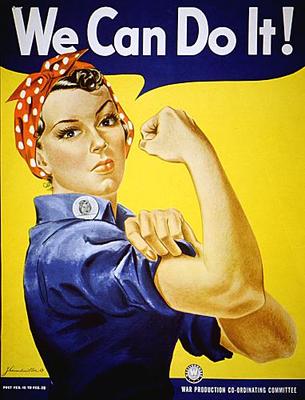
Women who stood up for their rights -
- Abigail Adams
- Mary Ludwig Hayes (Molly Pitcher)
- Harriet Tubman
- Susan B. Anthony
- Sojourner Truth
- Clara Barton
- Harriet Beecher Stowe
Web Searches
www.gardenofpraise.com/leaders.htm
Dictionary
Books
Abigail Adams by Alexandra Wallner (32 pages; level 4.1)
Time For Kids: Abigail Adams Eyewitness to America's Birth by Editors of TIME For Kids (48 pages; level 2.5)
They Called Her Molly Pitcher by Anne F. Rockwell, Cynthia von Buhler (40 pages; level 4.5)
Molly Pitcher by Jan Mader (24 pages; level 2.2)
Harriet Tubman by Philip Abraham (24 pages; level 1.7)
Harriet Tubman by Marion Dane Bauer (32 pages; level 4.3)
Susan B. Anthony by Alexandra Wallner (32 pages; level 5.0)
Susan B. Anthony: Fighter for Women's Rights by Deborah Hopkinson, illustrated by Amy Bates and Amy June Bates (32 pages; level 2.1)
Only Passing Through: The Story of Sojourner Truth by Anne F. Rockwell, illustrated by Gregory Christie (40 pages; level 4.4)
Sojourner Truth (Photo Illustrated Biography) by Margo McLoone (24 pages; level 2.5)
Clara Barton: Angel of the Battlefield by Allison Lassieur, illustrated by Brian Bascle (32 pages; level 3.5)
The Life of Clara Barton by Kathleen Connors (24 pages; level 2.1)
Harriet Beecher Stowe (Classic Storytellers) by Michele Griskey (48 pages; level 4.3)
A Picture Book of Harriet Beecher Stowe (Picture Book Biographies) by David A. Adler, illustrated by Colin Bootman (32 pages; level 2.5)
Evaluation
WEBQUEST PROJECT GRADING RUBRIC
|
CATEGORY |
Excellent 4 |
Good 3 |
Satisfactory 2 |
Needs Improvement 1 |
|
Quality of Information |
Information clearly relates to the main topic. It addresses all research questions |
Information clearly relates to the main topic. It addresses most research questions |
Information clearly relates to the main topic. Most research questions were not addressed |
Information has little or nothing to do with the main topic. It did not address the research questions |
|
Mechanics |
No grammatical, spelling or punctuation errors. |
Almost no grammatical, spelling or punctuation errors |
A few grammatical spelling, or punctuation errors. |
Many grammatical, spelling, or punctuation errors. |
|
Sources |
A variety of multiple sources were used to gather information |
Several sources were used to gather information |
Few sources were used to gather information |
Minimal sources were used to gather information |
|
Diagrams & Illustrations |
Diagrams and illustrations are neat, accurate and add to the reader's understanding of the topic. |
Diagrams and illustrations are accurate and add to the reader's understanding of the topic. |
Diagrams and illustrations are neat and accurate and sometimes add to the reader's understanding of the topic. |
Diagrams and illustrations are not accurate OR do not add to the reader's understanding of the topic. |
|
Focus |
Project focuses on the importance of character contributions |
Project mostly focuses on character contributions |
Project briefly discusses the character contributions |
Project does not place importance on character contributions |
|
Oral Presentation |
Student presents information accurately and relates to the topic He/she speaks clearly and at appropriate volume. |
Student presents information accurately and includes the topic He/she speaks clearly and at appropriate volume. |
Student presents information with some inaccuracies and does not include to the topic He/she requires reminders to speak clearly and at appropriate volume. |
Student presents information with many inaccuracies and does not include the topic He/she is soft spoken and is not clear during presentation. |
Conclusion
You have researched and learned lots of information about women who stood up for their rights.
Did these women make a difference?
Do women deserve to be treated as equals to men?
Does every person deserve to be treated equally?