
Introduction
One of the most iconic and influential Japanese artworks is the Great Wave of Kanagawa. You have probably noticed it in gift shops, shirts, bags, and post cards. It was a revolutionary painting, by Hokusai, that reflects the artist’s life and the environment in Japan at the time of its production. Hokusai’s combination of foreign and local culture was a groundbreaking practice and left an impact on the world.
In this WebQuest you will delve into the historical context that produced this artwork, with an overview on the artist's biography. And by analyzing the printing techniques used, you will be able to create a small print of your own.


Task
To fully understand the influences of Hokusai's artworks and stylistic/ figurative details of the 'Great Wave of Kanagawa', you will need to do the following:
1- Understand the political and social climate in Japan in the 18th century
2- Look into Hokusai's life and experiences that led him to produce the artwork
3- Explore the influence of European art on Hokusai's artworks
4- Analyze the stylistic and figurative details in the 'Great Wave of Kanagawa'
5- Study the woodblock printing process
6- Create a small print inspired by Hokusai's work and applying the techniques learned
Process
To guide you through the relevant information, use the sources provided to find the answers for each of the topics.
Step 1: Political and Social Climate in Japan
- Reasons and process of Japan's seclusion from the rest of the World
- The steps the country followed to remain self sufficient
- Merchants' role in Japan's economy
- The subject of popular art and entertainment

Find the answers in the following sources:
- Mason, R. H. P., & Caiger, J. G. (2011a). A history of Japan. Charles E. Tuttle Co.
-
Clements, J. (2017). A brief history of japan: Samurai, shōgun and zen: The extraordinary story of the land of the rising sun. Tuttle Publishing.
- Squires, G. (2022, October 11). Edo period. World History Encyclopedia. https://www.worldhistory.org/Edo_Period/%C2%A0
Step 2: Hokusai's Life and Art
- Hokusai's upbringing
- Life Hardships
- What made his work special
- Local and international inspirations

Find the answers in the following sources:
-
Cartwright, J. H. E., & Nakamura, H. (2009). WHAT KIND OF A WAVE IS HOKUSAI’S GREAT WAVE OFF KANAGAWA ? Notes and Records of the Royal Society of London, 63(2), 119–135. http://www.jstor.org/stable/40647253
- Richard Lane Research Associate, H. A. of Arts. A. of M. of the J. P. H. L. and W. and others. (2025, September 27). Hokusai. Encyclopædia Britannica. https://www.britannica.com/biography/Hokusai
Step 3: Influence of European Art
- Japan trade and ties with Europe
- Dutch representation techniques of perspective and subject matter
- Imported of colors from Europe

Find the answers in the following sources:
- Mason, R. H. P., & Caiger, J. G. (2011a). A history of Japan. Charles E. Tuttle Co.
Step 4: Stylistic and Figurative Techniques
- Figures represented and symbolized
- Composition and perspective
- Dynamism, contrast and their affects
- Nature vs human scale geometry

Find the answers in the following sources:
- Guth, C. M. E. (2011). Hokusai’s Great Waves in Nineteenth-Century Japanese Visual Culture. The Art Bulletin, 93(4), 468–485. http://www.jstor.org/stable/23208270
Step 5: Ukiyo-e Techniques
- Members and skillsets involved in woodblock prints
- Drawing and gluing process
- Carving process
- Printing process
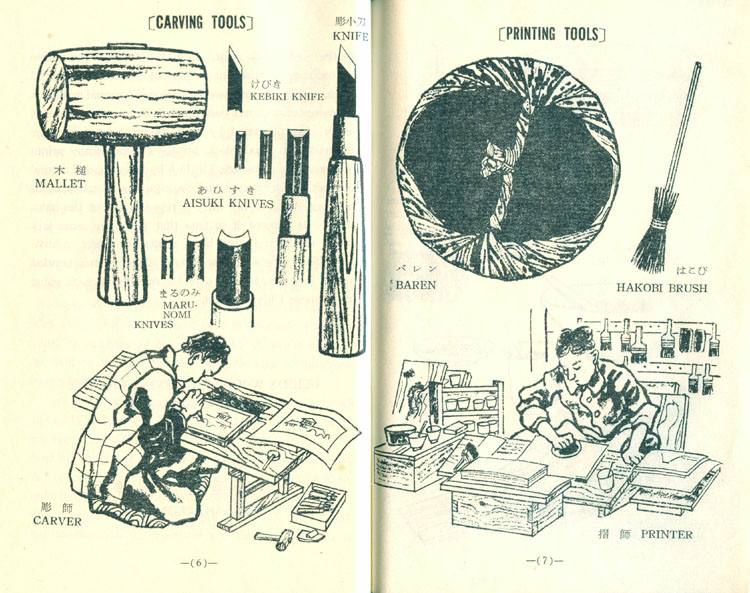
Find the answers in the following sources:
-
Harris, F. (2012). Ukiyo-e: The art of the Japanese print. Tuttle Pub.
-
https://www.youtube.com/watch?v=t8uF3PZ3KGQ&pp=0gcJCdgAo7VqN5tD
Step 6: Create Your Own Print
- Using paper, ink (or paint), and a simple carved surface (such as styrofoam, eraser, or linoleum), create a small print inspired by Hokusai
- Document your process with sketches and short notes
Evaluation
| Criteria | Excellent (4) | Good (3) | Satisfactory (2) | Needs Improvement (1) |
|---|---|---|---|---|
| Understanding of Japan's historical context | Demonstrates deep understanding of Japan's Edo period and socio-economic context | Demonstrates clear understanding | Demonstrates partial understanding | Minimal understanding |
| Knowledge of Hokusai's life | Provides detailed information on Hokusai’s life and works | Provides good overview | Some details missing | Very limited |
| Explanation of European influence | Clearly explains European impact on Japanese art | Explains influence with some gaps | Mentions influence but little explanation | No explanation |
| Analyzing stylistic and figurative techniques | Analyzes clearly all the representation techniques used | Analyzes most techniques | Leaves many important techniques out | No analysis |
| Knowledge of woodblock printing techniques | Clearly explains ukiyo-e process | Explains most steps | Explains some steps | Very little explained |
| Creation of creative print |
Original, thoughtful, shows effort |
Clear effort, somewhat original | Some effort but incomplete | Minimal effort |
Conclusion
You have learned about one of the most recognizable artworks in the world, 'The Great Wave of Kanagawa'. Through a deep study, you discovered about Japanese history, artist's career, international influences, and printmaking techniques. You were also able to create your own personal print.
In conclusion, even with the seclusion of Japan, dramatic changes in art, ideas and culture continued. Foreign influences were still prominent even with the great effort of the Japanese to avoid that. Hokusai is a great example of maintaining tradition while still experimenting with foreign ideas. He remains an inspiration to new generations of artists
Credits
- Mason, R. H. P., & Caiger, J. G. (2011a). A history of Japan. Charles E. Tuttle Co.
- Clements, J. (2017). A brief history of japan: Samurai, shōgun and zen: The extraordinary story of the land of the rising sun. Tuttle Publishing.
- Squires, G. (2022, October 11). Edo period. World History Encyclopedia. https://www.worldhistory.org/Edo_Period/%C2%A0
- Cartwright, J. H. E., & Nakamura, H. (2009). WHAT KIND OF A WAVE IS HOKUSAI’S GREAT WAVE OFF KANAGAWA ? Notes and Records of the Royal Society of London, 63(2), 119–135. http://www.jstor.org/stable/40647253
- Richard Lane Research Associate, H. A. of Arts. A. of M. of the J. P. H. L. and W. and others. (2025, September 27). Hokusai. Encyclopædia Britannica. https://www.britannica.com/biography/Hokusai
- Guth, C. M. E. (2011). Hokusai’s Great Waves in Nineteenth-Century Japanese Visual Culture. The Art Bulletin, 93(4), 468–485. http://www.jstor.org/stable/23208270
- Harris, F. (2012). Ukiyo-e: The art of the Japanese print. Tuttle Pub.
- YouTube. (n.d.). YouTube. https://www.youtube.com/watch?v=t8uF3PZ3KGQ
Teacher Page
Target Group:
- Upper middle school to high school students (ages 13–18)
- Adaptable for introductory college-level art history or cultural studies courses
Grouping:
- Students can work in pairs for research but individually for printmaking
Time Frame:
- Approximately 5-6 class sessions (45–60 minutes each topic)
Classroom Materials:
- Computer access for research
- Art materials (paper, pencils, rulers, styrofoam) for carving, inking, and printing