
Introduction

Hello everyone! It is time for us to embark on a grand adventure! Where we will be exploring ecosystems.
What is an ecosystem?
What are the parts of an ecosystem?
Are we part of an ecosystem?
If you were a lion would you need the grass?
If you were grass would you need the lion?
You will watch videos, you will play games, you will find out what an ecosystem is.
Task
ECOSYSTEM ADVENTURE
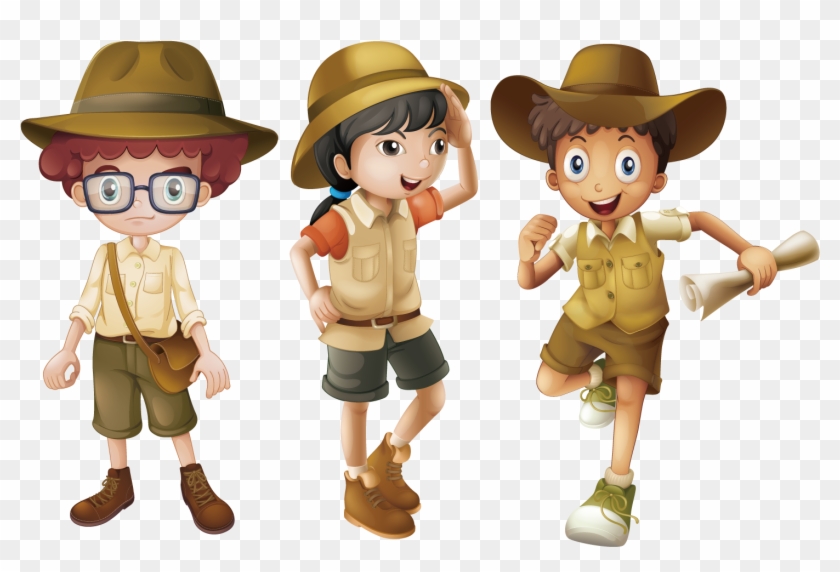
Welcome to our ecosystem adventure. We will embark on our journey through ecosystems. On our journey we will become familiar what an ecosystem is and the different parts of an ecosystem. So get your binoculars, magnifying glass and your clipboards ready!
Once we have identified and illustrated an ecosystem already in existence you will create your very own using your new found knowledge.
You will illustrate and describe your own ecosystem! It can be as creative, original or as realistic as you like.
Process
Part 1: Research
Let our adventure begin:
1.You will work in groups of 4 to choose an ecosystem that you will explore in depth together.
The major types of ecosystems are forests, grasslands, deserts, tundra, freshwater and marine.
Choose an ecosystem to explore after watching and/or reading any of the following links:
Reading links:
http://www.nhptv.org/natureworks/nwepecosystems.htm
https://sciencing.com/types-environmental-ecosystems-8640.html
Video links:
2) Play any of the following games to refine your knowledge about the parts of an ecosystem before moving on to your next step.
https://pbskids.org/plumlanding/games/ecosystem/feed_the_dingo.html
https://pbskids.org/plumlanding/games/ecosystem/mountain_scramble.html
https://pbskids.org/plumlanding/games/ecosystem/make_a_mangrove.html
3 Create a poster, a slide, a tableau or a game using Scratch to describe what an ecosystem is, include the specific characteristics that make up your chosen ecosystem.
4) You exploration is coming to an end. Before moving on is it time for you to present your discoveries to your fellow researchers.
Part 2 Consolidation/Creation
5) Now your group will invent your own ecosystem. Your ecosystem should include: all of the essentials parts of an ecosystem that you have already listed ( i.e .producers, consumers, living-non-living). You will include a brief description of your ecosystem including a paragraph on the life cycle of one of your ecosystem members. You will draw and label your ecosystem using Google Slides, poster paper, make a booklet, use Scratch or create a video are some possibilities. If you have an idea not mentioned please feel free to present your own ecosystem using your own ideas. Be as creative as you like. Make sure to run it by your teacher.
Google Slides: https://docs.google.com/presentation/d/1oqYj6U7Sl2YyN_L9ntk6CTMd9PtxBg-w_PbQoJXo7ww/copy?usp=sharing
Scratch: https://scratch.mit.edu/
Booklet: https://bookcreator.com/
Video: https://spark.adobe.com/sp
8) Turn in all materials to your teacher. I hope you enjoyed your exploration.
EXTENSION: https://www.generationgenius.com/activities/ecosystems-activity-for-kids/
Evaluation
|
RubiStar |
Rubric Made Using: RubiStar ( http://rubistar.4teachers.org ) |
|
|
CATEGORY |
4 |
3 |
2 |
1 |
|
Ideas/Research Questions |
Students independently identify at least 4 reasonable, insightful, creative ideas/questions to pursue when doing the research. |
Students independently identify at least 4 reasonable ideas/questions to pursue when doing the research. |
Students identify, with some adult help, at least 4 reasonable ideas/questions to pursue when doing the research. |
Students identify, with considerable adult help, 4 reasonable ideas/questions to pursue when doing the research. |
|
Plan for Organizing Information |
Students have developed a clear plan for organizing the information as it is gathered and in the final research product. All students can independently explain the planned organization of the research findings. |
Students have developed a clear plan for organizing the information in the final research product. All students can independently explain this plan. |
Students have developed a clear plan for organizing the information as it is gathered. All students can independently explain most of this plan. |
Students have no clear plan for organizing the information AND/OR students in the group cannot explain their organizational plan. |
|
Content Knowledge |
Students know , and can apply the knowledge that ecosystems can be characterized by their living and nonliving components. |
Students know ecosystems can be characterized by their living and nonliving components |
Students partially understand ecosystems can be characterized by their living and nonliving components |
Students do not understand ecosystems can be characterized by their living and nonliving components |
|
Application of Knowledge |
Students completed assignments and fully understand further application of learned knowledge. Projects were neat, articulate and creative and contained little or few grammatical and scientific errors. |
Students completed assignments and understand further application of learned knowledge through final task they are able to partially apply their learned knowledge, but did not fulfill all aspects correctly |
Students partially completed assignments and partially understand further application of learned knowledge |
Students did not complete project, and do not understand ecosystems, and knowledge application |
Conclusion
Great job on your exploration of ecosystems and creative presentations. What an adventure!
What are two main takeaways from this assignment?
What did you learn about ecosystems and their main characteristics?
What two approached created a positive group experience?
What would you improve?
What might you choose to explore further?
Credits
Teacher Page
This webquest was designed in alignment with the learning objectives from the Ontario Curriculum Guide for Science and Technology - Grade 4.