
Introduction
 This Web Quest will identify some of the most important people as well as several key themes in early childhood education. Enhancing the quality of young children’s lives is now a national and international priority that is expressed through research and policy initiatives, programme development and advocacy. This Webquest will also show how current events, such as political, social, and economic changes and pressures, affect both the field of education and the realities of child care.
Task
My intention is to attract the attention of college students and other Early Childhood Professionals like myself to have a better understanding and array of knowledge of Early Childhood Education. These include key events, peoples, beliefs,and theories that one way or another have impacted the field of Early Childhood Education through the years.
Among some of the key people you should have came across were:
- Maria Montessori: invented the Montessori method for educating young children; believed that respect for children is the foundation of teaching
- John Dewey: children's interests form the basis for curriculum; child-centered education; discovery learning
- Jean Piaget: children are "little scientists" and literally develop their own intelligence; mental and physical activities are important for cognitive development
- Erik Erikson: life is a series of eight stages with each stage representing a critical period in social development; how parents and teacher interact with and care for children helps determine their emotional and cognitive development.
Process
 Research: Go onto the internet and search for information on the history of early childhood education, beliefs, theories, events, and important people in reference to early childhood education.
Activity: After researching about the history of the early childhood education, you can take the initial of finding people that contributed to the early childhood education. Research two to three people in present time that have contributed in one way or another into the growth of the program. After completing this step, compare their beliefs and theories with the past theories and beliefs from Piaget, Montessori, or Erickson.
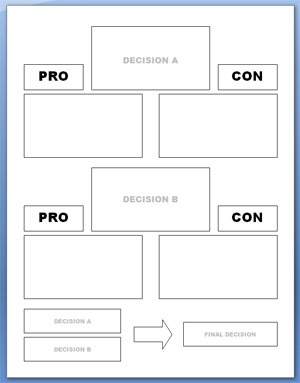
Create a pros and cons list for each of them.
Evaluation
|
Beginning |
Developing |
Accomplished |
Score |
|
|
Overall Visual Appeal |
There are few or no graphic elements. No variation in layout or typography. |
Graphic elements sometimes, but not always, contribute to the understanding of concepts, ideas and relationships. |
Appropriate and thematic graphic elements are used to make visual connections that contribute to the understanding of concepts, ideas and relationships. |
|
|
Motivational Effectiveness of Introduction |
The introduction is purely factual, with no appeal to relevance or social importance. |
The introduction relates somewhat to the learner's interests and/or describes a compelling question or problem. |
The introduction draws the reader into the lesson by relating to the learner's interests or goals and/or engagingly describing a compelling question or problem. |
|
|
Connection of Task to Standards |
The task is not related to standards. |
The task is referenced to standards but is not clearly connected to what students must know and be able to do to achieve proficiency of those standards. |
The task is referenced to standards and is clearly connected to what students must know and be able to do to achieve proficiency of those standards. |
|
|
Clarity of Process |
Process is not clearly stated. Students would not know exactly what they were supposed to do just from reading this. |
Some directions are given, but there is missing information. Students might be confused. |
Every step is clearly stated. Most students would know exactly where they are at each step of the process and know what to do next. |
|
|
Relevance & Quality Resources |
Links are mundane. They lead to information that could be found in a classroom encyclopedia. |
Some links carry information not ordinarily found in a classroom. |
Links make excellent use of the Web's timeliness and colorfulness. |
|
|
Evaluation |
Criteria for success are not described. |
Criteria for success are at least partially described. |
Criteria for success are clearly stated in the form of a rubric. Criteria include qualitative as well as quantitative descriptors. |
Conclusion
After all of your research is complete, you now have the opportunity to convince the students the importance of Early Childhood Education. You will write a well-organized and supported paragraph defending your choice of the most important key elements of Early Childhood. Be sure to include a topic sentence, supporting details, and a conclusion.
Credits
Early Childhood Education. Digital image. Carson-Newman University. N.p., 2014. Web. 1 June 2014.
Dembroski, Kristen. Internet Research. Digital image. Kristen Dembroski. WordPress, 2014. Web. 1 June 2014.
Mezirow, Schon, and Brookfield. The Thinking Process. Digital image. UNSW Australia. N.p., 5 Mar. 2014. Web. 1 June 2014.
Morrison, G. (2013). Observing and Assessing Young Children. 7th edition. Upper Saddle River, New Jersey: Pearson Education, Inc.
Richardson, John. Pros and Cons Chart. Digital image. Personal Success Today. N.p., 2014. Web. 1 June 2014.
Teacher Page
This WebQuest contains what I consider to be the most important people, events, theories, and beliefs that had an impact on early childhood education.