
Introduction
Introduction

Studies from Anthropologists (people who study human behaviors and cultures) and Archeologists (people who study and find information of human activity in the past) have researched early primates over the last three centuries.
The search for the modern human ancestor started with the theory of Evolution which was created by Charles Darwin. Since then we've been studying to see how the remains of early primates are related to modern humans.
All that we have learned about genetics and fossils will help you as we begin our quest to learn about Human Evolution
Watch this video before getting started!
[video:http://www.teachertube.com/viewVideo.php?video_id=328522 align:left]
Task
Task
While working in your groups you are going to research your primate group that was assigned to your group. The goal of this webquest is to:
1. research and analyze what makes your primate different
2. Determine how closely related your primate group is to modern humans by using evidence from your research.
3. Become experts and teach the class by creating a scripted role play and act it out with your group to the class.
The primate categories the class will learn about are listed below:
Afarensis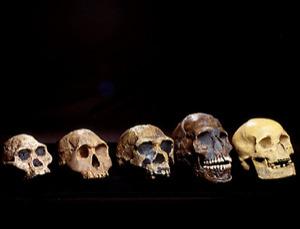
Homo Habilis
Homo Erectus
Homo Neanderthal
Cro-Magnon
A. Boisei
Homo Ergaster
Homo Heidelbergensis
Homo Sapiens
Click this link to learn more about what primates are!
[video:https://www.youtube.com/watch?v=BpnlS_ach-0 align:left]
Process
Process
Day 1&2
Step 1
Once you recieve your primate assign the follwing roles in your group. Each person will be responsible for researching their role for their group's presentation.
Person 1- Habitat, location and the time period. Answer these questions:
1. Where was your group found? (continent/country)
2. From what time period did they exsist?
3. What type of habitat or shelter did they live in?Person 2- Behavior and diet. Answer these questions:1. How did they interact with each other?2. How did they communicate?3. What was their main food source and how did they find it?
Person 3- Physical attributes and special characterisitcs (special adaptations)
1. What's their physical apperance?
2. What's two physical characteristic that makes them different from the other groups?
3. What's one special physcial adaptation of this group?
Step 2
Review your background understanding. Click on the link below to view the powerpoint presentation that we went over in class.
http://prezi.com/33lwgmrc6zoh/?utm_campaign=share&utm_medium=copy&rc=ex0share
Step 3
Click on the links beneath your primate to start your research.
Afarensis
http://humanorigins.si.edu/evidence/human-fossils/species/australopithecus-afarensis
http://www.pbs.org/wgbh/evolution/humans/humankind/d.html
http://australianmuseum.net.au/Australopithecus-afarensis/
http://humanorigins.si.edu/evidence/human-fossils/species/homo-habilis
http://australianmuseum.net.au/Homo-habilis/
http://www.handprint.com/LS/ANC/hfs4.html
Homo Erectus
http://humanorigins.si.edu/evidence/human-fossils/species/homo-erectus
http://www.pbs.org/wgbh/evolution/humans/humankind/k.html
http://australianmuseum.net.au/Homo-erectus
Homo Neanderthal
http://www.pbs.org/wgbh/evolution/humans/humankind/n.html
http://australianmuseum.net.au/Homo-neanderthalensis/
http://www.nhm.ac.uk/nature-online/life/human-origins/early-human-family/neanderthals/
Cro Magnon
http://humanorigins.si.edu/evidence/human-fossils/fossils/cro-magnon-1A. Boisei
http://www.kidspast.com/world-history/0019-cro-magnon.php
http://www.pbs.org/wgbh/evolution/library/07/2/l_072_02.html
http://earlyhumans.mrdonn.org/cromagnon.html
Cro Magnon meets Neanderthal Video
Homo Ergaster
http://australianmuseum.net.au/Homo-ergaster
http://www.bradshawfoundation.com/origins/homo_ergaster.php
http://www.bbc.co.uk/sn/prehistoric_life/human/human_evolution/leaving_home1.shtml
Homo Heidelbergensis
http://humanorigins.si.edu/evidence/human-fossils/species/homo-heidelbergensis
http://australianmuseum.net.au/Homo-heidelbergensis
http://www.bbc.co.uk/sn/prehistoric_life/human/human_evolution/first_europeans1.shtml
http://www.pbs.org/wgbh/evolution/humans/humankind/m.html
Homo Sapiens
http://humanorigins.si.edu/evidence/human-fossils/species/homo-sapiens
http://www.bradshawfoundation.com/herto_skulls.php
http://www.kidspast.com/world-history/0018-homo-sapien-sapien.php
http://www.pbs.org/wgbh/evolution/humans/humankind/o.html
Day 3
Step 4
Develope your script. Make your script to present the daily routine of your Primate group. Make sure that you include important information from your research such as where they are from and the year, have them show off any physical traits or characteristics, what they eat and what type of shelter they live in. Remember to practice your script as a group and your presentation should be 4 min. No longer.
Day 4 & 5
Step 5
Present your primate. Those groups who aren't presenting will take notes on the primate group during the presenting groups role play. You will fill out the form the teacher will give you. There will be one minute to ask the group questions after the role play.
Evaluation
| 4 | 3 | 2 | 1 |
| Group members equally participate | All group members participate | Some group members participate | Only 1 group member particpates |
| Group members always help each other | Group members often help each other | Group members sometimes help each other | Group members never help each other |
| Information is presented in an organized and engaging way | Information is presented in an organized way | Information is partially organized | Information is disorganized |
| Oral presentation includes all needed details | Oral presentation includes many needed details | Oral presentation includes some needed details | Oral presentation includes very little to no needed details |
| Role play presentation is organized, complete and engaging | Role play presentation is organized and complete | Presentation is complete | Presentation is not complete and/or disorganized |
Conclusion
Conclusion
During this webquest you were able to connect what you learned about genetics and fossils in the process of human evolution. There were two goals of this project. One was to give you the tools to be able to become experts and teach your peers about human evolution. The second was to be able to use the information you collected from your individual research and the information from your classmates to create a visual presenation of the Primate categories.
Credits
Credits
I would like to give thanks to Marisol Rosario. She is a 6-7th grade educator at Booker T. Washington Middle School whom I had the priveledge of working closely with this year. during the development of the content on this webquest, she has provided her expertise and advice in the curriculum development process. With her mentoring and crtique, this webquest was able to be executed.
Teacher Page
Teacher Introduction
Greetings,
The purpose of webquests is intended to incorporate interactive, collaborative and technological learning in the classroom. Through implementing webquests into the classroom curriculum students are provided with the opportunity to learn and be equipped with 21st century skills. Some of the benefits of webquests are as follows:
1. Students gain practice working in teams and collobarting with their peers
2. It helps to promote individual thinking by helping the student to be less reliant on the teacher to gain information
3. It allows students to be introduced to the process of research
4. It brings interaction into learning by allowing students to become the experts and teach their peers
5. It enables differention in learning and students can move at their own pace
To find out more information about webquests and how they can be used in the classroom follow this link
http://www.thirteen.org/edonline/concept2class/webquests/index_sub1.html