
Introduction
The purpose of this webquest is to show and tell students in grades 8-10th all about the Holocaust and why it was one of the darkest times in history. Students will be able to evaluate material on the Holocaust, establish connections between events, learn the brutality of deportation, and analyze the conditions in the concentration and death camps. The students will go through a journey to learn about the very difficult time during the Holocaust. They will become experts on a particular theme that took place during the Holocaust.
Curriculum: social studies
Author: Gabriela Prochilo
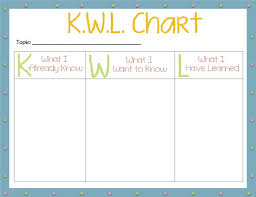
The students will watch a video on the Holocaust. The video will explain the main points of the Holocaust and a short summary. Before watching the video on the Holocaust the students will fille out a KWL chart. The chart has 3 different categories: K-know what the students already know about the Holocaust W-what the students want to know about the Holocaust L-after watching the video the students will fill out what they learned about the Holocaust. The class will then have a class discussion about the key points of the Holocaust, what the students have learned, and the students' reflections of the Holocaust.
[Video: http://www.youtube.com/watch?v=ULpLkhL-p_o]
Task
The students will learn about the Holocaust through readings. The main themes the students will be learning about is Hitler's Final Solution, The Ghettos, The Camps, The German Perpetrators, Liberation, and Survivors. Students will get into groups of four and there will be six groups total. Each group will be assigned one of the themes along with a reading about the assigned theme. After reading and researching about their assingned theme they will present a presentation to the class explaining their theme. They will teach the class their assigned theme through main ideas, pictures, and videos. They will use primary sources, secondary sources, and backround knowledge to summarize their findings. Each student will have a role in the group when creating their presentations to teach the class. They will be the teachers for this particular subject to the class.
1. Chief Researcher- This person is responsible for guiding research and making sure all the information is accurate and has the right facts
2. Recorder- This person is responsible for typing the information on the slides and incorporating videos and pictures
3. Spokesperson- This person is responsible introducing the group and their theme. This person is also responsible for stating the main idea of their theme to the class.
4. Creative Manager- This person is responsible for providing a creative format to the presentation
*Each student in the group must read and teach one slide. However, the spokesperson has to read and teach four slides.
Process
Formative Assessment
Phase 1: Students will be completing a PowerPoint presentation on their assigned theme of the Holocaust. The groups will be assigned at random by the teacher so the groups can be diverse. There will be 6 groups total with 4 students assigned in each group. Each group will be assigned one of these themes: Hitler's Final Solution, The Ghettos, The Camps, The German Perpetrators, Liberation, and Survivors. The Holocaust was a major event that had happened in history. The students will learn about the key points that had happened in the Holocaust. The students will take part in silent reading, researching, summarizing, clarifying, learning new vocabulary, and working together as a team.
Phase 2: Once the students are in their groups they will each be assigned a role. The roles are a chief researcher, recorder, spokesperson, and creative manager. Each group will then be assigned an article about their particular theme. They will have 25 minutes to individually read the article. Once the 25 minutes are up the students will discuss in their groups the key factors in their article and their reflections about it. Once they had a 5 minute discussion they will break off into the computer section. They then will begin to work on their roles they were assigned to do. They will begin to research more information about their topic and start creating their PowerPoint to teach to the class. The slides need to be informational, filled with facts, provide pictures, provide videos, and draw the students’ attention.
Phase 3: The students will be provided three days to complete their PowerPoint. Once they are completed they will present to the class their theme. They will be the teachers for this topic and need to teach the information to the class. The students can either have a junk drive or pull up their PowerPoint from email to go on the overhead. The students should be taking notes, while the other students are presenting.
Summative Assessment:
Once all the groups have presented their material they will be quizzed on the information that was presented. It will be the information that was read and learned from the presentations. The quiz will be 30 questions, 5 for each theme.
- Where did the Holocaust take place?
- How many people died during the Holocaust?
- What was the Final Solution in the Holocaust?
- Who was in charge of the Holocaust?
- What were the Ghettos?
- How did they kill the Jews?
- What did they do with the bodies?
- Were there a lot of survivors?
- Why did they tattoo the Jews?
10. When speaking about the Holocaust what time frame are we referring to?
11. How many non-Jewish civilians were murdered during WWII?
12. What is a death camp? How many were there?
13. How did the Germans define who was Jewish?
14. What were the first measures taken by the Nazis against the Jews?
15. Why were the Jews singled out for extermination?
16. Did all Germans supports Hitler’s plan for the persecution of the Jews?
17. Who are the “Righteous Among the Nations”?
18. How many Jews were able to escape from Europe prior to the Holocaust?
19. What was Hitler’s ultimate goal in launching WWII?
20. Besides, Jewish people who else did Hitler want to get rid of?
21. When the Germans took over a city in Europe, what was the place in town called where they put the Jewish people?
22. What was the name of the places where they would take the Jews and make them work or kill them?
23. What were gas chambers?
24. What other religious groups did the Germans kill in the concentrations camps?
25. Almost 8,000 Jews were hidden and ferried to safety by the citizenry of?
26. Non-Jewish citizens of Europe who, at great risk to themselves, helped hide and rescue Jews from Nazis are
27. The number of people displaced after the second war reached
28. Any form of resistance to Nazi authority in Germany was
29. Allied forces were well prepared for what they found in concentration camps
30. How old were the majority of the Holocaust victims?
Evaluation
Theme Presentation PowerPoint Rubric
|
Category |
Excellent
90-100 |
Good
75-89 |
Needs Improvement 60-74 |
Unacceptable
0-59 |
|
Content Accuracy
(100 pts) |
All content presented is accurate with creditable sources listed. |
Most of the content presented is accurate, but there is some information that maybe inaccurate, or not have a creditable source listed. |
The content presented is generally accurate, but there is some information that maybe inaccurate, or not have a creditable source listed. |
The content is confusing, or mostly inaccurate, with no creditable source listed. |
|
Components (100 pts) |
All the required presentation components were presented (Pictures, Videos, and creativity) |
Most of the required presentation components were presented. (Pictures, Videos, and creativity) |
Some of the presentation components were presented (Not a lot of pictures, videos, or creativity) |
The presentation was missing a lot of components (No pictures, videos, or creativity). |
|
Organization
(100 pts) |
The presentation was very organized and the group was prepared. The class was really engaged. |
The presentation was mostly organized and the group was mostly prepared. The class was engaged. |
The presentation was generally organized, but the group was not prepared. The class was not so much engaged. |
The presentation was not organized and the group was not prepared. The class was not engaged. |
|
Cooperation (100 pts) |
Group delegates tasks and shares responsibility. |
Group delegates tasks and shares responsibility. |
Group delegates tasks and shares responsibility effectively some of the time. |
Group is not effective at delegating tasks and shares/sharing responsibility. |
|
Effectiveness
(100 pts) |
The presentation is effective at covering the group’s theme and taught the class very well. Used very good voices. Everyone spoke in their group. |
The presentation is mostly effective at covering the group’s theme and taught the class. Used good voices. Everyone spoke in their group. |
The presentation is somewhat effective at covering the group’s theme and could of taught the class a bit better. Used okay voices. Mostly everyone spoke in their group. |
The presentation is in-effective at covering the group’s theme and did not teach the class very well. Did not use good voices. Not everyone spoke in their group. |
Total: 500 points
Conclusion
After each group presents their theme to the class. The students will write and reflect in their journals what they learned about the Holocaust. They will also express their thoughts on the Holocaust. They then will turn in their journals for teacher to review. They will also pick one Holocaust survivor that they learned about. They will then write a pretend letter to him or her and ask them questions. They can also reflect in the letter their opinions to him or her.
That's all the time we have for today to learn about the Holocaust, but if you would like to pursue more own your own check out these resouces out!
http://www.hitlerschildren.com/article/1646-a-brief-holocaust-summary
http://www.holocaustsurvivors.org/
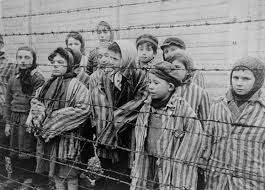
"The Holocaust: The Darkest Time in History" Unknown
Credits
A special thanks to Professor Scrant for showing us how to include a WebQuest into our lessons.
A special thanks to RED 4350 CRN 50640 for helping when needed.
Teacher Page
Standards:
SS.912.A.1.1
Describe the importance of historiography, which includes how historical knowledge is obtained and transmitted, when interpreting events in history.
FL-NGSSS-LA-2007.8.2.2.3 The student will organize information to show understanding or relationships among facts, ideas, and events (e.g., representing key points within text through charting, mapping, paraphrasing, summarizing, or comparing/contrasting)
Evaluate, design and employ instructional methods and techniques appropriate to learners' socialization and communication needs, based on knowledge of language as a social phenomenon.
FL-CCSS-ELA-2010.W.K-5.ANCHOR.6 Use technology, including the Internet, to produce and publish writing and to interact and collaborate with others.
- Teacher:
- This WebQuest was for a Lesson Plan Critical Task needed for a RED 4350 class. It was in block 3 of my Education program at Florida Gulf Coast University. This webquest can be used for an entire class with roles, literacy contents, research, and standards. It was a lot of fun creating this webquest and my advice for teachers to be make sure you have a topic and standards before starting the webquest! Also, to engage readers with pictures!
- [img_assist|nid=13917|title=Teacher|desc=|link=none|align=left|width=232|height=305]