
Introduction

What is figurative language? Did you know that by using figurative language, you can enjoy reading and understanding so much more? Did you know that using figurative language will make your writing much more exciting? Your audience will be captivated by your stories, poems, and dramas. In this web quest, you will learn about six types of figurative language:
- Simile
- Metaphor
- Personification
- Alliteration
- Onomatopoeia
- Hyperbole
Do you recognize any of these types are already? If so, you are already on your way! Watch this video of songs and it will give you a good idea of what you will be looking for. You will watch it again in the conclusion, and I guarantee you will recognize many more types.
Task

Project Directions---
- Each day you will complete the daily assignment from this webquest.
- Guess What? You will be using Google Slides and making a story using photos.
- First, you will create the photo story to teach a classmate about the eight types of figurative language that you will be learning about in this web quest. Make it creative and fun!
- Here are your requirements for your Photo Story.
- First Slide-Create a fun and exciting title with your name and date
- Each following slide-The type of figurative language, the definition, an example, and a photo/illustration to match (x6)
- Transitions
- If you would like, you may find photos on the internet or create your own illustrations.
- This is a way to have fun and yet, show what you know!!
- Create, create, create! This will be this 9 weeks project grade!
GA State Standards addressed in this Webquest:
ELAGSE5L5: Demonstrate understanding of figurative language, word relationships, and nuances in word meanings. a. Interpret figurative language, including similes and metaphors, in context. b. Recognize and explain the meaning of common idioms, adages, and proverbs. c. Use the relationship between particular words (e.g., synonyms, antonyms, homographs) to better understand each of the word
Common Core Standards Addressed:
1.ELAGSE5SL3: Summarize the points a speaker makes and explain how each claim is supported by reasons and evidence
ELAGSE5L3: Use knowledge of language and its conventions when writing, speaking, reading, or listening. a. Expand, combine, and reduce sentences for meaning, reader/listener interest, and style.* b. Compare and contrast the varieties of English (e.g., dialects, registers) used in stories, dramas, or poems
ELAGSE5L5:
- Use knowledge of language and its conventions when writing, speaking, reading, or listening.
- Vary sentence patterns for meaning, reader/listener interest, and style.*
ELAGSE5SL5: Include multimedia components (e.g., graphics, sound) and visual displays in presentations when appropriate to enhance the development of main ideas or themes.
|
|
|||
Process
Day 1- Simile
 A simile is a comparison between two objects using the words like or as. A simile is a comparison between two objects using the words like or as.
Examples: The night was like coal. The cat was as sly as a fox. |

1. Go to this site for further information about similes: https://www.englishclub.com/vocabulary/figures-similes-list.htm
- Open your LA interactive notebook, jot down three examples of a SIMILE and their definitions. Illustrate one.
- Complete this quiz: http://www.softschools.com/quizzes/grammar/similes/quiz3468.html. You may use your notes!
- Use this game to see how many of these common similes you have heard of! Write down your score! https://www.englishclub.com/esl-games/vocabulary/matching-similes-1.htm
- Use your remaining time to work on your Picture Story! Begin by creating the page for Simile!
- Don't forget to review the directions. https://www.createwebquest.com/node/56366/edit
|
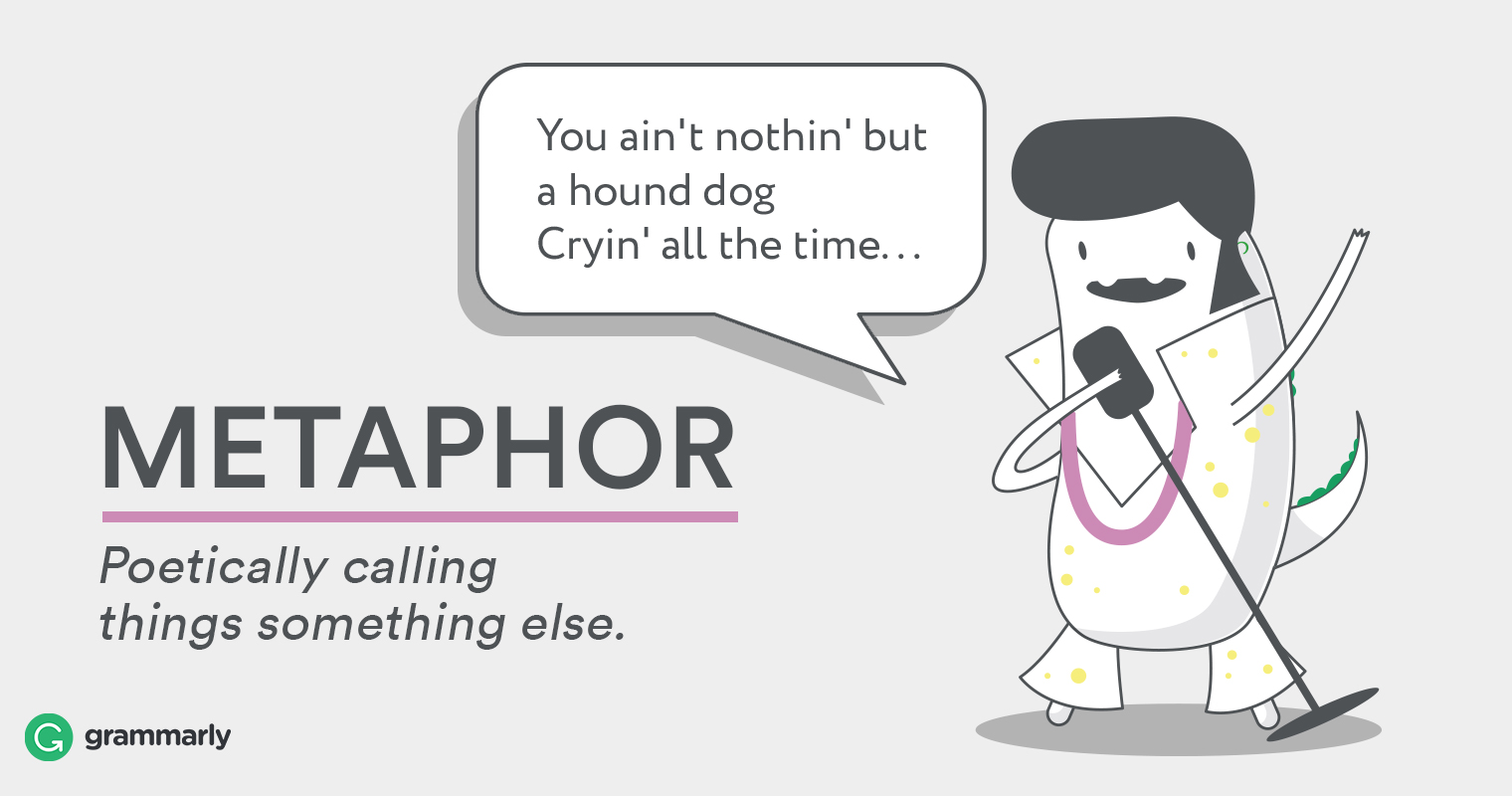
If you can create a simile, you can easily make it into a metaphor by removing the like or as. A metaphor is a comparison between two objects not using like or as. Example: The boy was a cheeta running the race. The popcorn was a fireworks display as it popped in the microwave.
The Haircut When I woke up on Saturday, mom said I was a sheepdog with my long, shaggy hair, and it was time for me to get my hair cut. When I looked at her, she was a zebra, half hidden behind the drapes of my overgrown bangs. I couldn’t help it. I laughed. She was right, my hair had to be cut. The barber’s chair was a tower, and he pumped it higher and higher. I didn’t really mind. I was an explorer, looking at the world in a whole new way. The pieces of hair on the floor were an exotic carpet of strange brown fibers that criss-crossed in a crazy pattern. The floor was an odd new planet, and I was an astronaut looking down from above. The barber pumped the chair again, and I was a rocket coming in for a landing. I couldn’t believe the adventure was over so soon. On the way home, we stopped at the store to buy some milk. Unfortunately, there was some amazing sale going on at the time. We were tiny fish swimming in a sea of people. I couldn’t wait to get out of there and go home. The drive home was a frustrating experience, because the holiday traffic had turned the street into a parking lot. I hope it’s a long time before I’m a sheepdog again! 3. Use your remaining time to work on your Picture Story! 4. Don't forget to review the directions! |
|||||||
Day 3: Personification
|
|||||||
Day 4: Alliteration
|



 Alliteration is the repetition of initial sounds in neighboring words in order to increase memory. Several tongue twisters use alliteration.

 A hyperbole is an extreme exaggeration. These statements are not literally true, but people make them to sound impressive or to emphasize something.
Evaluation
Evaluation
|
At the end of this web quest, you need to: Make sure your journal is updated and complete. Turn it in to me. Make sure you have taken one quiz and one test. They both need to be turned in. Your picture story and presentation need to be complete. They will be graded according to this rubric. |
||||||||||||||||||||||||||||||||||||||||||||||||||||||||||||||||||||||||||||||||||||||||||||||||||||||||||||||||||||||||
Rubric
|

Conclusion
Conclusion
|
I hope you have enjoyed our journey learning about figurative language. I look forward to seeing your writings and projects where you have implemented (used) these different types. We may not have covered every one of them in this visual, but maybe it will help you remember them.
|

Credits

This web quest was created by Jan McGlauchlen on June 15,2019 for EDUC 6601, Media and Technology for Education.
https://www.createwebquest.com