
Introduction

Welcome, Volcanologists! We have been studying Earth's landforms and today, we are going to explore volcanoes! Volcanoes are some of the coolest landforms on Planet Earth. As you travel through different volcanoes and even see some eruptions, you will learn the parts of a volcano to share with your fellow explorers! Ready? Go!
Task
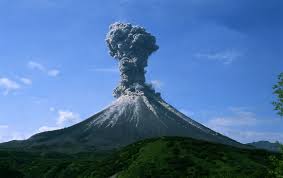
Today, you will get to explore volcanoes and their many important parts. After you have done a little exploring, you will create your very own diagram of the inside of a volcano on a poster to display for everyone to see! Your diagram should be a picture of a volcano with the following parts labeled:
- volcano
- lava
- magma
- magma chamber
- vent
- eruption
You should make your diagram EXPLOSIVE with color! Grab some crayons or markers and make it come alive! Be sure to make your labels dark and easy to read.
Process
Let's get started, Volcanologists!
STEP 1. Our first stop: Deep underground then.....out through the top of a VOLCANO! Click on the link to watch the video!
http://safeshare.tv/w/glixrPCTfa
Wow, that was AWESOME!
STEP 2. Next, let's look up some more basic information about volcanoes. Click on the links below to brush up on the facts.
Here's another video for you to watch: http://safeshare.tv/w/AoGyaehuyI
Now for some fun facts: http://www.ngkids.co.uk/did-you-know/Volcano_Facts
STEP 3. Let's take a look at the parts of a volcano so we can create our diagrams! Visit the links below to get some ideas.
- http://www.iknowthat.com/ScienceIllustrations/volcano/science_desk.swf
- http://eschooltoday.com/volcanoes/what-is-inside-a-volcano.html
- http://www2.edc.org/sciencequest/2001/sq0110360/valcanoparts2.html
STEP 4. Now that you've learned a little more about volcnoes and know the parts of them, let's test your knowledge! Click the link below to play a game!
STEP 5. Go and create your explosive diagrams! You learned about a lot of different volcano parts, but remember that you only need to label these:
- volcano
- lava
- magma
- magma chamber
- vent
- eruption
Here are the materials you will need:
- a blank poster
- a pencil
- crayons, markers, or colored pencils
Here are the steps you should take to draw your diagram:
1. Begin your diagram by drawing the inside of a volcano. Pretend it is cut in half. You can go back and look at the examples in STEP 3 if you need to. Be sure to include all the parts listed above.
2. Clearly label each part of the volcano.
3. Color your diagram and make it look GREAT!
Evaluation
This is how I will grade your diagram.
|
Diagram |
1 point |
3 points |
5 points |
Score |
|
Parts Of The Diagram |
Zero, one, or two of the required parts are included in the diagram |
Three, four, or five of the required parts are included in the diagram |
All six of the required parts are included in the diagram |
|
|
Labels
|
Zero, one, or two of the required parts of the volcano are labeled correctly AND/OR the labels are difficult to read |
Three, four, or five of the required parts of the volcano are labeled correctly AND/OR some labels are difficult to read |
All six of the required parts of the volcano are labeled correctly AND the labels are easy to read |
|
|
Appearance |
The diagram is not colored and/or is not organized or visually appealing |
The diagram has some color and/or organization
|
The diagram is colored and organized and is very visually appealing |
|
|
|
|
|
|
Total Score: |
Conclusion

Welcome back, Volcanologists! I hope you have had a wonderful exploration through volcanoes and have learned a lot! You went inside volcanoes, learned about volcanoes, and even diagrammed a volcano! Now you know some EXPLOSIVE facts about volcanoes and know the parts of a volcano!
Credits
Thank you to YouTube and National Geographic for providing the videos used in the WebQuest. I also used the following websites for the students to visit:
National Geographic Kids
iknowthat.com
eschooltoday.com
http://www2.edc.org/sciencequest/2001/sq0110360/valcanoparts2.html
Scholastic.com
Photos were taken from:
http://www.blastr.com/2015-1-13/nasa-deploys-special-robot-designed-exp…
http://www.egu.eu/medialibrary/image/14/karymsky-volcano-2004/
Teacher Page
This lesson was designed for 2nd grade students to complete individually.
Before students are to go on their own to complete the WebQuest, I will demonstrate the navigation of the WebQuest for students who are unfamiliar. Many students will not have extensive background knowledge of using computers or the internet, so I will be constantly moving throughout the room to assist students.
This lesson would likely be taught in a small group setting to allow for greater student success. The students would be placed into small groups throughout a week and have different "stations" to visit each day as part of a learning segment. Each group would visit the WebQuest station on a different day.
Various accommodations can be made to improve the success of my students, depending on need. If need be, I could read the WebQuest to a student. Text can be made larger. The Quest itself can be modified to a lower or higher level of learning, as needed. The Task could be modified as well.
Standard
2-ESS2-2: Develop a model to represent the shapes and kinds of land and bodies of water in an area.