
Introduction
Welcome to Miss Sotis's 3rd Grade Weather Webquest!
Love making snowmen? Swimming on a sunny day? Puddle jumping after a big rainstorm? These are all fun activities we love to do! But do you ever wonder what causes us to be able to do these activities? The Weather! But not every kid around the country can make snowmen, or swim in warm water. It all depends on the weather climates in the part of the country that we live!
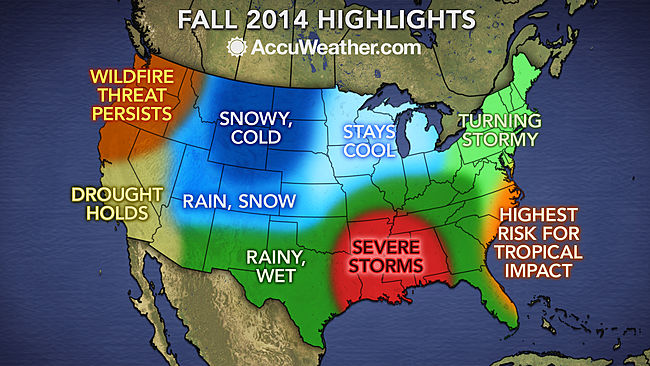
The United States is often noted for its great diversity in weather climates within the country's borders. Today you will be learning about the weather in various regions of the United States. We will focus on the temperatures, percipitations, wind speeds, and extreme weather conditions of of all regions of the United States. You will be broken into groups of 4 and each person will be given a specific job.
Task
Welcome to Miss Sotis's 3rd Grade Weather Webquest!

Today you will be learning about the weather in various regions of the United States. You will be broken into groups of 4 and each person will be given a specific job listed below.
Group 1: Northwest
Group 2: Southwest
Group 3: Midwest
Group 4: Northeast
Group 5: Southeast
Each group will assign a member to one of the following:
Thermostat: Researches, observes and records the highs, lows, and average temperature during each season in their region of the United States.
Percipitation Nation: Researches, observes and records the average amount of percipiation (rain, snow, sleet, etc.) during each season in their region of the United States.
Windy Mindy: Researches, observes and records the average wind speed during each season in their region of the United States.
Extremist: Researches, observes and records the extreme weather events that are most likely to occur during each season in their region of the United States.
Process
Each group member will use the corresponding sites to find information for their part of the project.
http://www.weather.com/storms/severe
http://www.weather.com/forecast/news/national-forecast-20141009
http://www.weather.com/weather/map/interactive/l/01938:4:US?animation=true
The following worksheets will be completed by each of the corresponding group members:
file:///C:/Users/Evelyn/Documents/thermometer.pdf
file:///C:/Users/Evelyn/Documents/seasons-worksheet.pdf
file:///C:/Users/Evelyn/Documents/weather-worksheet-4.pdf
file:///C:/Users/Evelyn/Documents/natural-disasters-worksheet.pdf
After completing your research, collaborate within your groups to create a presentation for the class. Each "region" will present their information using posters, powerpoints, or weather broadcast videos. Please be creative, colorful and resourceful!
Evaluation
Rubric
| CATEGORY | 4 | 3 | 2 | 1 |
| Focus on Topic (Content) | There is one clear, well-focused topic. Main idea stands out and is supported by detailed information. | Main idea is clear but the supporting information is general. | Main idea is somewhat clear but there is a need for more supporting information. | The main idea is not clear. There is a seemingly random collection of information. |
| Recognition of Reader (Voice) | The reader's questions are anticipated and answered thoroughly and completely. | The reader's questions are anticipated and answered to some extent. | The reader is left with one or two questions. More information is needed to "fill in the blanks". | The reader is left with several questions. |
| Word Choice | Writer uses vivid words and phrases that linger or draw pictures in the reader's mind, and the choice and placement of the words seems accurate, natural and not forced. | Writer uses vivid words and phrases that linger or draw pictures in the reader's mind, but occasionally the words are used inaccurately or seem overdone. | Writer uses words that communicate clearly, but the writing lacks variety, punch or flair. | Writer uses a limited vocabulary that does not communicate strongly or capture the reader's interest. Jargon or cliches may be present and detract from the meaning. |
| Flow & Rhythm (Sentence Fluency) | All sentences sound natural and are easy-on-the-ear when read aloud. Each sentence is clear and has an obvious emphasis. | Almost all sentences sound natural and are easy-on-the-ear when read aloud, but 1 or 2 are stiff and awkward or difficult to understand. | Most sentences sound natural and are easy-on-the-ear when read aloud, but several are stiff and awkward or are difficult to understand. | The sentences are difficult to read aloud because they sound awkward, are distractingly repetitive, or difficult to understand. |
| Capitalization & Punctuation (Conventions) | Writer makes no errors in capitalization or punctuation, so the paper is exceptionally easy to read. | Writer makes 1 or 2 errors in capitalization or punctuation, but the paper is still easy to read. | Writer makes a few errors in capitalization and/or punctuation that catch the reader's attention and interrupt the flow. | Writer makes several errors in capitalization and/or punctuation that catch the reader's attention and greatly interrupt the flow. |
| Grammar & Spelling (Conventions) | Writer makes no errors in grammar or spelling that distract the reader from the content. | Writer makes 1-2 errors in grammar or spelling that distract the reader from the content. | Writer makes 3-4 errors in grammar or spelling that distract the reader from the content. | Writer makes more than 4 errors in grammar or spelling that distract the reader from the content. |
| Sentence Length (Sentence Fluency) | Every paragraph has sentences that vary in length. | Almost all paragraphs have sentences that vary in length. | Some sentences vary in length. | Sentences rarely vary in length. |
| Conclusion (Organization) | The conclusion is strong and leaves the reader with a feeling that they understand what the writer is "getting at." | The conclusion is recognizable and ties up almost all the loose ends. | The conclusion is recognizable, but does not tie up several loose ends. | There is no clear conclusion, the paper just ends. |
Conclusion
After completion of your research, be prepared to present! You are now "experts" of your region's climates and will be teaching the rest of the class! This is a great way to learn about the weather surrounding the regions of the United States, and to practice recording weather information!

Teacher Page
| 3-ESS2-1. | Represent data in tables and graphical displays to describe typical weather conditions expected during a particular season. [Clarification Statement: Examples of data could include average temperature, precipitation, and wind direction.] [Assessment Boundary: Assessment of graphical displays is limited to pictographs and bar graphs. Assessment does not include climate change.] |
|---|---|
| 3-ESS2-2. | Obtain and combine information to describe climates in different regions of the world. |