
Introduction
Like all languages throughout the world there are parts that must be understood before one can fully use and understand a language. This also holds true for the language of the Visual Arts. One must understand its elements and principles before they can properly use the language to communicate ideas to others.
The elements are components or parts which can be isolated and defined in any visual design or work of art. They are the structure of the work and can carry a wide variety of messages.
The elements of design are those structural values that can be objectively identified as line, shape, space, color, texture, and pattern.
The latter half of the nineteenth century was a time when artists and critics began to formulate aesthetic models based on process and pure form, setting aside the old academic models that prioritized narrative and allegorical content. A new formal vocabulary began to define the integral elements of design that included both traditional fine art, such as painting, and artistic applications to the crafting of functional objects and products. The role of the artist in society, as well as what actually constituted art, underwent a radical transformation.
Think of the elements as the ‘building blocks’ we use to create a wonderful artwork. The elements can work individually or together to come up with a good combination of the elements. Elements of design are arranged using the Principles of Design to create a successful composition.
By using this WebQuest you will become familiar with the Elements of Design that are the foundation for all visual images. Once you have gained a better understanding of these topics, you will apply this newly acquired information to create your own artwork.
To finish this project you will use the Elements of Design to create an original artwork of your own.
MOTIVATION
Before starting and without reading this lesson I would like you to come up with your own composition and try to describe the elements that you used in your output. Do this on a short bond paper and after finishing your output take some pictures of it and send it through my Gmail account.
Task
Your task is to complete the following Elements of Design WebQuest to learn how to fully understand the visual images you see.
1. Identify the elements of art.
2. Describe the characteristics of the line.
3. Describe the characteristics of the shape.
4. Classify color and describe how it is created.
5. Describe the characteristics of texture.
6. Describe the characteristics of value.
Process
Elements of Design
1. Form

Everything posses a form in one way or another. When we talk about form, we’re not talking about the content of the form, but the form itself.
Forms are three dimensional, and there are two types: geometric (man-made) and natural (organic). A digital or physical form can be measured by height, width, and depth. A form can be created by combining shapes, and it can be enhanced by color or texture. Depending on their usage, they can also be ornate or utilitarian.
For digital design, think of form as the object you’re designing for; so if you’re designing for a mobile device, the phone is your form.
2. Shape

All objects are composed of shapes, and all elements of design are shapes in some way. Shapes can live in a form. An example would be a button on a website: It’s a shape that’s living inside the computer (which is the form).
A shape is a two- or a three-dimensional object that stands out from the space next to it because of a defined or implied boundary. A shape can live in different areas in space and have other elements like line, color, texture, or movement. Like forms, shapes come in two different types: geometric and organic.
3. Line

Often the starting point for all artistic expression, the line is one of the most essential elements of design. It always has more length than thickness, and can be unbroken, broken, or implied. A line can be vertical, diagonal, horizontal, and even curved. It can be any width, size, shape, position, direction, interval, or density.
Points create lines and lines create shapes. A line can have other elements like color, texture, and movement applied to it. Though basic in appearance, lines can control the viewer’s thoughts and emotions, and lead a viewer’s eye through space.
In digital design, the line is commonly used to contain or break areas apart visually. For example, a navigation bar could have a line to divide itself from the content.
Types of Lines
- Vertical lines: are straight up and down and perpendicular to horizontal lines

- Horizontal lines: are straight up and down and perpendicular to vertical lines

- Diagonal lines: are lines that straight in any direction except vertical or horizontal

- Zigzag lines: are a series of diagonal lines joined end to end

- Curved lines: are lines that bend in any amount of degree; they may be gently wavy to tightly wound spirals
❌ Photo unavailable
4. Texture

The texture is the way a surface feels, or the way it’s perceived to feel. It has the power to attract or detract a viewer’s eyes and can be applied to lines, shapes, and forms.
There are two types of texture: tactile and visual. Tactile textures are three-dimensional and can be touched. The easiest example is tree bark. When you touch bark, you can feel all the bumps and ridges, the roughness and smoothness. A photo of the same bark would be a visual texture. You can see it, not feel it.
In digital design, there are currently no touch screens that emulate tactile textures—yet. So we stick to visual textures.

5. Color

Color is one of the hardest elements to harness, and probably one of the most challenging to understand. The basics, however, are relatively easy.
Color can help the organization of design, and give emphasis to specific areas or actions. Like other elements, it has a few different properties: hue, saturation, and lightness. Unlike other elements, it does not always have to be used. A design can have the absence of color (yes, black and white are still colors, but you get the point). Color can be used sparingly or in a rainbow of hues but tends to work best when there’s both a dominant color and a supporting color.
KINDS OF COLOR
A. PRIMARY COLOR-red, blue, and yellow. They are called primary colors because they cannot be created by mixing any other colors.
B. SECONDARY COLOR-green, orange, and purple—are created by mixing two primary colors. The ratio of primary colors you use when you mix will determine the final hue of the secondary colors.
C. TERTIARY COLOR-red-purple, red-orange, blue-green, blue-purple, yellow-green, and yellow-orange. There are six tertiary colors and they are the result of mixing equal parts of a primary color with a secondary color.

It’s important to note that while color is global, different cultures have different connotations for colors. For example, in some cultures, white is associated with purity; in others, it’s associated with death.
6. Space
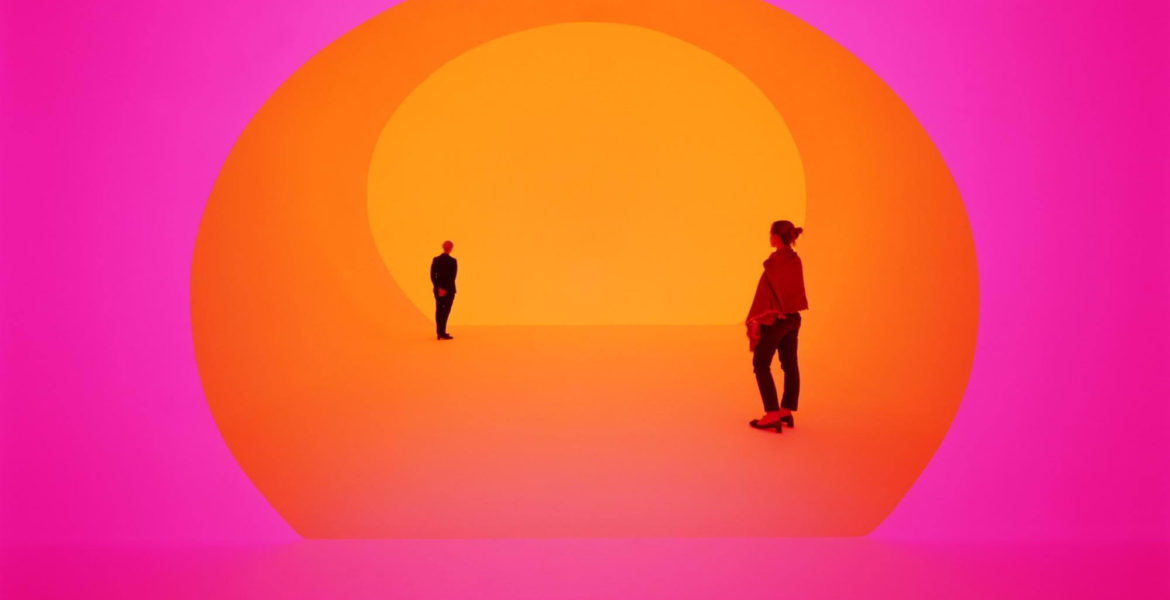
Every shape or form has a place in space. As an element of design, space refers to the area around, above, below, or behind an object.
Objects in space can occur in both two and three dimensions. In a two-dimensional setting, space is about creating the illusion of the third dimension on a flat surface. Shadows, shading, overlap, and sizing can help define an object’s place in space. For example, a button could have a shadow that makes it feel like it’s closer to the user.
TYPES OF SPACE
1. POSITIVE SPACE-is the actual objects or shapes within an artwork.
2. NEGATIVE SPACE- is the space around and between those objects.
7. Value
Value is a basic element of art that refers to the gradual change of lightness or darkness of a color. It is created when a light source shines upon an object creating highlights, form shadows, and cast shadows.
 Value is most evident on the grayscale where black is represented as lowest or darkest and white is represented as the highest or lightest value. Or more simply said, they are the various shades of grey between white and black. Artists use them to create highlights and shadows (shading) in objects and create depth in their paintings or drawings.
 Colors can have value too. In painting, value changes can be achieved by adding either black or white to the chosen color. Some colors, like yellow and orange, are naturally light in value.
Try to watch this video on how elements of arts can be done.
Evaluation
Now that you already know the different elements of art, for your activity, I would like you to create your final artwork using the 7 elements of arts. Describe the elements that you used and give a brief statement on how elements of the art works. Afterward, compare your final output with the 1st output you have made and give the differences of each. Make sure to use all the elements. Do it on a 1/4 cardboard and take some picture of your activity and send through my Gmail.
I'll be evaluating your output using the criteria below.
creativity- 25%
uses of elements- 25%
explanation to the importance of elements- 25%
comparison between the 1st and your final output- 25%
TOTAL - 100%
NAME:_____________________________________________

Activity: Describe the pictures below and indicate the elements of art being used. Write your answers on a long short bond paper and take some picture of your activity and send through my Gmail.
. __1. ______________________________________________
 ___2. ____________________________________________________
 ___3. _____________________________________________
 ___4. _______________________________________________
 __5. ______________________________________________________
Conclusion
By using the Elements of Design to understand the visual world we live in you will now have a better understanding of what you see. In addition to understanding what you are seeing, when someone is lost and needs help understanding an image or a work of art, you will be able to direct them along and help them fully understand what they are standing in front of.
In doing an artwork we must learn how to use the basic elements of arts in order to come up with a good and pleasing output. We have also to consider the important use and contribution of the elements of art.
Credits
Teacher Page
Sisana Mae B. Salagma
BSE 3C PEHMA