
Introduction

Hello Students!
Have you ever wondered:
What sustains our planet?
What are some of the things that threaten survival on the planet?
How can we keep these threats at bay?
The answers to these questions lie in the study of Ecology.
Ecology is the study of the relationships between living organisms, including humans, and their physical environment.
Ecology is crucial for understanding the vital interdependence between the living and the non-living world.
The study of Ecology may be applied to:
- Food production
- Conserving habitats
- Maintaining biodiversity
- Preventing pollution
- Reducing the effects of climate change
- Managing waste
- Controlling pest
Application of ecological principles aids with maintaining a harmonious balance between the living and non-living world. It allows Man to maximize the use of natural resources without destroying and depleting nature's gifts.
Check out the following video for a deeper understanding of the importance of Ecology to humans.
Task
The Objective
As budding Ecological scientist, you will be required to conduct an Ecological Study of a chosen area in your neighbourhood or on your College campus. This will require you to gather the following information about your chosen area:
- Land topography
- Climate
- Diversity of plants
- Diversity of animals
- Soil type
- Human activity

Process
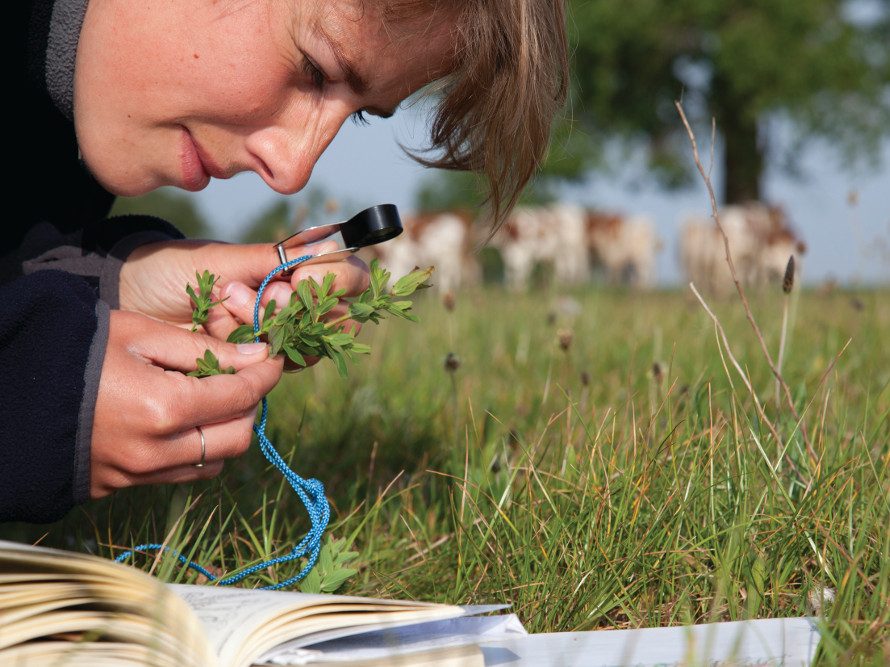
Things you will need:
- Notebook
- Pen
- Quadrat
- Hand lenses
- All your senses to observe your environment!
What you will do - Gathering Data
This study mainly relies on your ability to keenly observe your environment and take good notes on the following areas:
Land type and topography - Provide a detail description of the land. Questions to bear in mind are, "Is the land flat?", "Are there slopes?", "Are there many tall trees or shrubs?" , "Are there any water bodies?"
Climate - Provide a detail description of the climate of the are. Questions to bear in mind are, "Does the area receive adequate rainfall?", "What is the average range in temperature?", "Are there seasonal fluctuations in temperature and rainfall?"
Diversity of plants and animals - Provide an inventory of the plants and animals observed in the area. To attain a representative sample of small plants and animals you will need to use a quadrat and small hand lenses. The following resources provides information on how to make your own quadrats and how to use them.
- How to make quadrat at home: http://blog.soton.ac.uk/bioblitz/2015/03/25/how-to-make-a-quadrat/
- How to use quadrat to determine species richness https://www.bbc.co.uk/bitesize/guides/z8s2v9q/revision/3
Soil type - Provide a detail description of the soil. Questions to bear in mind are, "Does the soil appear sandy or loamy?", "What is the color of the soil?", "What is the relative size of the particles?" "Is the soil moist or dry?" , "Are there any signs of soil erosion?"
Human activity - Provide a detailed description of any positive or negative human activity in the area. eg. agriculture, sewage, construction etc.
NOTE: Do not hesitate to get creative in how you showcase your data! Data may be represented in charts, tables, pictures!
What you will do - Interpret and discuss your data
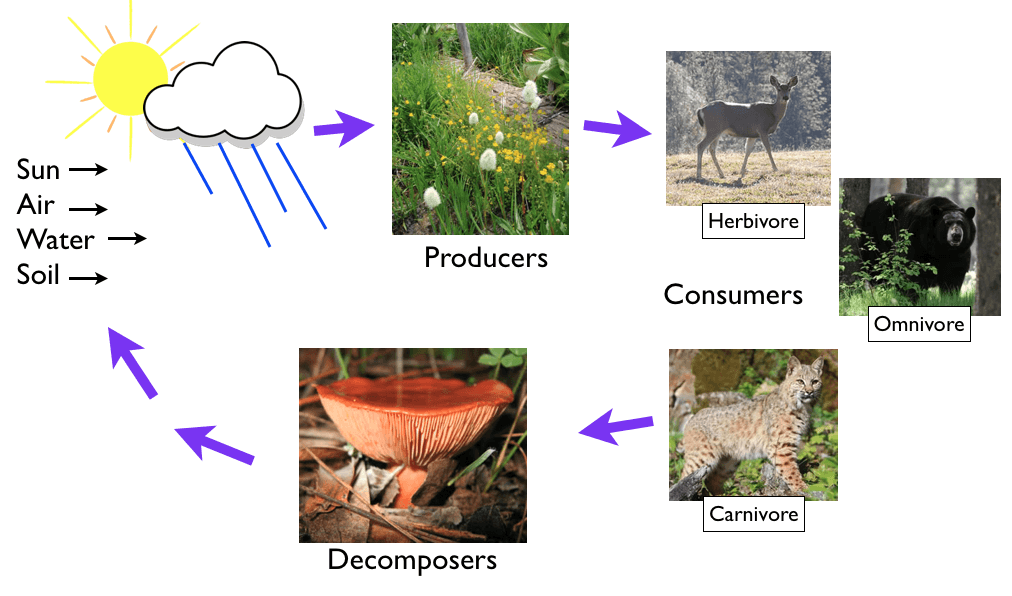
Now that you have gathered your information it is time to interpret it and make sense of it! It is time to tie all these elements of your environment together and determine how they are all connected!
Some areas to consider in your discussion include:
- Relate topography and climate with communities observed, soil type, level of fertility
- Comment on species diversity and possible food webs that may exist.
- Discuss the niche of at least 5 organisms observed.
- Comment on human activity and possible negative or positive impact on the living and non-living.

The report
At the end of the study, you will compile all elements of your study in the following report format:
- Aim
- Apparatus
- Method
- Observations
- Discussion
- Conclusion
- Limitations of the study
- Recommendations for the area studied
Evaluation
The assignment will be evaluated based on your written report, using the following grading scheme.
Objective (1)
Apparatus and method (2)
Observations (8)
- Topography and climate
- Species diversity
- Habitats
- Human activity
- Soil
- Creativity in representing data.
Discussion (6)
- Relate topography and climate with communities observed, soil type, fertility
- Comment on species diversity and construct possible food webs that may exist
- Comment on human activity and negative or positive impact to the study area
Conclusions (1)
Limitations (1)
Recommendations (1)
Total- 20 marks
Conclusion
This activity is designed for you to apply your ecological knowledge to your environment. Have fun while doing it!
Credits
Created by Cindy-Leigh Hamilton.
Science Educator.