
Introduction
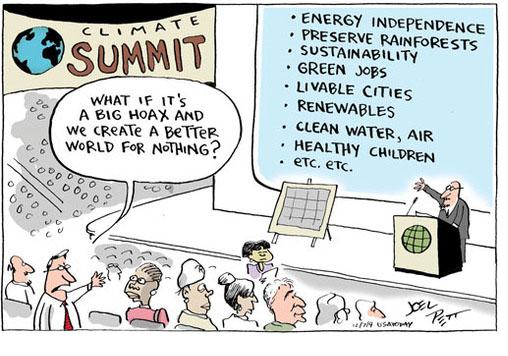
There are many different resources, in addition to textbooks, which will allow us to learn more about U. S. history. Biographies, documentaries, and/or letters between historical figures are a few examples. One interesting way to consider the impact of historical events is to look at political cartoons which were created during the time that the actual historical event took place. Not only do many political cartoons allow us to learn about a specific historical happening. They also allow us some deeper insight to the mood of the community surrounding those events.
What is a Political Cartoon?
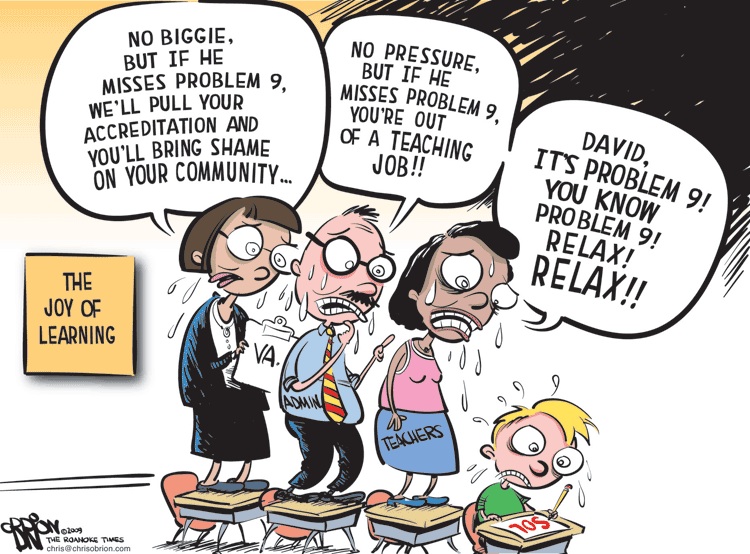
A political cartoon is an illustration which is designed to convey a social or political message. The art form dates back to, at least, the 1500’s. Political cartoons are found on the editorial pages of newspapers and magazines, and they also will sometimes appear in the comics section or as stand-alone illustration. The advent and popularity of the internet has proved to be a fertile ground for political cartoons as well.
Task
THE TASK:
Learn about the impact of political cartoons on the consciousness of their readers.
YOUR FINAL PROJECT WILL INCLUDE:
Journal entries.
An original political cartoon of your own creation
THESE ARE THINGS THAT YOU WILL BE DOING:
- View some select political cartoons.
- Reflect (in your journals) upon the societal impact of political cartoons.
- Reflect (in your journals) upon how the cartoonist's personal beliefs and history impact a political cartoon.
- Learn how to create a political cartoon using the animation-ish software.
- Create a political cartoon using the animation-ish software.
- Reflect (in your journals) upon the impact which the internet has had/will have on political cartoons and the message that they share.
Process

Ok. Let's get started.
As you move through this WebQuest you will take a brief view of American History as shown through political cartoons. You will have the opportunity to view some iconic political cartoons. You will learn more about the events surrounding the cartoon as well as gain some insight about the creators of those cartoons. After reflecting on the impact that a political cartoon has on the opinion of its viewers, you will create a political cartoon of your own.
1. First you will follow this link to a politcal cartoon presentation which has been created for you. Once you reach the link view the presentation following the directions on the presentation. Be sure to follow the links provided.
U.S. History & Political Cartoons
2. Write a journal entry using the following prompt.
Might political cartoons be a better method for influencing public opinion than other forms of print media? Justify your answer.
3. Find an example of a political cartoon which speaks to an issue which you feel is important.
4. Write a journal entry using the following prompt.
How do the beliefs and background of political cartoon artists influence their craft?
5. View this tutorial about how to use the Animation-ish software to create a political cartoon.
6. Use the Animation-ish software on your computer to create a political cartoon for something about which you feel strongly.
Evaluation
Task Rubrics
|
Criteria |
5 |
3 |
1 |
0 |
|
Structure Ideas (x2) |
All or almost all of the entries have a connection to structure. |
Most entries have a connection to structure. |
Few entries have a connection to structure. |
None of the entries have a connection to structure. |
|
Feelings and Thoughts (x2) |
Feelings and thoughts are revealed in all or almost of the entries. |
Feelings and thoughts are revealed in most entries. |
Feelings and thoughts are revealed in few of the entries. |
None of your feelings and thoughts are revealed in any of the entries. |
|
Format |
The proper format has been followed for all of the entries. |
The proper format has been followed for most of the entries. |
The proper format has been followed for few of the entries. |
The proper format has not been followed for any of the entries. |
|
Mechanics |
All or almost all of my entries use correct spelling and grammar. |
Most of my entries use correct spelling and grammar. |
Few of my entries use correct spelling and grammar. |
None of my entries use correct spelling and grammar. |
|
Completion |
All entries are present, in order, and together. |
All entries are present, but are either not together or in order. |
All entries are not present, but they are together or in order. |
All entries are not present, nor are they together or in order. |
Reflection Journal Rubric (Above)
Political Cartoon Rubric (Below)
|
6 |
5-4 |
3-2 |
1-0 |
|
|
|
|
|
|
|
|
Meets Basic Requirements |
Student’s project follows all instruction points. |
Student’s project is missing a minor point from instructions |
Student’s project is missing a major point, but is still completed |
Student’s project does not conform to more than one major point. |
|
Organization & Preparation |
The political cartoon is of excellent quality and it is apparent that the student spent time in preparing it. |
The political cartoon is of good quality and it is apparent that the student spent some time. |
The political cartoon is of fair quality and seems rushed. |
The political cartoon appears to have been hastily created and appears messy or disorganized. |
|
Knowledge & Concept of the Topic |
The political cartoon demonstrates higher level understanding of an issue. |
The political cartoon demonstrates an understanding of an issue. |
The political cartoon demonstrates recognition of an issue but not a clear understanding. |
The political cartoon demonstrates that the student is still struggling to understand the issue. |
|
Creativity of the Product |
The political cartoon’s style, color, and impact align perfectly with the students ideas. |
The political cartoon’s style, color, and impact align well with the students ideas. |
The political cartoon’s style, color, and impact do not align well with the students ideas. |
The political cartoon’s style, color, and impact seem disjointed and rushed. |
|
Visual Expression of Ideas |
The political cartoon is rich with symbolism. The message goes beyond a statement and reflects an in-depth opinion answering more than one of the “questions to answer.” |
The political cartoon is rich with symbolism. The message goes beyond a statement and reflects an in-depth opinion answering one of the “questions to answer.” |
The political cartoon demonstrates little symbolism. The message does not really go beyond a statement (for example “people in Africa are starving”) and does not reflect an in-depth opinion answering more than one of the “questions to answer.” |
The political cartoon demonstrates little to no symbolism. The message does not really go beyond a statement (for example “people in Africa are starving”) and does not reflect an in-depth opinion. |
Conclusion
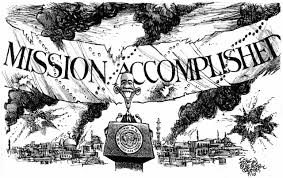
Hopefully you have enjoyed learning more about political cartoons. Though they have been a part of our lives for nearly a century and a half; the internet has given new scope and power to the work of political cartoonists. As a wrap up to this WebQuest, I encourage you to consider (and reflect in your journals upon) the impact which the internet has had/will have on political cartoons and the message that they share. Below you will find some more resources to expand your learning about political cartoons both through suggested readings as well as several internet resources.
External Links for further study. courtesy Wikipedia•American Association of Editorial Cartoonists Political cartoons by the members of the American Association of Editorial Cartoonists•TED Talk: The power of cartoons •Politcalcartoons.com: editorial cartoons from around the World•About.com: Political Cartoons Comprehensive guide to political editorial cartoons on the Web•Globe Cartoon: archived editorial cartoons, searchable by themes and keywords•Using editorial cartoons in the classroom Sources, analysis, interpretation (mostly English with some German)•Gettysburg College Civil War Era Digital Collection Contains over 300 Civil War Era political cartoons•American Social History Online •The Role of Puck's Cartoons in Gilded Age Politics from American Studies at the University of Virginia•CartoonMovement.com: Political Cartoons and Comics Journalism from around the world •maroonbeard political cartoons •Sykes Editorial Cartoon Collection Political cartoons by Bill Sykes from 1930s-1940s. VCU Libraries•A key contributor to the museum’s virtual exhibit: Where to draw the line? Editorial cartoons in Quebec, 1950-2000Further Reading•Adler, John, and Draper Hill. Doomed by Cartoon: How Cartoonist Thomas Nast and the New York Times Brought Down Boss Tweed and His Ring of Thieves (2008) excerpt and text search•Gocek, Fatma Muge. Political Cartoons in the Middle East: Cultural Representations in the Middle East (Princeton series on the Middle East) (1998)•Hess, Stephen, and Sandy Northrop. American Political Cartoons, 1754-2010: The Evolution of a National Identity (2010)•Keller, Morton. The Art and Politics of Thomas Nast (1975)•McKenna, Kevin J. All the Views Fit to Print: Changing Images of the U.S. in 'Pravda' Political Cartoons, 1917-1991 (2001)•Morris, Frankie. Artist of Wonderland: The Life, Political Cartoons, and Illustrations of Tenniel (Victorian Literature and Culture Series) (2005)•Nevins, Allan. A century of political cartoons;: Caricature in the United States from 1800 to 1900 (1944)•Press, Charles. The Political Cartoon (1981)

Credits
- 1 Backer, Dan (07/01/1996). A Brief History of Political Cartoons. Retrieved February 21, 2008, from Uniting Mugwumps and the Masses; Puck's role in gilded age politics Web site: http://xroads.virginia.edu/~MA96/PUCK/part1.html
- (2003, Aug. 7). Bill Mauldin; Beyond Willie and Joe. Retrieved February 28, 2008, from Library of Congress; Bill Mauldin Online Tribute Web site: http://www.loc.gov/rr/print/swann/mauldin/mauldin-atwar.html
- Benjamin Franklin: Glimpses of the Man. Retrieved February 28, 2008, from The World of Benjamin Franklin Web site: http://www.fi.edu/franklin/
- Block, Herb (2001, Nov. 9). HerbBlock's Presidents. Retrieved February 28, 2008, from HerbBlock's History: Political Cartoons from the Crash to the Millenium Web site: http://www.loc.gov/rr/print/swann/herblock/presidents.html
- Block, Herb (2001, Nov. 9). The Sorcerer’s Apprentice. Retrieved February 28, 2008, from HerbBlock's History: Political Cartoons from the Crash to the Millenium Web site: http://www.loc.gov/rr/print/swann/herblock/presidents.html
- Groening , Matt (2008 Jan. 6 ). E Pluribus Wiggum. Retrieved February 28, 2008, from The Simpsons Episode Guide Web site: http://www.thesimpsons.com/episode_guide/
- Larson, Gary (1986). Stay Free Daily Nov. 2006. Retrieved February 21, 2008, from Stay Free Daily Web site: http://blog.stayfreemagazine.org/2006/11/index.html
- Minear, Richard, H (1999). A Catalogue of Political Cartoons by Dr. Seuss. Retrieved February 21, 2008, from Dr. Seuss Goes to War Web site: http://humor.about.com/gi/dynamic/offsite.htm?zi=1/XJ&sdn=humor&cdn=entertainment&tm=9&gps=337_226_1020_599&f=20&su=p504.1.336.ip_&tt=2&bt=1&bts=1&zu=http%3A//orpheus.ucsd.edu/speccoll/dspolitic/
- Parker & Stone, Matt & Trey (2004, Nov 3 Original airdate). Something Wall-Mart This Way Comes. Retrieved February 28, 2008, from South Park Episode Guide Web site: http://www.southparkstudios.com/show/episodes/display_episode.php?episodeid=809
- Pizey, Chris (04/24/1997). Calvin and Hobbes. Retrieved February 21, 2008, from Calvin and Hobbes Web site: http://www.neophilia.de/onlinehome/calvin/
- 2- Roberts , Chuck (1999, Oct 17). Serious Seuss: Children's author as political cartoonist. Retrieved February 28, 2008, from CNN.com Web site: http://www.cnn.com/books/news/9910/17/dr.seuss.war/index.html
Teacher Page
Political Cartoon WebQuest
Teacher Page
A WebQuest for 6th- 8th Grade (Social Studies/History)
Designed by
Daniel Wilson
Teach1030@gmail.com
[img_assist|nid=17166|title=marco polo|desc=|link=none|align=left|width=640|height=433]
Introduction
Initially this lesson was developed to allow for the differentiation of activities between regular ed and gifted students. As it progressed it became a lesson for all students and the manner in which they approached it served as self-differentiating.
This lesson allows students to explore the history of the United States (briefly) through the use of political cartoons. It also allows students to contemplate the impact that art has on society and even History itself.
Learners
This lesson was developed for the use with grades 6 through 8. There are no prior learning requirements which the student needs before embarking upon this WebQuest. Any historical event with which they are unfamiliar, that is in this lesson, is discussed in the lesson.
Curriculum Standards
Kansas History, Government, and Social Studies
Standards Addressed in his WebQuest
Standard 1. Choices have consequences.
1.1 The student will recognize and evaluate significant choices made by individuals,
communities, states, and nations that have impacted our lives and futures.
Standard 2. Individuals have rights and responsibilities.
2.2 The student will analyze the context under which significant rights and responsibilities
are defined and demonstrated, their various interpretations, and draw conclusions
about those interpretations.
Standard 3. Societies are shaped by beliefs, ideas, and diversity.
3.1 The student will recognize and evaluate significant beliefs, contributions, and ideas of
the many diverse peoples and groups and their impact on individuals, communities,
states, and nations.
3.2 The student will draw conclusions about significant beliefs, contributions, and ideas,
analyzing the origins and context under which these competing ideals were reached and
the multiple perspectives from which they come.
Standard 4. Societies experience continuity and change over time.
4.1 The student will recognize and evaluate continuity and change over time and its impact on individuals, institutions, communities, states, and nations.
4.2 The student will analyze the context of continuity and change and the vehicles of
reform, drawing conclusions about past change and potential future change.
Standard 5. Relationships among people, places, ideas, and environments are dynamic.
5.1 The student will recognize and evaluate dynamic relationships that impact lives in
communities, states, and nations.
5.2 The student will analyze the context of significant relationships and draw conclusions about a contemporary world.
Process
1. First, students will follow this link to a politcal cartoon presentation which has been created for you. Once students reach the link view the presentation following the directions on the presentation. Be sure to follow the links provided.
U.S. History & Political Cartoons
2. Write a journal entry using the following prompt.
Might political cartoons be a better method for influencing public opinion than other forms of print media? Justify your answer.
3. Find an example of a political cartoon which speaks to an issue which you feel is important.
4. Write a journal entry using the following prompt.
How do the beliefs and background of political cartoon artists influence their craft?
5. View this tutorial about how to use the Animation-ish software to create a political cartoon.
Animation-ish how to video
6. Use the Animation-ish software on your computer to create a political cartoon for something about which you feel strongly.
This multi-disciplinary lesson should take approximately 5 (one hour) class periods to complete.
Before using this lesson it would be wise to familiarize yourself with the animation-ish software and to have it downloaded onto the computers which students will be using to complete this WebQuest.
Resources Needed
- Class sets laptops or i-Pads (one per student)
- E-mail accounts for all students
- Animation-ish software
- Students should already have an electronic journal, or a blog which can serve as such, set up.
- The Truman Library has some excellent resources regarding political cartoons that you might find useful.
This lesson can easily be implemented by one teacher so long as you make a point to be moving throughout the room regularly to act as a resource and to ensure that students remain on task.
Evaluation
(See evaluation page of the WebQuest)
The important thing to consider, especially when evaluating the students’ political cartoon is whether or not the idea of it would be a worthy political cartoon as opposed to getting bogged down in the art or the humor of the cartoon itself.
Conclusion
The strength of this lesson is that it allows students to tap into their strength of, and familiarity with, surfing the internet. It also presents historical events in a manner in which they are a bit more accessible to younger audiences.