
Introduction
This web-quest is devoted to the UK Royal Family.
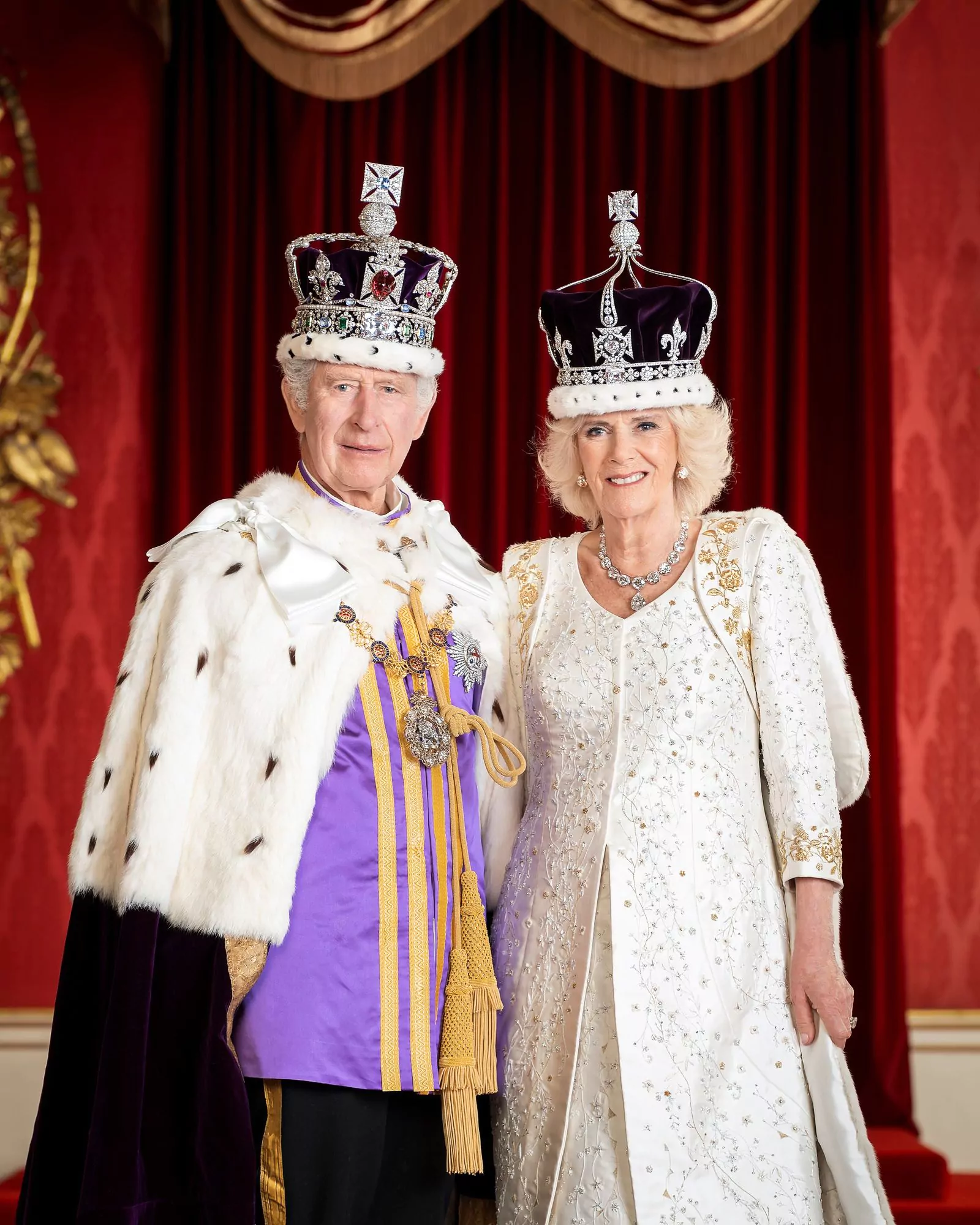
Imagine you are the young journalists working on the TV-programme about thr coronation of the King Charles III for BBC. So you are invited to make a documental film about the King's life, some Royal traditions, Royal family members,Royal symbols and amazing and interesting facts about the British Crown.
Let`s get started and get to know with the British Monarchy. Some additional materials such as words, exercises, tasks and video will help you in your research. You can also find extra information in the presentations.
Finally, you have to make a presentation for our lesson using a multi-medium to tell the audience about the coronation, the King and the Royal family.
To fulfill what we have planned for, you have to answer all the questions.
Surf the Net and gather as much information as possible about the topic.
You are supposed to be active, creative and curious in doing this project.
Task
Why Charles III is coronated? Who was the previous monarch? Is he the King of Great Britain only?
To answer these questions you will need to work in small groups or individually. And complete tasks and assignments.
To begin you will also need a notebook. In this notebook you must write down all the information needed for your research. Don`t forget to save some images for your research. They must help you to reflect the events, facts and people you are talking about.
Process
For the lesson the whole class will be divided into 2 groups. Each group will get one aspect (the King's life and some Royal traditions; Royal family members,Royal symbols and amazing and interesting facts about the British Crown.). Your task will include the following:
- PRE-CLASS PREPARATION.
- study Web-based materials using links suggested;
- do additional Internet search for information on the target issue, if necessary;
- answer the questions;
- divide the material between all team members for presentation in class for the members of other groups;
- illustrate the results of your search by examples and create a Power Point presentation reflecting your ideas.
- IN-CLASS ACTIVITY
- Report to the whole class what you have learned on the topic for your group activity.
Phase 1 – Background information
For the lesson I decided to break the topic about the coronation of Charles III into 2 parts. Each group will need to study only one part and inform the whole class about main information.
Phase 2 – Roles
You will be working in teams. It will be up to you to divide roles in each team. For efficiency, there should be a leader, who will organize the work and divide the issues within each topic to make sure everything is covered and there is no overlap. However, all team members are responsible for presenting information in class, regardless their role in pre-class preparation process.

Group 1: the King's life and Royal Family members
https://en.wikipedia.org/wiki/Charles_III (biography)
https://en.wikipedia.org/wiki/Elizabeth_II (Predecessor Monarch, Elizabeth II)
https://www.vanityfair.com/style/2022/09/inside-queen-elizabeth-and-prince-charles-complicated-relationship (Relationship with the Queen Elizabeth II, his mother)
https://en.wikipedia.org/wiki/British_royal_family (British Royal Family)
Video about The Royal Family members
QUESTIONS
1. What is King Charles' full name, and how is he related to the monarch, Queen Elizabeth II?
2. What is King Charles' role in the Royal family, and how has he served as a representative of the Crown throughout his life?
3. What is the history and significance of the British monarchy, and how has the Royal family evolved over time?
4. Who are the other members of the Royal family, and what roles do they play in public life and ceremonial events?
5. What is the Royal family's relationship with the Church of England, and how does this influence their official duties and responsibilities?
6. How does the British public view the Royal family, and what role do they play in national identity and culture?
7. What are some of the major events in the history of the Royal family, and how have they responded to crises or controversies?
8. What is King Charles' personal background and interests, and how has he used his platform to promote environmental causes and other charitable initiatives?
9. What are some of the traditional customs and practices associated with the Royal family, and how have these changed over time?
Group 2: Royal traditions, symbols and intresting facts about King Charles' coronation
https://www.royal.uk/coronation-regalia ( The coronation regalia)
(The Coronation Plan for King Charles III)
https://www.mentalfloss.com/article/563615/charles-prince-of-wales-facts ( Intresting facts about the King)
1. What is the name of The Coronation Plan for King Charles III?
2. What phrase will people say after Charle's coronation?
3. What are the coronation Regalia?
4. What intresting facts about the King do you know now?
5. What are the traditions for the coronation?
6. Which Royal family members will be on coronation?
Evaluation
|
|
Beginning (2) |
Developing (3) |
Accomplished (4) |
Examplary (5) |
Score |
|
Content |
The information is not clear or does not support the task in any way. |
There is a lot of information that is not clearly connected to the task. The role is not acted out at all. There are no images enclosed. |
Sufficient information that relates to the task, but some material doesn`t correspont to the task. Parts of the presentation are not connected well enough. The chosen role is not fully acted out. |
Abundance of matirial. All the material strictly corresponds to the task and meets the requirements of the chosen role. The content is structured. The information is presented in a clear logical way.
|
|
|
Composing |
No Clear focus, structure or elaboration. No central idea. Text is disorganized. |
Maintains clear focus and structure. No elaboration. Central idea is clear, but could be organized better. |
Maintains clear focus, structure. Some elaboration. Central idea is clear and delivered in an organized text. Shows some unity and organization. |
Establishes and maintains clear focus, structure and elaboration. Central idea is clear and delivered in an organized text. Shows unity and organization. |
|
|
Speaking Skills |
Inaudible or too loud; no eye contact; speech tempo too slow/fast; uninterested monotone speech. |
Muttering; little eye contact; uneven speech tempo; little expressiveness. |
Clear articulation but not polished. |
Balanced articulation, clear pronunciation; proper volume; steady speech tempo; good posture and eye contact; enthusiasm; confidence. |
|
|
Spelling / Grammar |
Untyped. Over 6 spelling or grammatical mistakes. Poor vocabulary. Inappropriate use of words. |
4-6 spelling or 1 grammatical mistakes. Words are nonspecific and redundant. |
No more than 3 spelling or grammatical mistakes. Good vocabulary. Typographical/printing problems. |
No spelling or grammatical mistakes. Perfect vocabulary. |
|
|
Sentence Formation |
Incomplete sentences. Hard to follow writer's thought. No standard word order. |
Complete sentences and easy to follow writer's thoughts. Standard word order. |
Sentences are formed completely and express writer's thoughts. |
Sentences are formed completely and are appropriately mature to express writer's thoughts. Some expressiveness is also achieved with the help of word order.
|
|
|
Style |
Writer has no language control. Writing is dull with no sentence variation. |
Writer controls language, shows some vividness with selected vocabulary, information. Good sentence variety. |
Writer shapes and controls language most of the time, shows vividness most of the time, uses selected vocabulary, information, and sentence variety. |
Writer purposefully shapes and controls language to affect reader. Writing shows vividness with selected vocabulary, selected vocabulary, selected information, and sentence variety. |
|
|
Audience Response |
Incoherent; audience lost interest and could not determine the point of the presentation. |
Some related facts but went off topic and lost the audience; mostly presented facts with little or no imagination. |
Presented facts with some interesting "twists"; held the audience's attention most of the time. |
Involved the audience in the presentation; points made in creative way; held the audience's attention throughout. |
|
Conclusion
Great! You`ve made a great TV-programme about the Royal family, the King and his coronation. You have gathered a lot of facts, learned lots of information , "took pictures" , presented it in the best way to your classmates and teacher. Now you have in store: extensive vocabulary on the topic, good skills of public speech and presentation, Internet competence, and of course... your impression of the history of country you like!
Now you are suggested take the Quiz and check yourselves how much you know of the country.
| Charles | his mother |
| Queen Elizabeth II | 6 May 2023 |
| was born | of Wales |
| Prince | in Buckingham Palace |
| Coronation | 14 November 1948 |
| Children | William, Harry |
Would you like to know more about the country and the Royal family? Good luck to you in your future achievements.
Credits
The WebQuest in prepared by Mariia Lukashova,
English teacher, Master student of VSU
Teacher Page
Introduction
Students will enlarge their vocabulary on the topic "The Royal Family", improve their listening or reading skills (according to the type of exercises they`ve got), exercise their creative writing skills and their knowledge.
Learners and Standards
This web-quest can be adjusted for students (grades 9-11). It is currently formatted for 9th grade students specifically. It can be included in that part of school curriculum which is dedicated to study of "The Royal Family, History of the UK". This web-quest will help you to awake students' interest in the topic, improve their Internet competence, their ability in finding and working up information on the specified topic. You can also give them a chance to practice their public speech skills. The students can present their works and then you may discuss the advantages and disadvantages of their presentations together. It is better if the students will use only English language to express their opinions.
Process
This web-quest is designed as an individual activity but students can also work in pairs if you prefer so.
Students can work in class but Internet access is necessary. Students can also work at home and a final product from everyone will be required.
You can choose one of the places yourself and prepare the neccessary material for studying (download, print the texts, prepare audio or video for listening/watching in class). Within a lesson you can do the first exploratory work as an example. Then students will make their own choice working at home and prepare their own presentation. Talk to the students about key information and what to look for. Encourage the students to use resources that are given in the list.