
Introduction
Have you ever wondered how do Christmas dinners look in the beautiful Wales? Maybe you associate Wales only with sheep and breath-taking landscapes and never even thought about the Welsh cuisine? We would like to show you that in the special Christmas time Wales has way more to offer!
Task
We want to introduce you to some vocabulary and definitions of traditional Welsh dishes served on Christmas Eve. We will also provide you with links that can demonstrate you how some of those dishes are made, and we are sure that you won't be dissapointed if you decide to try them out!
We want you to pick couple of these dishes and, as a task, prepare them and eat together during your classes. You should make them as close to their traditional versions as you can (in terms of ingredients and methods of cooking).
Enjoy!
Process
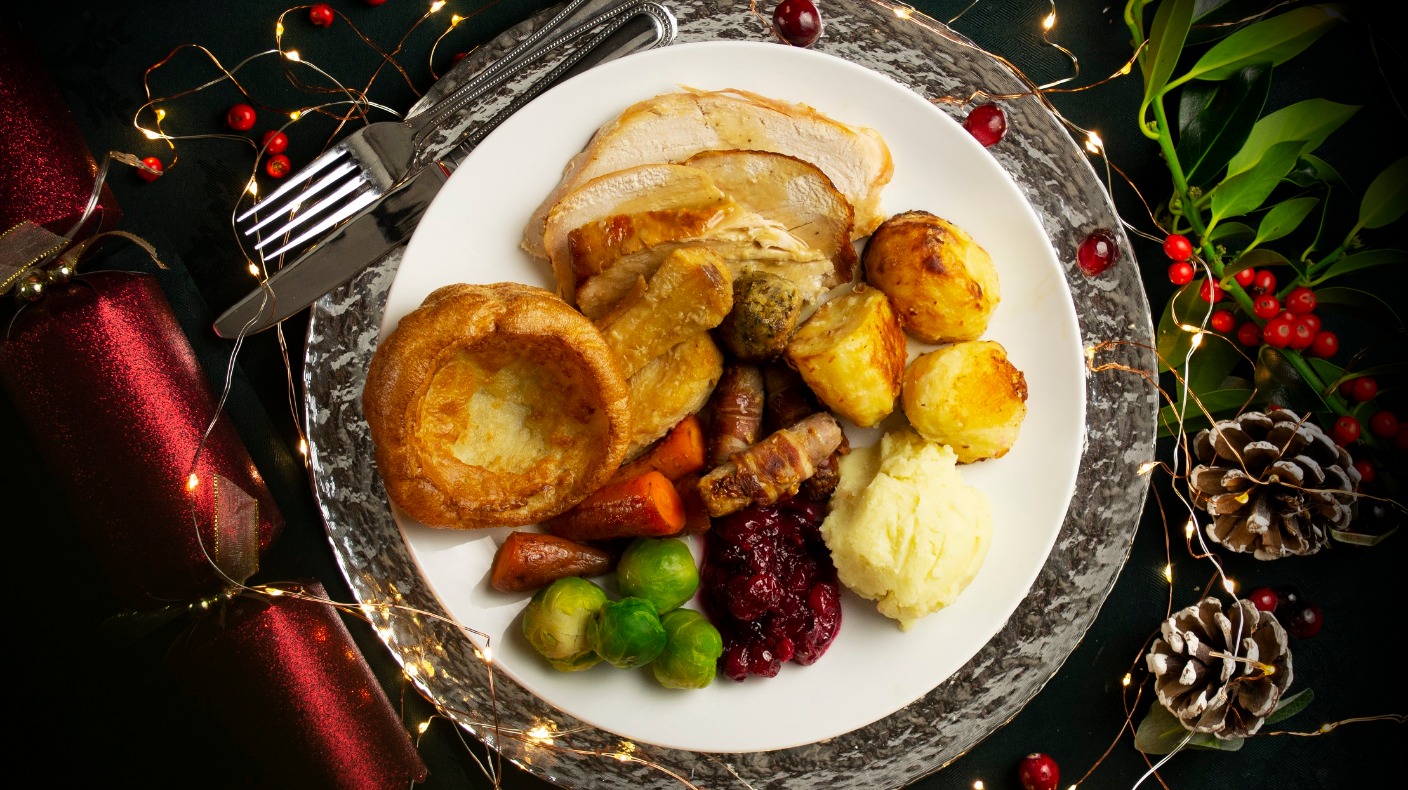
Here are some of the most popular Welsh Christmas dishes/ingredients:
Tatws rhost - roast potatoes; the most common Christmas dish in Wales.

Moron - carrots
Stwffin - stuffing

Grefi cig - meat gravy
Moch mewn blancedi - pigs in blankets

Pwdin sir Efrog - yorkshire pudding

Twrci - turkey
Goose blood tart - cacen waed gŵydd

Now it's time to get to know couple of the most interesting food related Welsh traditions.
Mixing the Christmas pudding involved the whole family when each member, from the youngest to the oldest, would take his turn to stir the pudding and in doing so would cast a secret wish. It was a common custom also when preparing the pudding to put small coins in the mixture - the old silver threepenny or sixpenny pieces, and the lucky recipients on Christmas day regarded them as tokens of good luck.
Pwdin nadolig - christmas pudding
Noson Gyflaith (Toffee Evening) was a traditional part of Christmas or New Year festivities in some areas of north Wales earlier this century. Families, in their turn, would invite friends to their homes for supper, usually in the form of a Christmas dinner, and it would be followed by merriment, playing games, making toffee, and story telling. When the required ingredients had boiled to a certain degree, the toffee was poured onto a well-greased slate or stone slab. The hearth-stone itself was used for this purpose in some houses. Members of the happy gathering would then cover their hands with butter and attempt to "pull" the toffee while it was still quite warm. It was a skilled art to "pull" and twist the toffee until it became golden yellow in colour. Both the skilled and unskilled would take part.Toffee-making was also practised in parts of south Wales, especially in the coal-mining areas.
Toffe evenings - nosweithiau taffi
And here's a recipe for you:
Evaluation
We are sure that your classmates would appreciate some homemade toffee! But if you don't have the time to make it, make sure to memorize at least three dishes that were mentioned in this webquiz. And who knows, maybe one day you will have an opportunity to impress someone with a little funfact about the welsh toffee?

Conclusion
Swydd da! Now you can impress others with your knowledge about Christmas in Wales and with your new recipes! We hope that you learned something you didn't know before and can now fully appreciate the Welsh cuisine and some of it's Christmas traditions.
Nadolig Llawen!
Credits
Teacher Page
WebQuest made by Sandra Kościuszko & Noemi Skoczek.